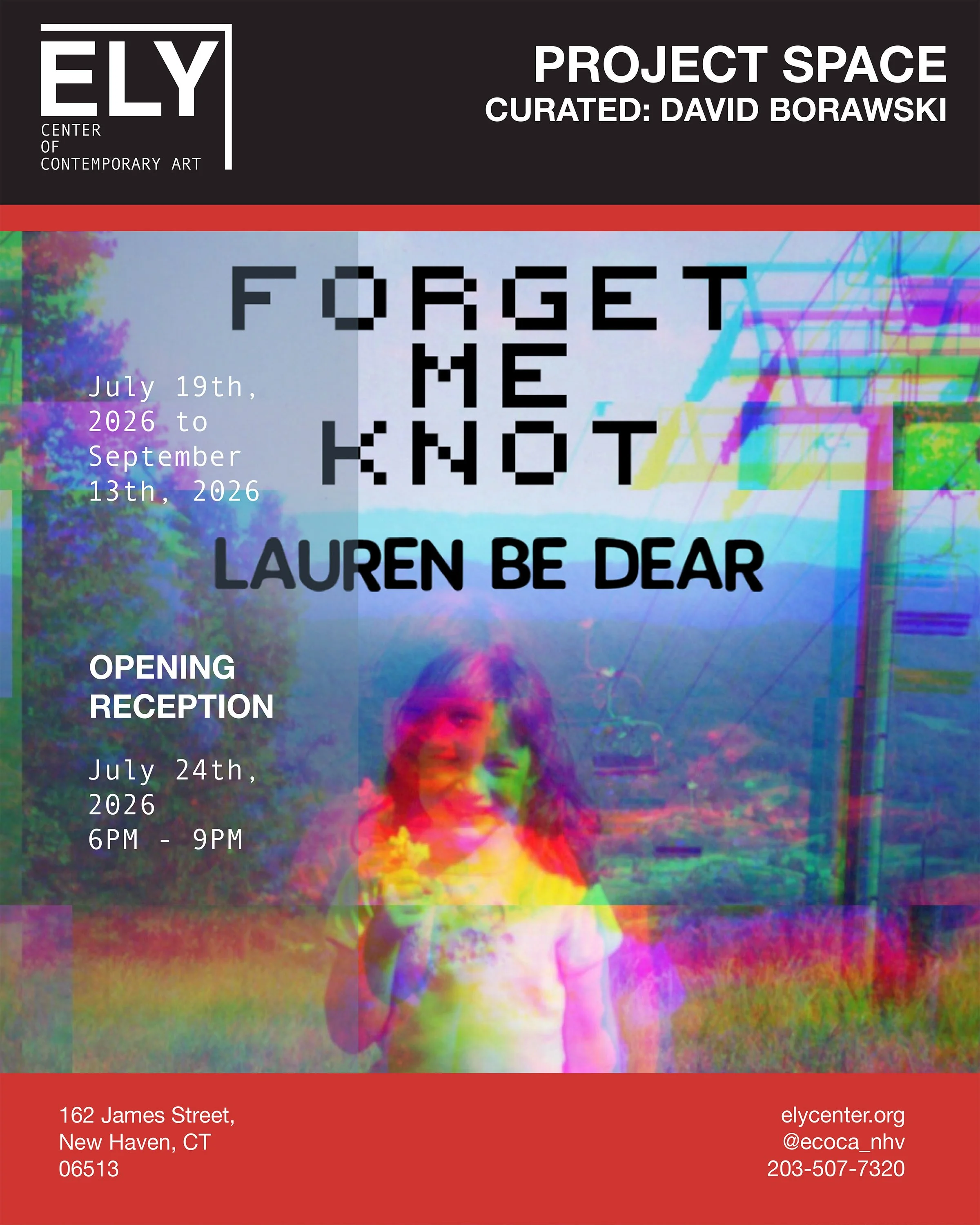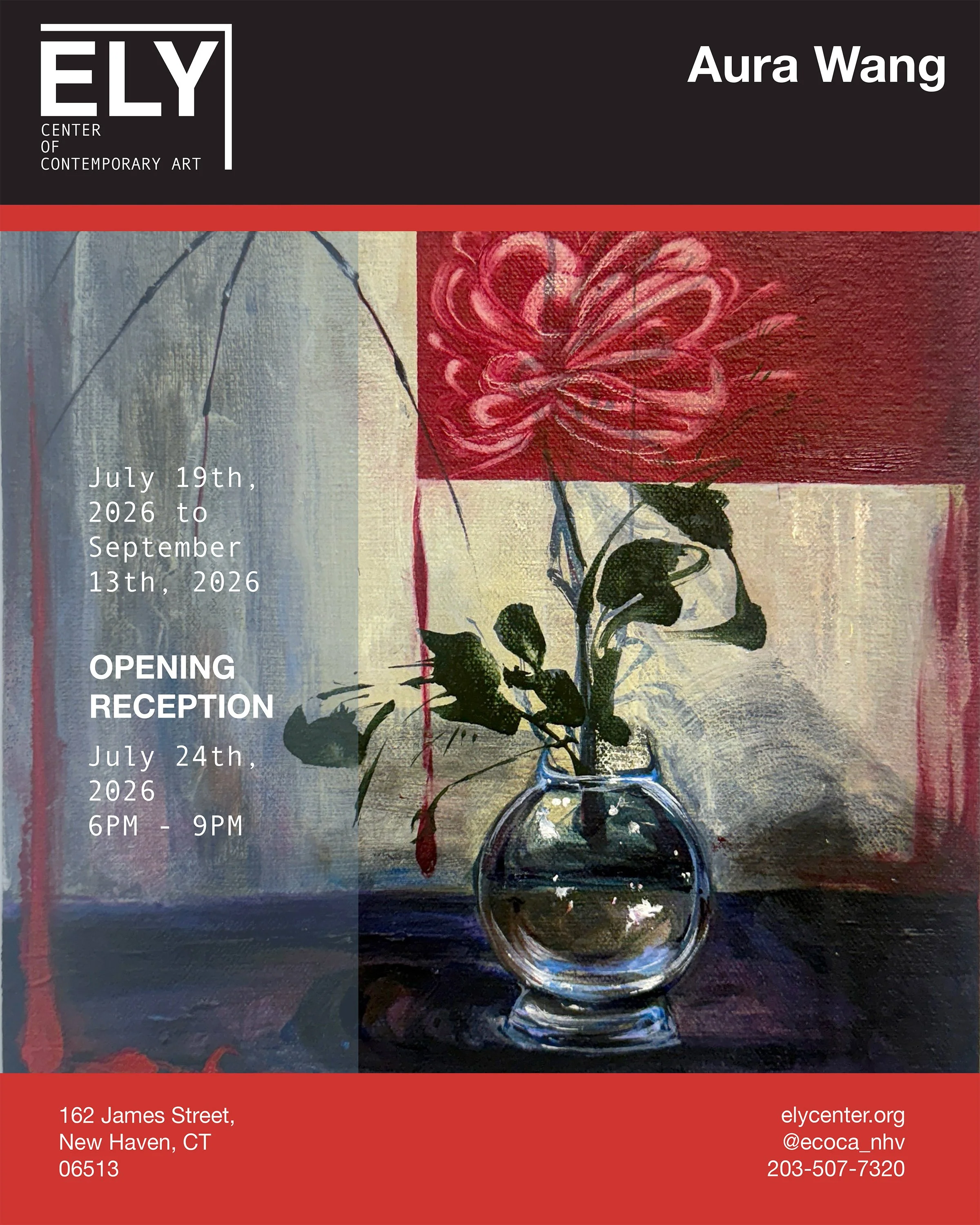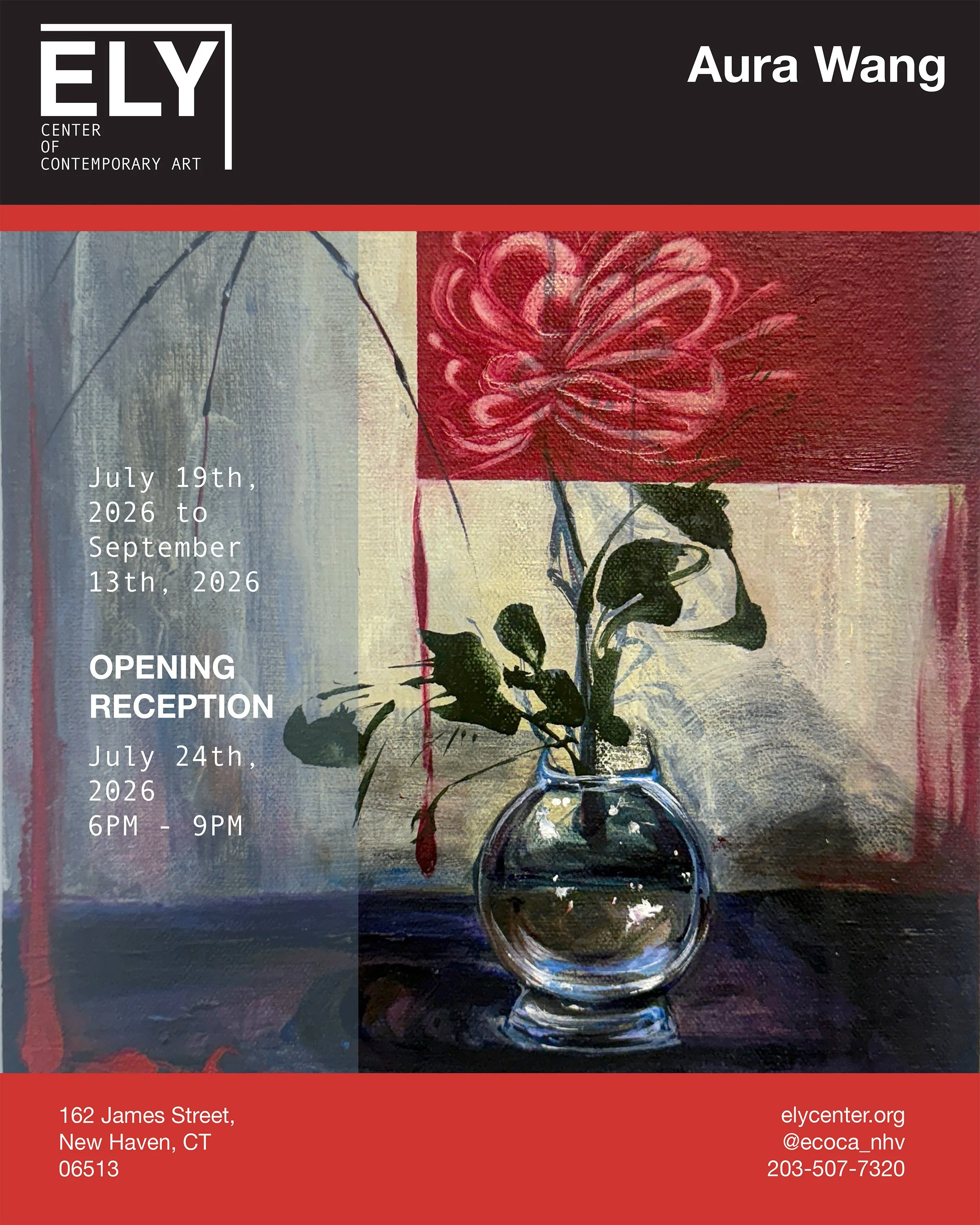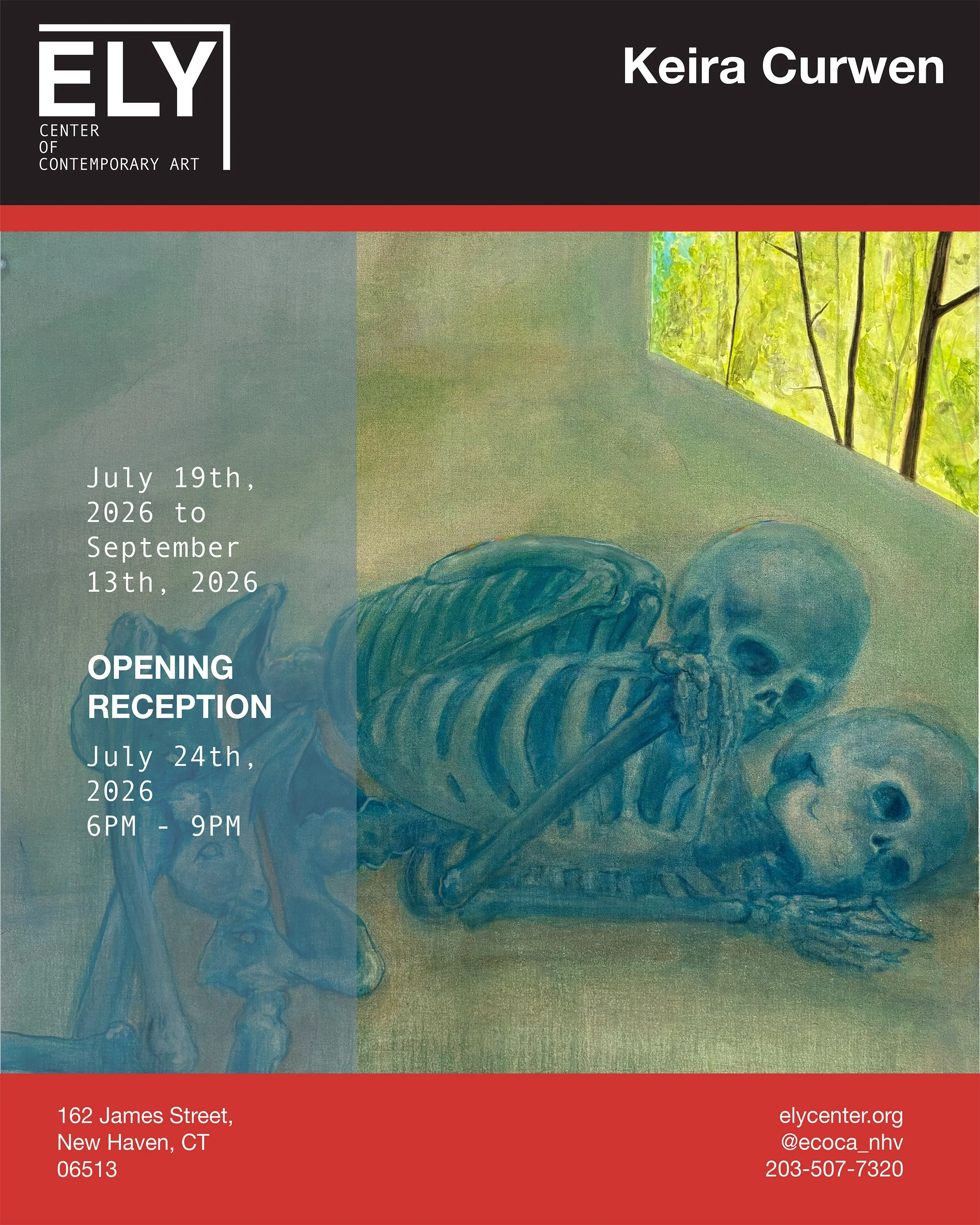
Sep
13
9:00 PM21:00
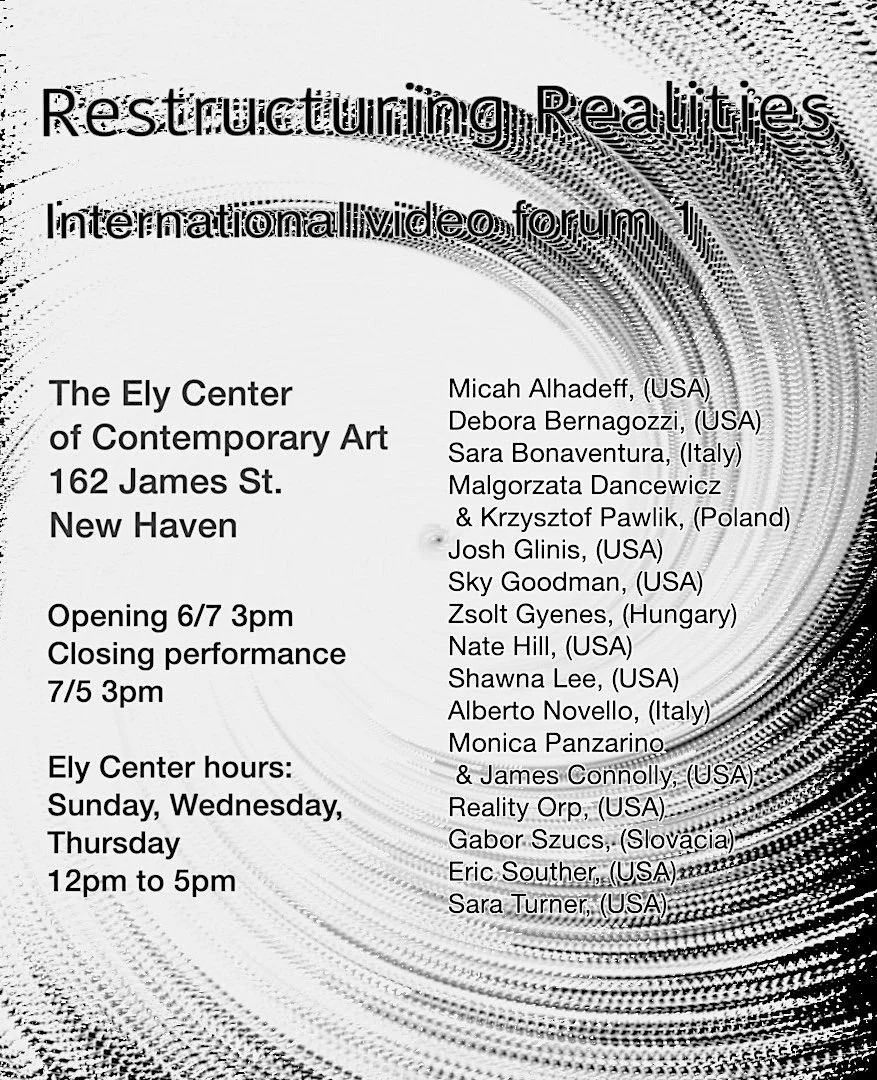
Curated by Kit Young
Exhibition Dates: June 7 - July 5, 2026
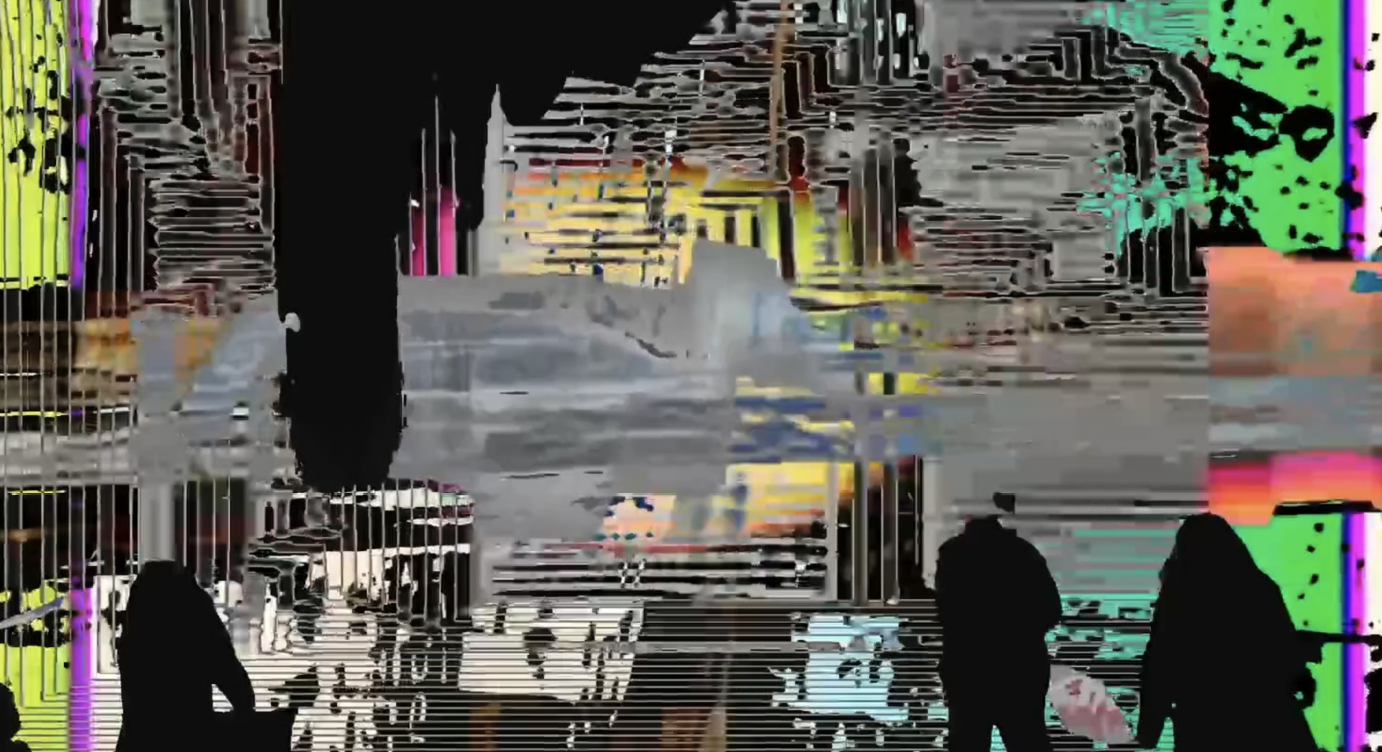
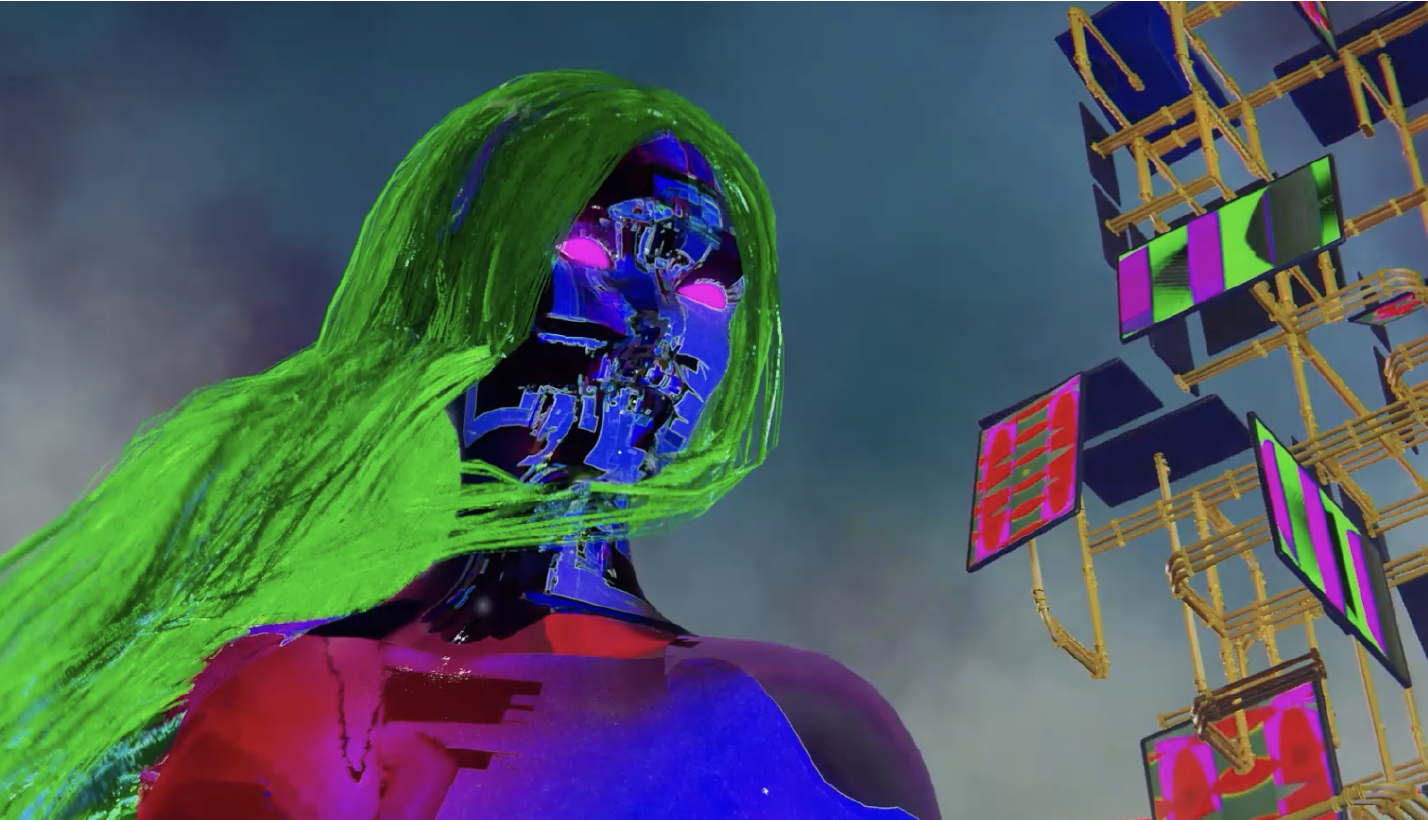
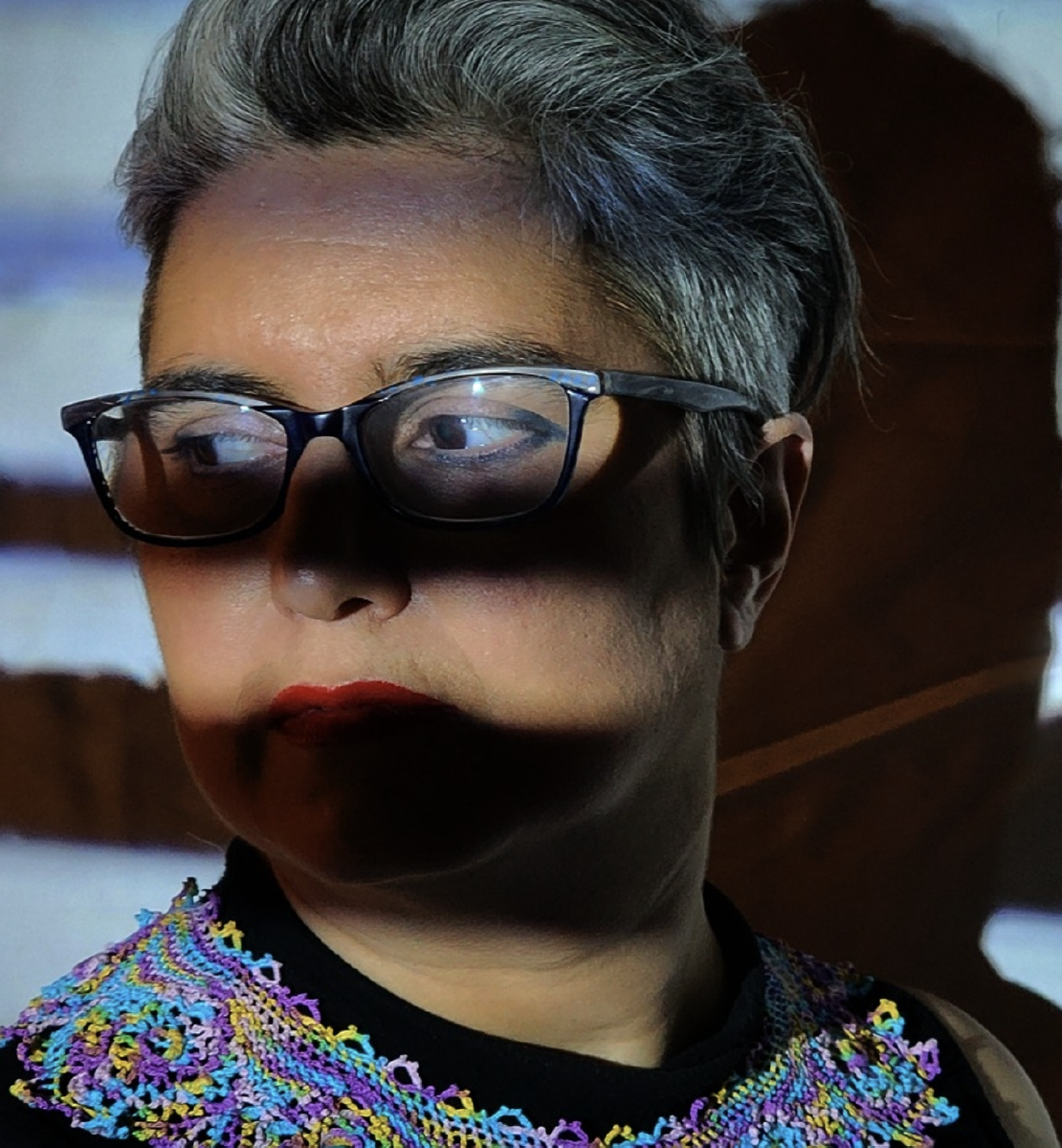
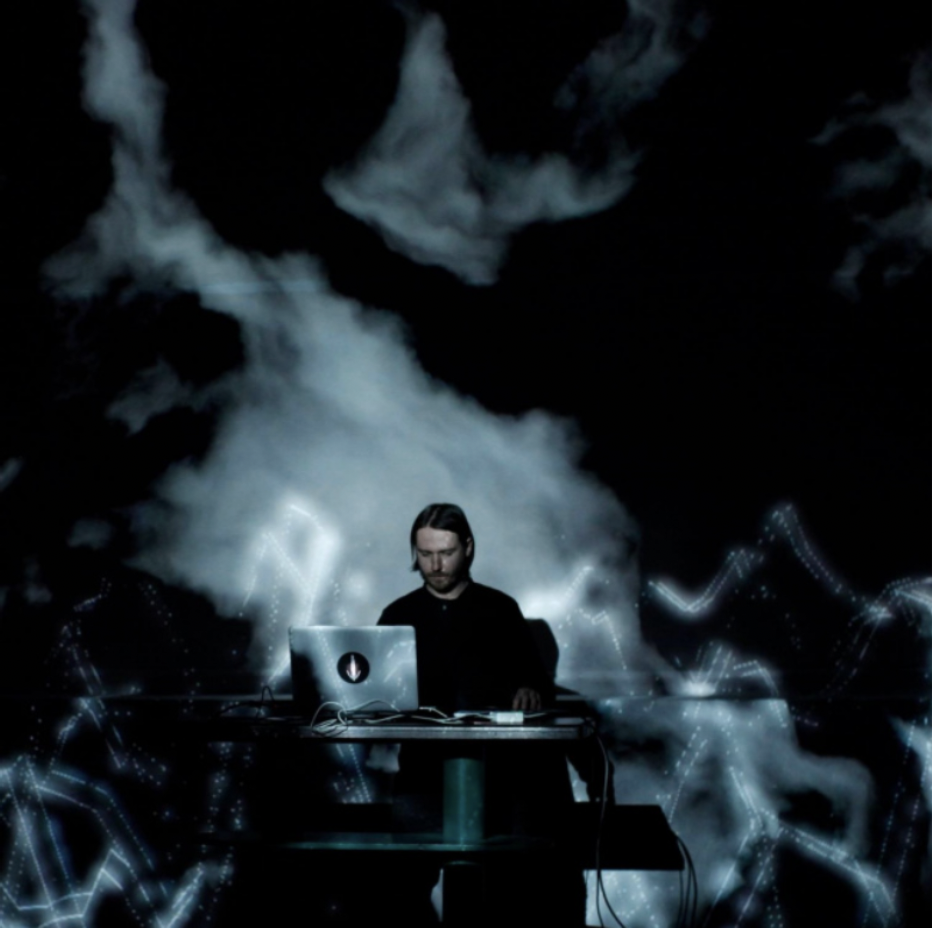
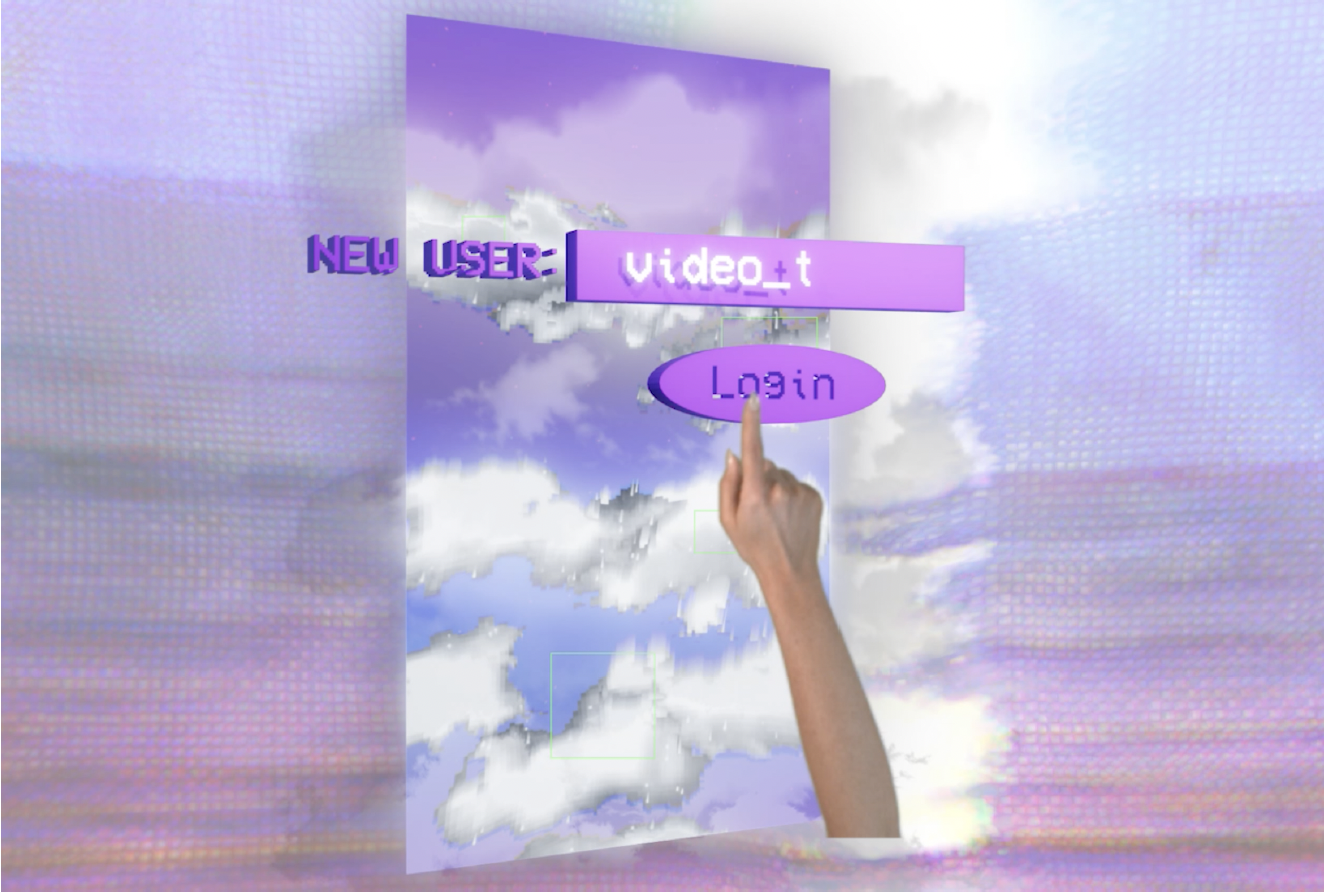
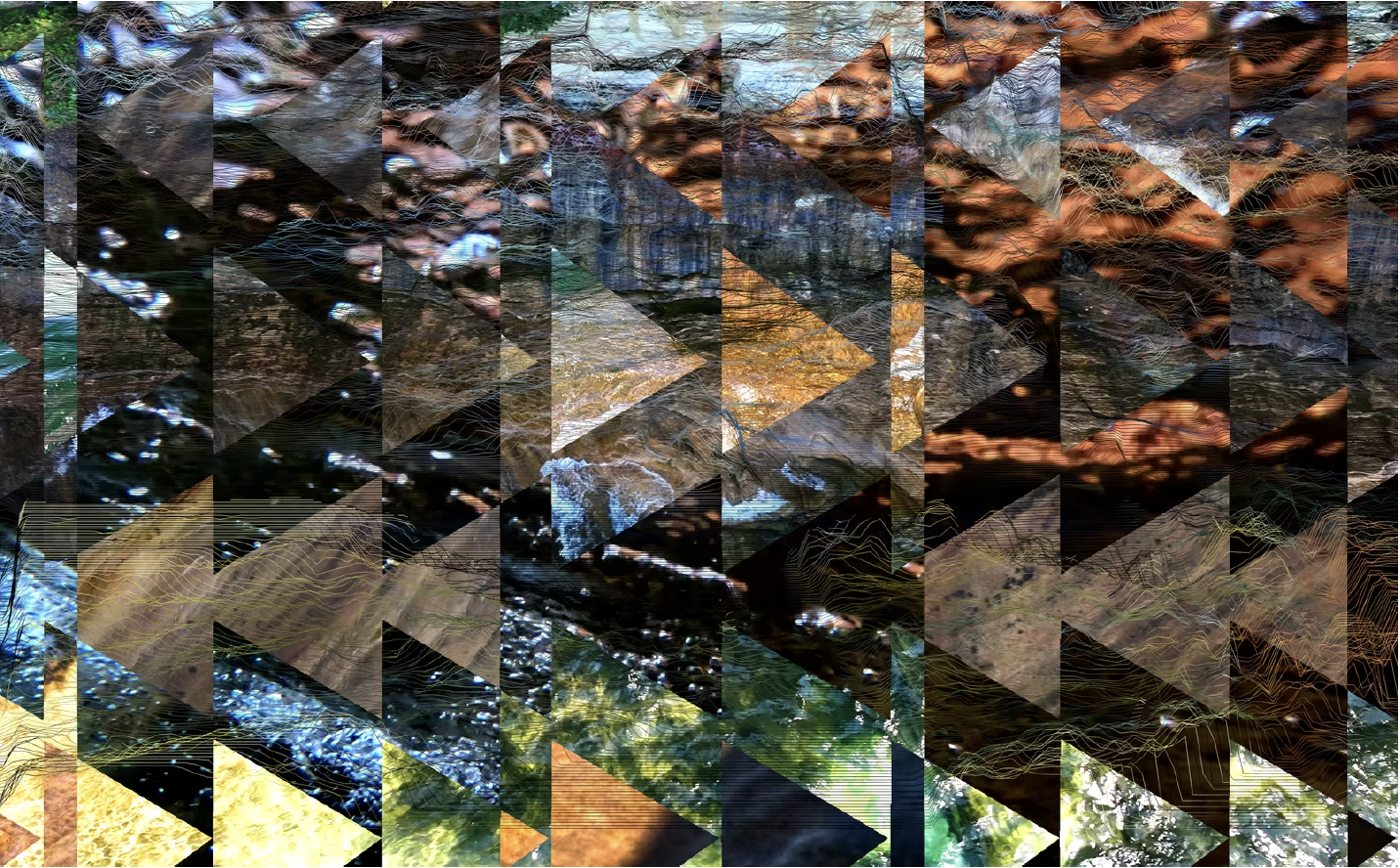
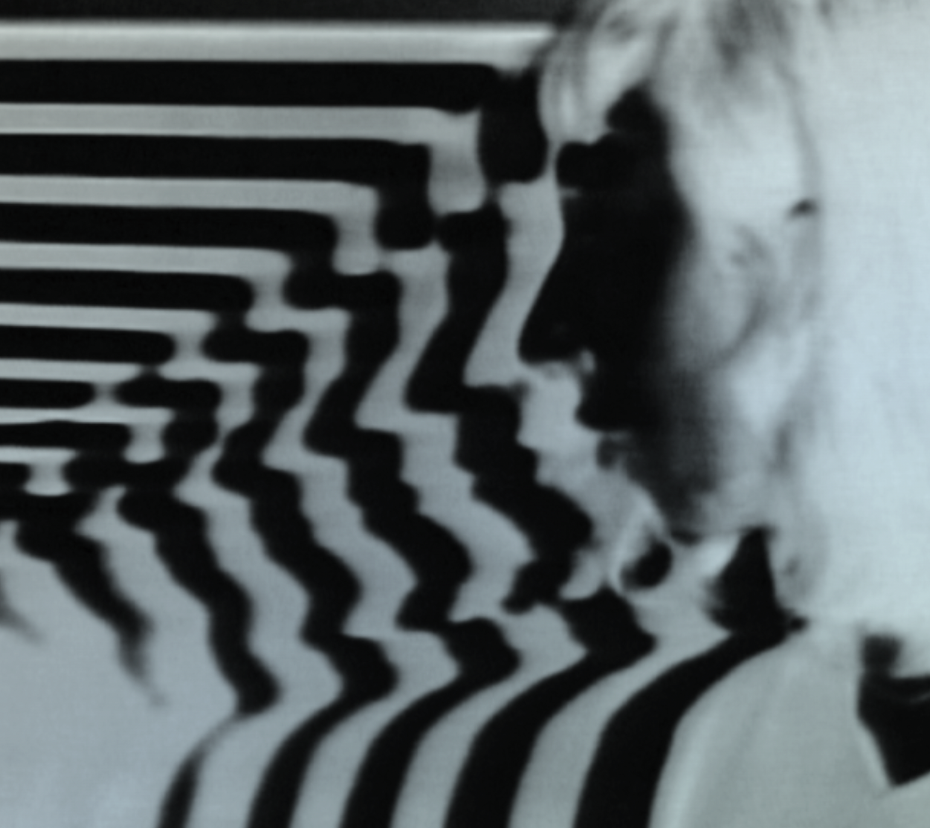
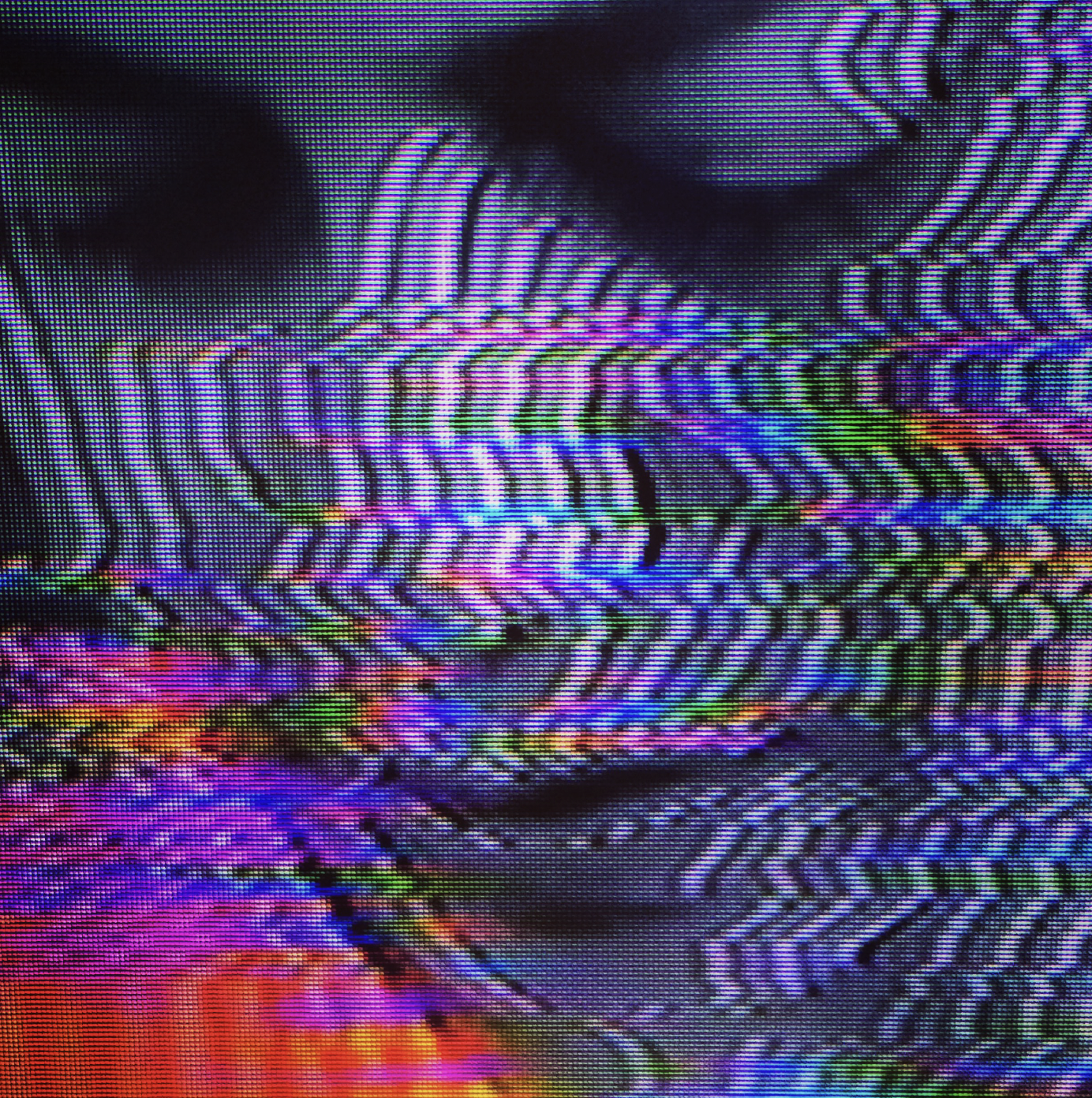
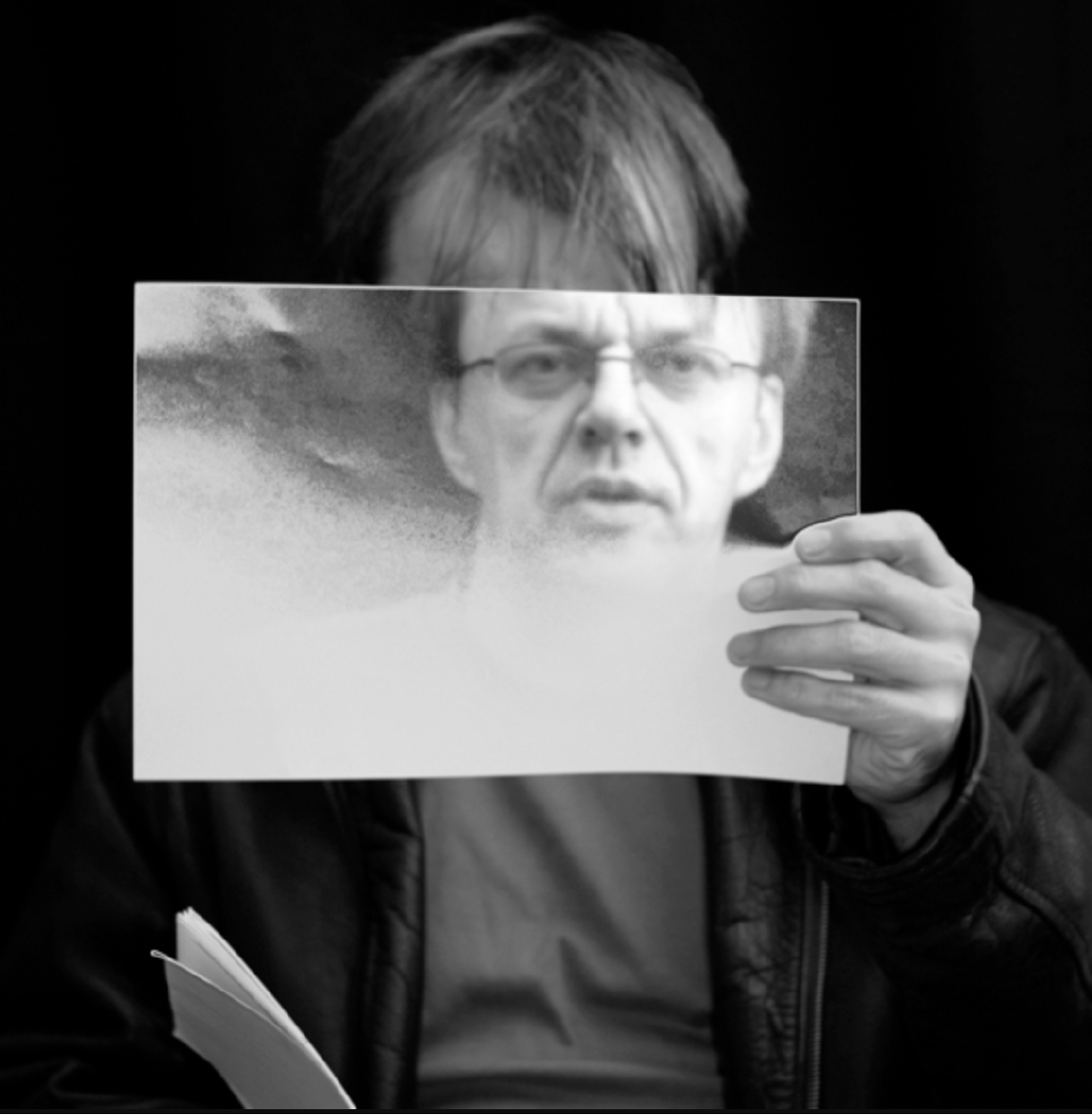
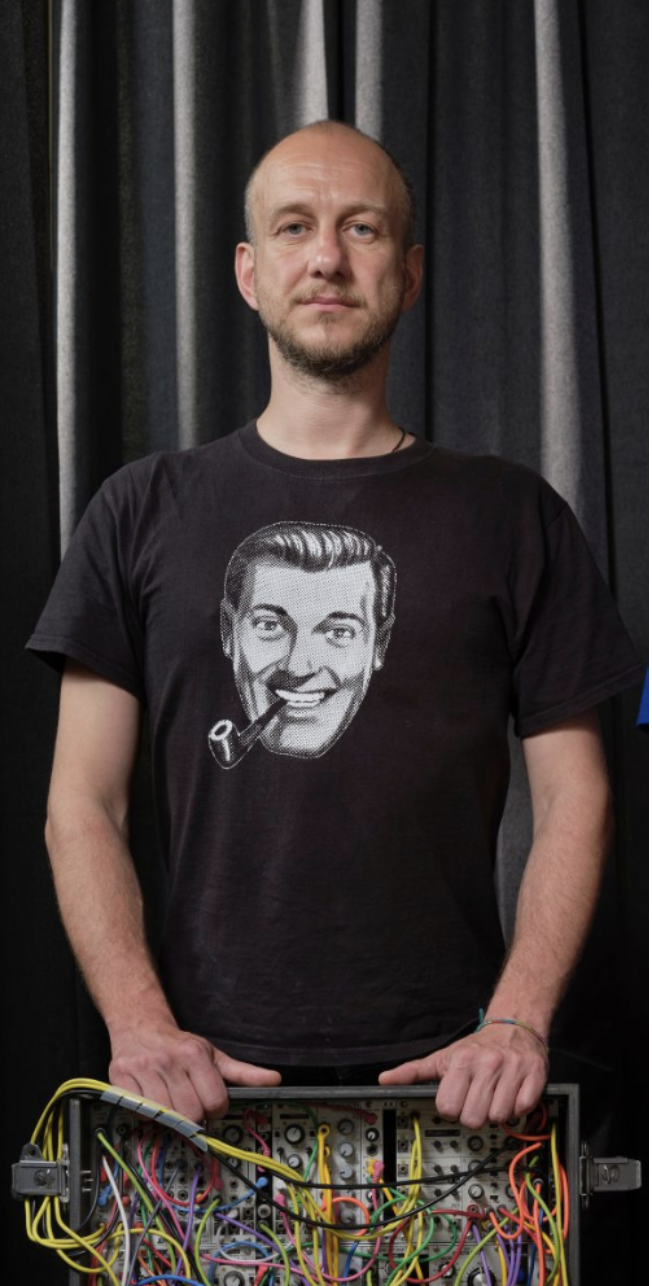
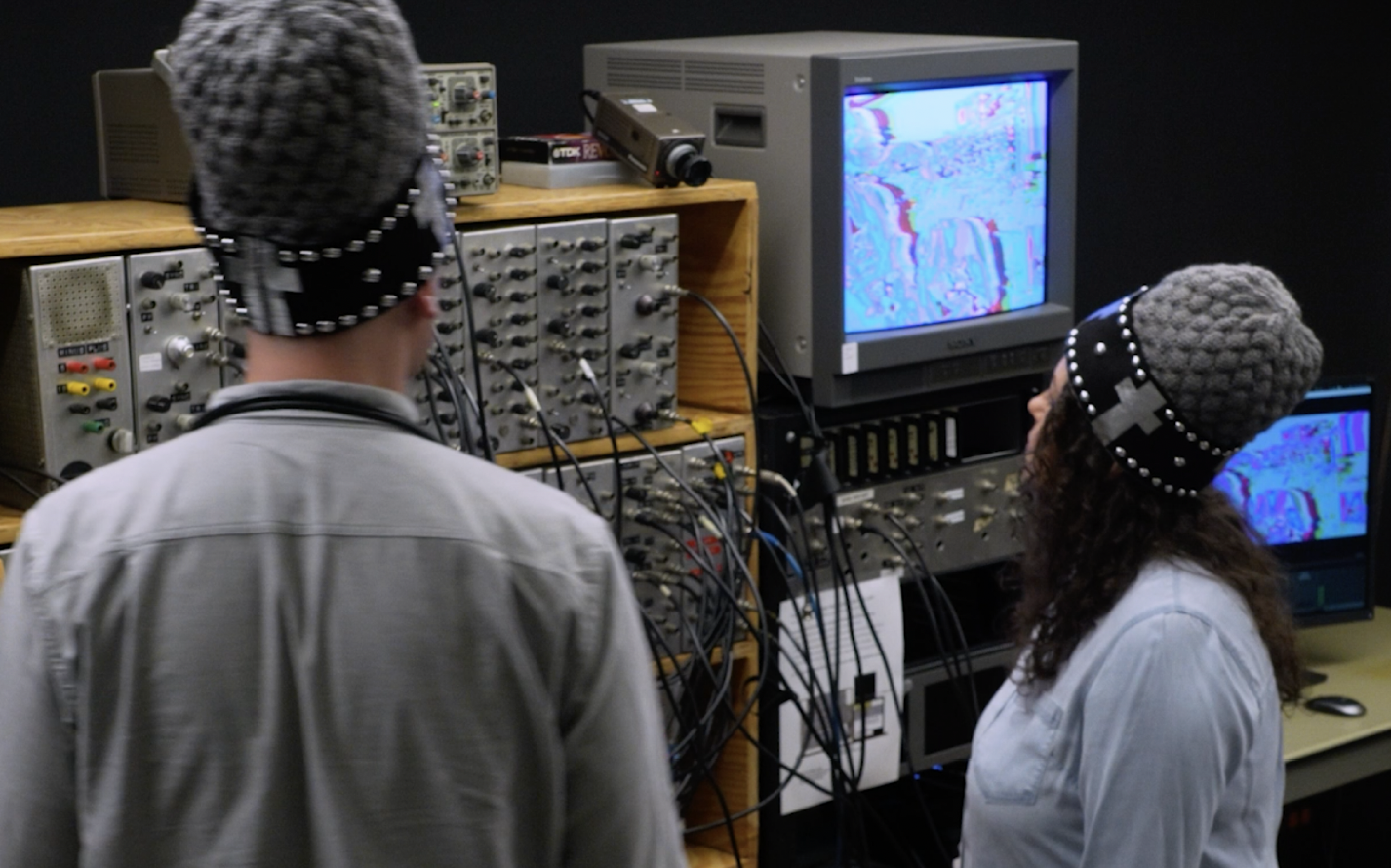
“The proposal I submitted to the Ely Center was simply for an international video forum. But as I begin to consider writing an introduction I realise that the artists I'm inviting have all restructured my reality in different ways. Art can have a profound effect on our behavior. These artists have supplanted normative channels of one directional information with interaction, improvisation, and play. Many use media in a performative way, in immediate dialog with their audience and their machines. The channels of communication they use are different and new, or made of reconstituted media archeology. They are able to circumvent our habitual modes of consumption thereby changing our minds. And when our minds change so does our behavior... So maybe thats the title of show, Restructuring Realities....”
-Kit Young
Exhibition Dates: April 26 - July 5, 2026
Opening Reception: April 26, 1-4pm
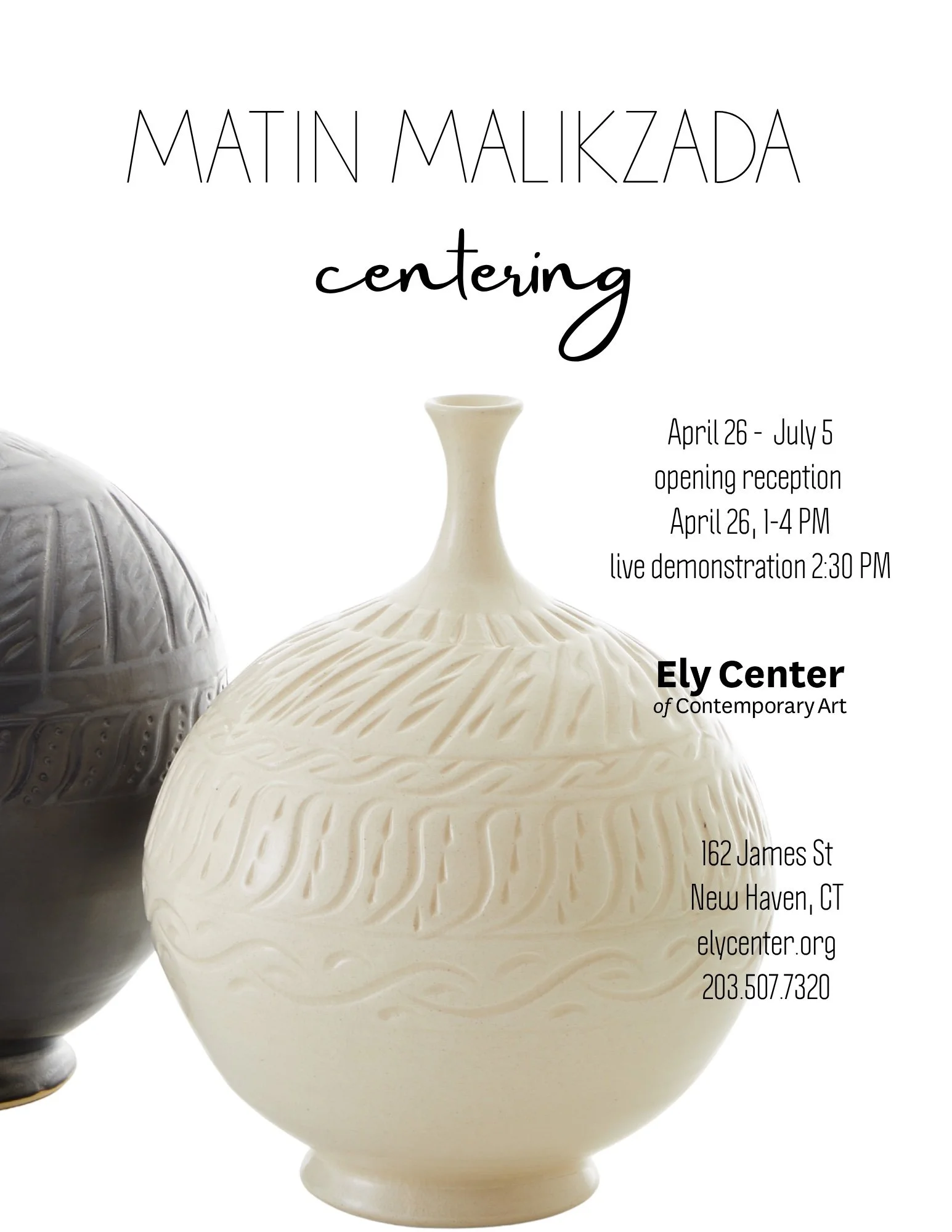
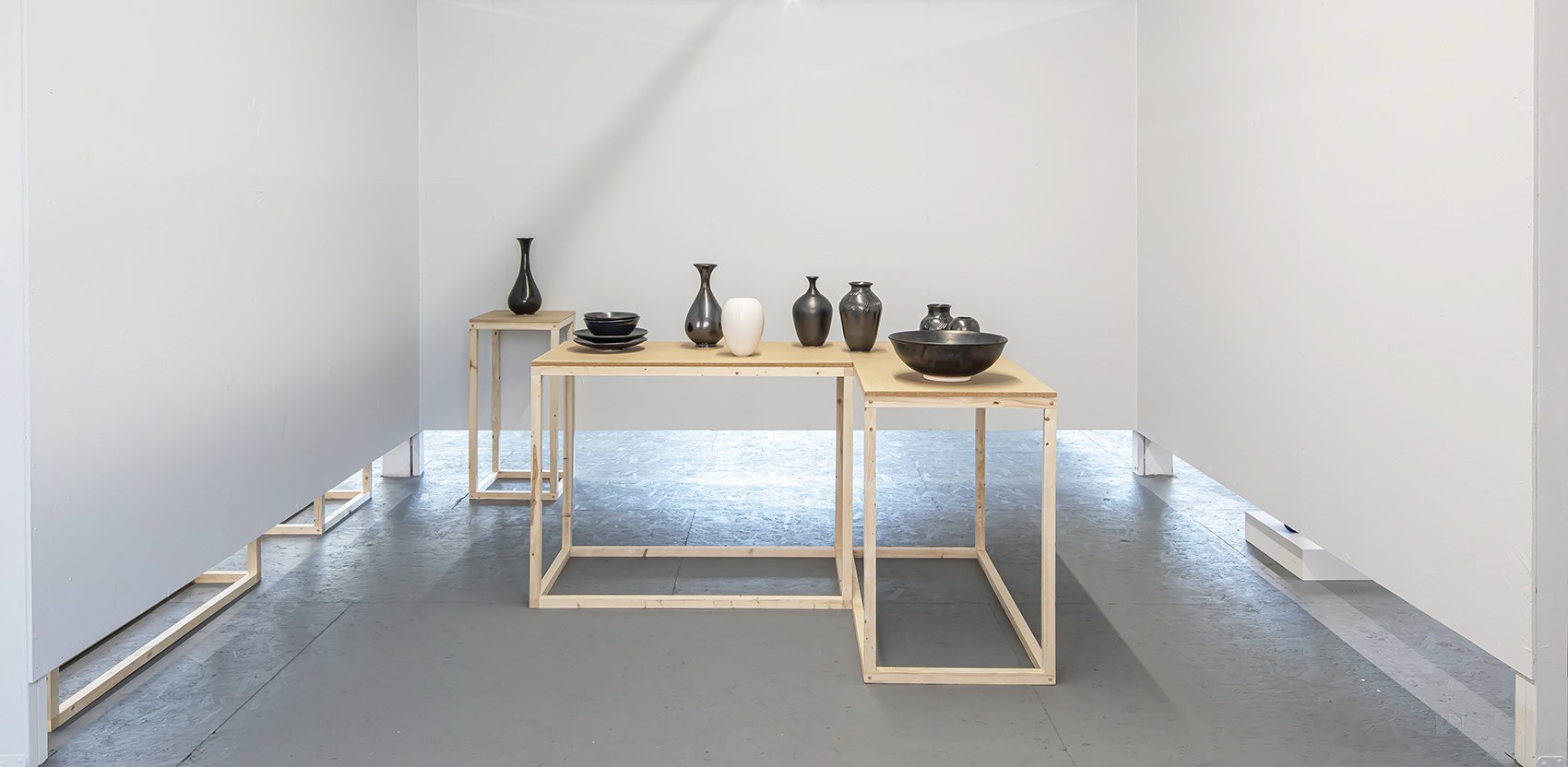
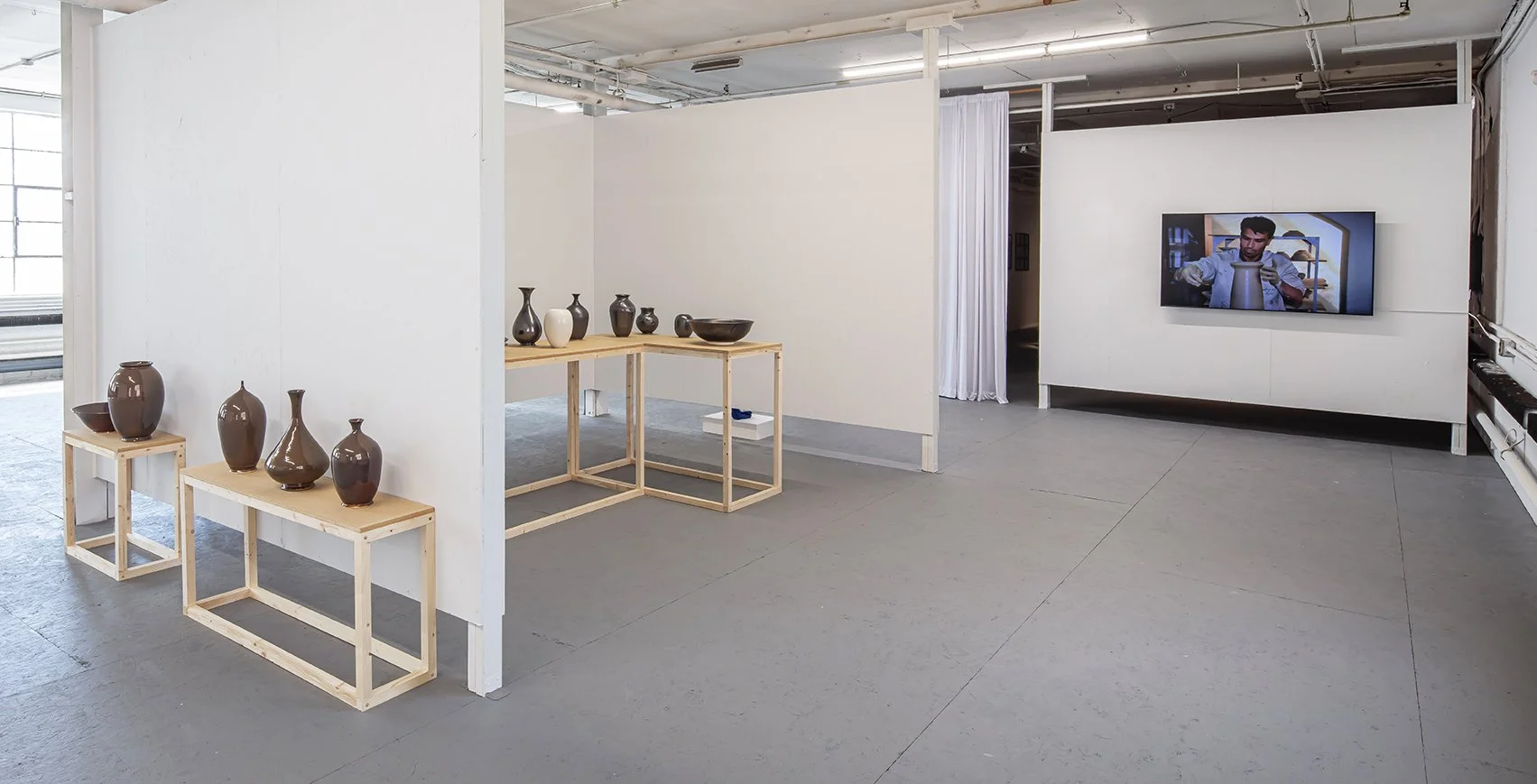
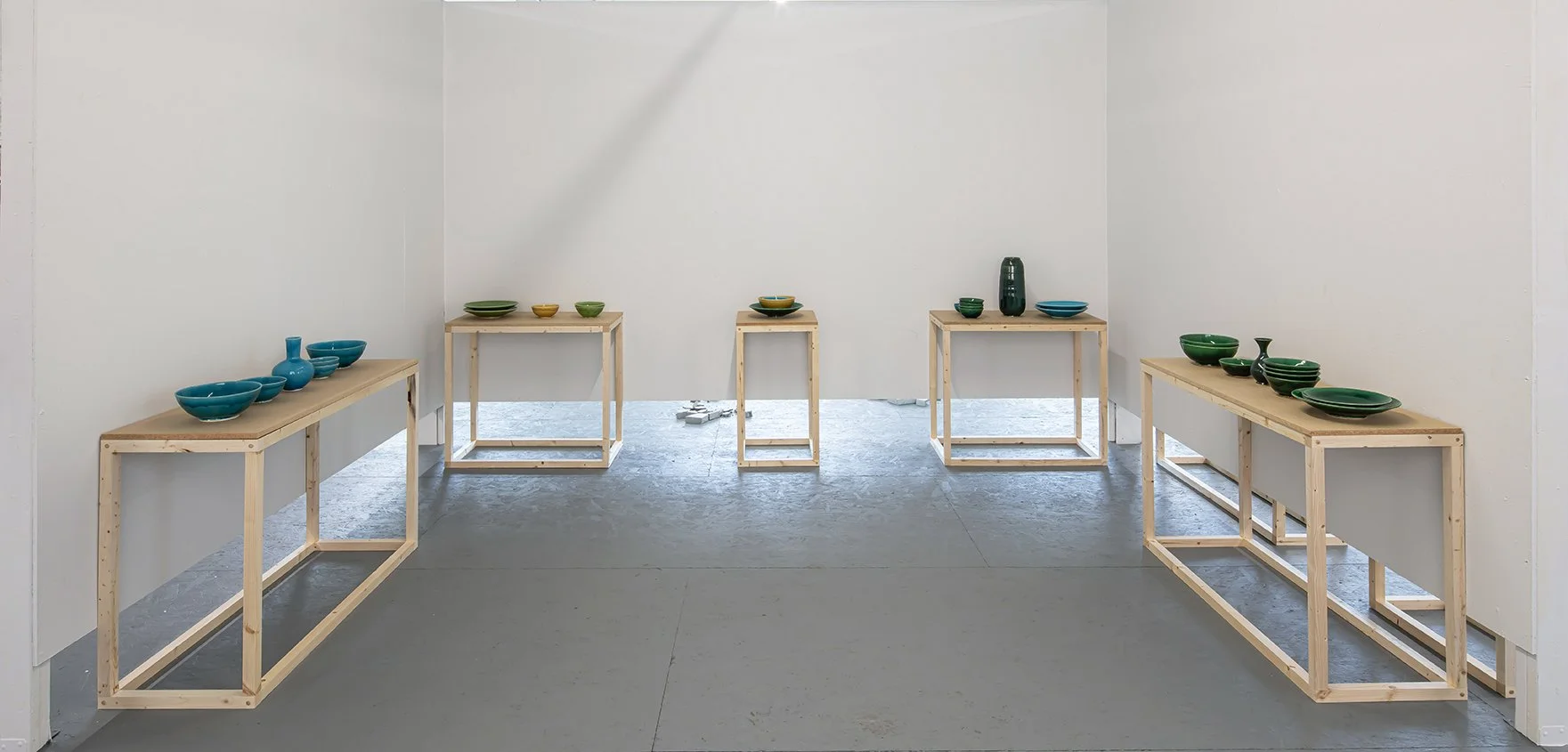
The Ely Center is honored to present Centering, a solo exhibition of work by Afghan master potter Matin Malikzada. A seventh-generation ceramicist from Istalif, Afghanistan, a place long recognized as a historic center of pottery, Malikzada brings a deeply rooted tradition into dialogue with his present life in Connecticut.
Working within a lineage passed down through generations, Malikzada’s practice bridges continuity and adaptation. His vessels, both functional and decorative, are shaped, carved and glazed through processes that reflect centuries of knowledge. This includes a distinctive turquoise hue historically derived from natural materials unique to Istalifi pottery. At the same time his work reflects a contemporary journey marked by displacement and resilience.
In 2021, Malikzada was forced to leave his home, his studio and his teaching position as head of the ceramics department at the Turquoise Mountain Institute. After months of migration he resettled with his family in Northwest Connecticut where he began the complex process of rebuilding both his life and his practice.
The works in this exhibition embody a system of translation, one specifically represented by the hundreds of glaze tests he created in order to rediscover a visual language that could carry his history forward in his new environment. The pottery’s forms maintain a refined symmetry and balance rooted in tradition, but each piece carries what Malikzada describes as both memory and renewal: an unbroken connection to place mixed with the realities of migration and change.
Central to Malikzada’s philosophy is the idea that pottery is not only an art form, but a part of daily life. His vessels are created to be used and shared during times of gathering, from everyday meals to significant celebrations. In this way his work sustains a living tradition, one that continues to evolve through use and community.
The exhibition also features a newly produced film, by Yonah Sedeh, documenting Malikzada’s journey from Istalif to Connecticut and the rebuilding of his practice. The short film offers an intimate view into his process and story; it expands the exhibition beyond simply works on display but highlights the human experience that is embedded in each piece.
An opening reception on Sunday, April 26, 1-4pm will include a live wheel-throwing demonstration at 2:30 pm by Malikzada, providing visitors with a rare opportunity to witness the incredible skill behind his practice. Through this work he offers to the audience not only objects of beauty, but a testament to the endurance of tradition and the possibility of rebuilding through art.
Exhibition Dates: April 26 - July 5, 2026
Opening Reception: April 26, 1-4pm
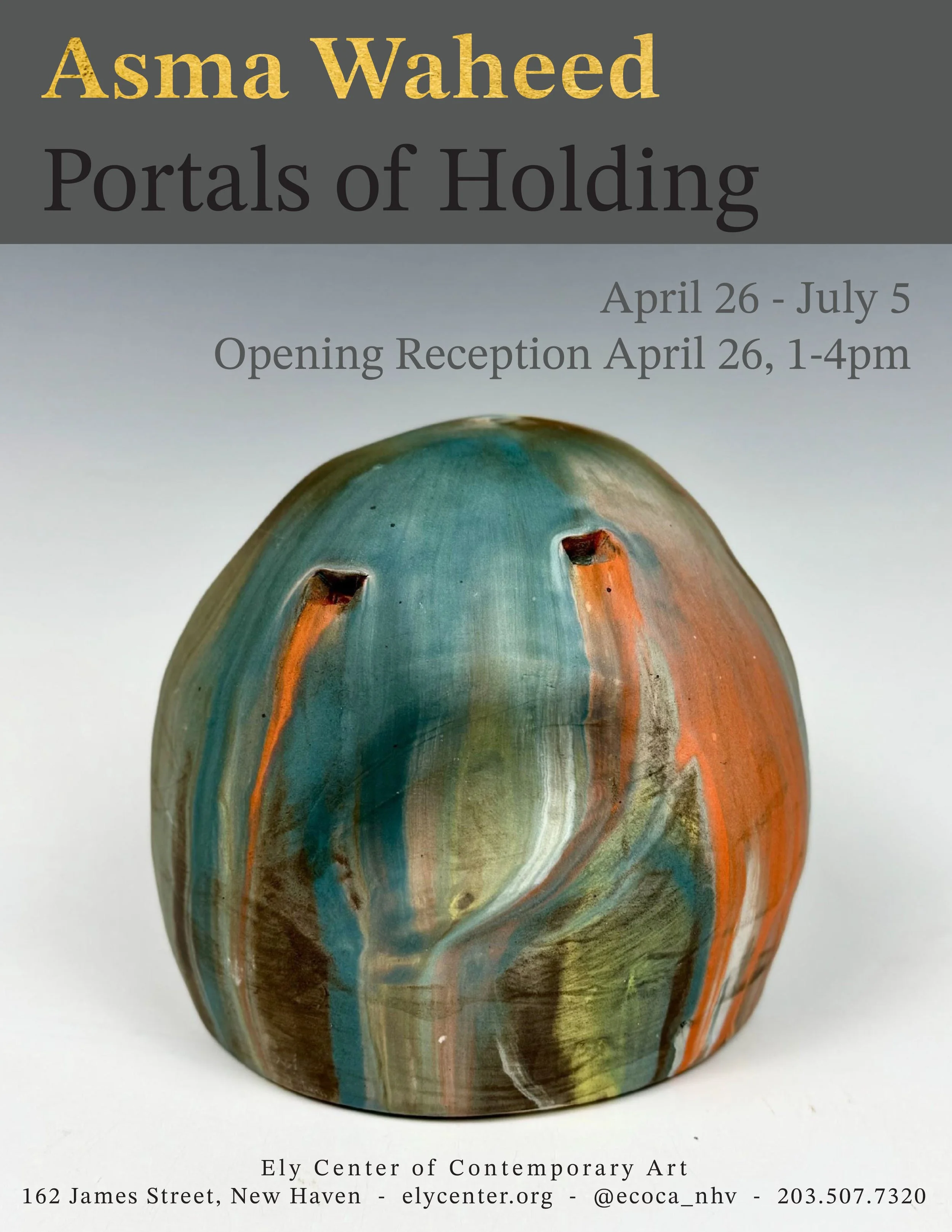
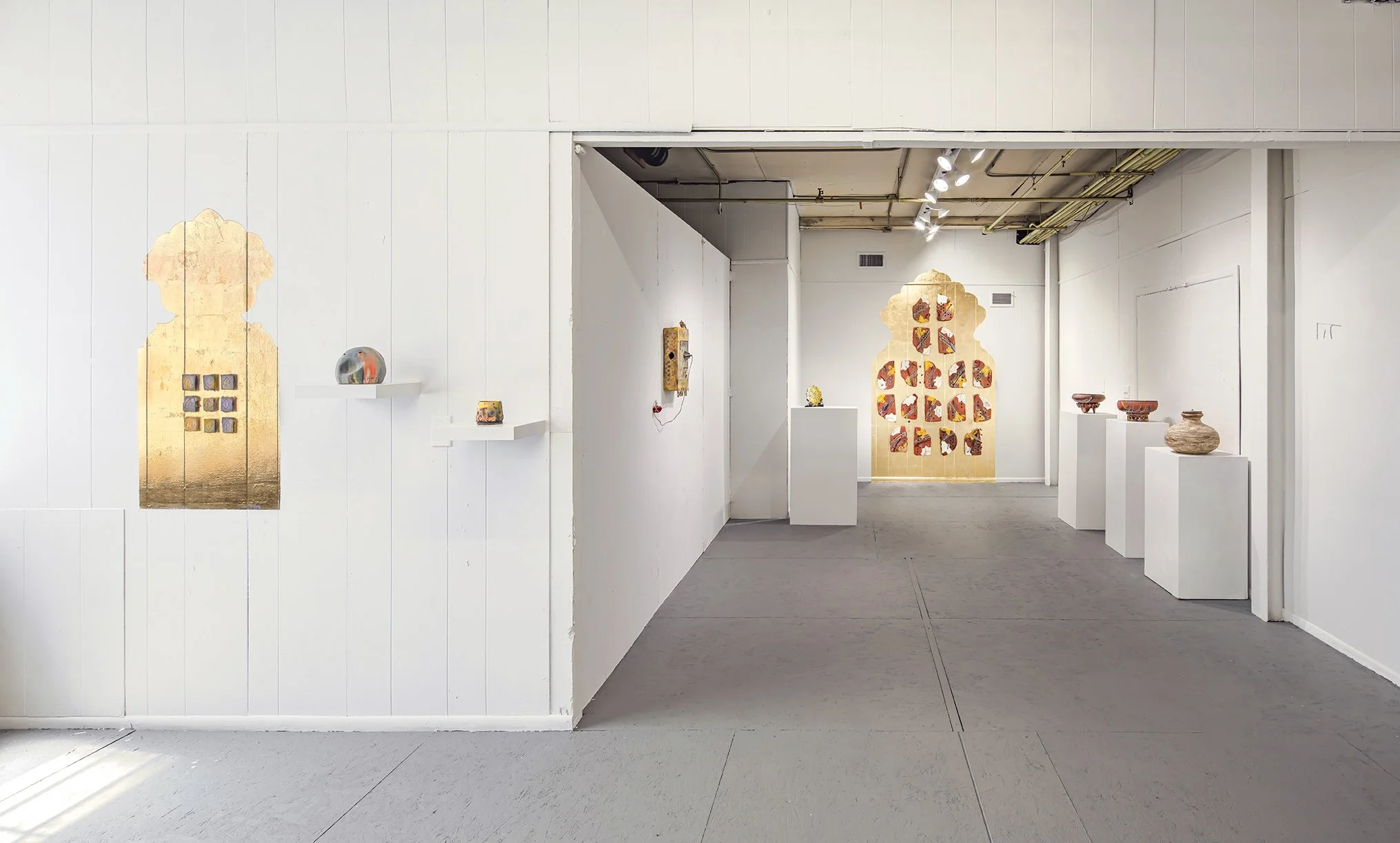
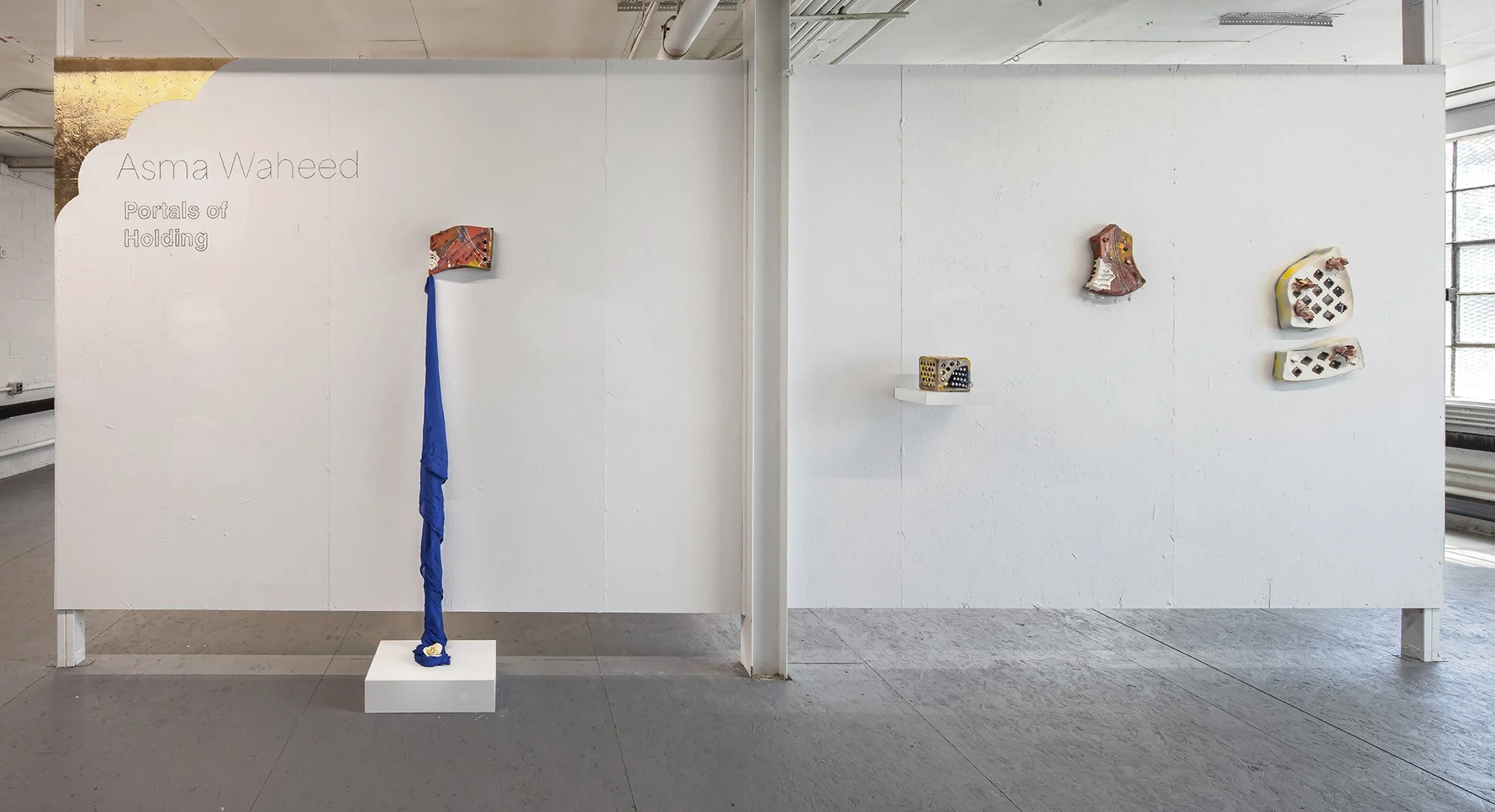
The Ely Center is pleased to present Portals of Holding, a solo exhibition of works by Asma Waheed. Working primarily in clay, Waheed draws from architectural materials and domestic traditions from the Middle East and South Asia and reimagines them through a deeply personal exploration of visibility, privacy, and cultural inheritance.
As a Pakistani Muslim woman, mother and artist living in the United States, Waheed’s practice is shaped by an ongoing conversation between stories revealed and stories held close. Her work balances on this tension, creating forms that both invite and withhold, offering moments of access while keeping moments of protection and intimacy.
Waheed uses perforated screens, draped textiles, and architectural references that allude to systems of boundaries that are physical, cultural and also psychological. Light filters through punctured surfaces, playful glazes make your eyes dance along surfaces, and fabric that could be flowing on a person is still, tethered to the wall and protected by a pedestal. What emerges is a dynamic interplay between exposure and concealment, where meaning is never fully given but is hinted at in fragments.
Central to Waheed’s practice are her ceramic vessels. These works draw on the universal rituals in domestic life: the table, the cup and the act of gathering. These vessels become sites for connection. Her use of patterns and surface treatment give these objects their layered histories allowing them to function as personal objects and carriers of a broader cultural memory.
Waheed is currently earning her MFA at MICA, but has also studied with Iranian ceramic masters. Rather than seeking to preserve tradition in a static form, her work activates it and allows for her inherited visual languages to shift, expand and speak to her contemporary experience. Waheed’s practice embraces the oppositions of softness vs strength, visibility vs holding and tradition vs transformation.
Please join us on Sunday, April 26, 1-4pm for the opening reception for Portals of Holding at 162 James Street in New Haven, CT.
Asma Waheed is a multidisciplinary artist with Pakistani roots, based in Ellicott City, Maryland, where she balances her creative practice with her role as a mother of four. Her work explores themes of identity, heritage, and self-expression, shaped by the complexities of diaspora and the everyday realities of motherhood.
Asma holds a Bachelor's degree in Education from West Virginia University and later pursued her passion for ceramics by earning a Master’s degree from Hood College, Maryland. She is currently an MFA candidate in Studio Art at the Maryland Institute College of Art (MICA). Her dedication to her Art practice has been recognized through numerous awards, including the prestigious Leslie King Hammond Graduate Fellowship from MICA, the Windgate University Fellowship from the Arrowmont School of Arts and Crafts, and the NCECA Graduate Fellowship Award. She also serves as the Student Director-at-Large for the National Council on Education for the Ceramic Arts (NCECA), where she advocates for student and contributes to the broader ceramics community.
Exhibition Dates: April 26 - July 5, 2026
Opening Reception: April 26, 1-4pm
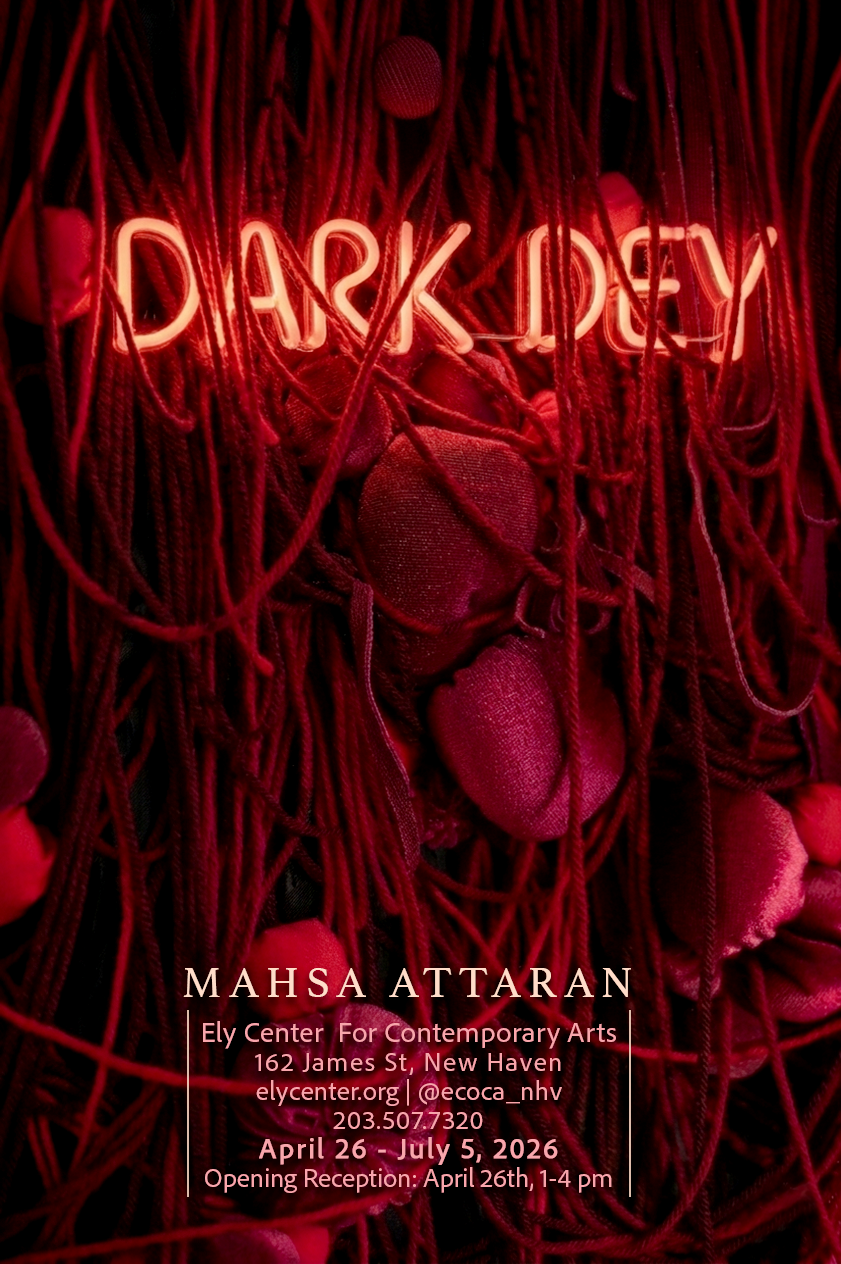
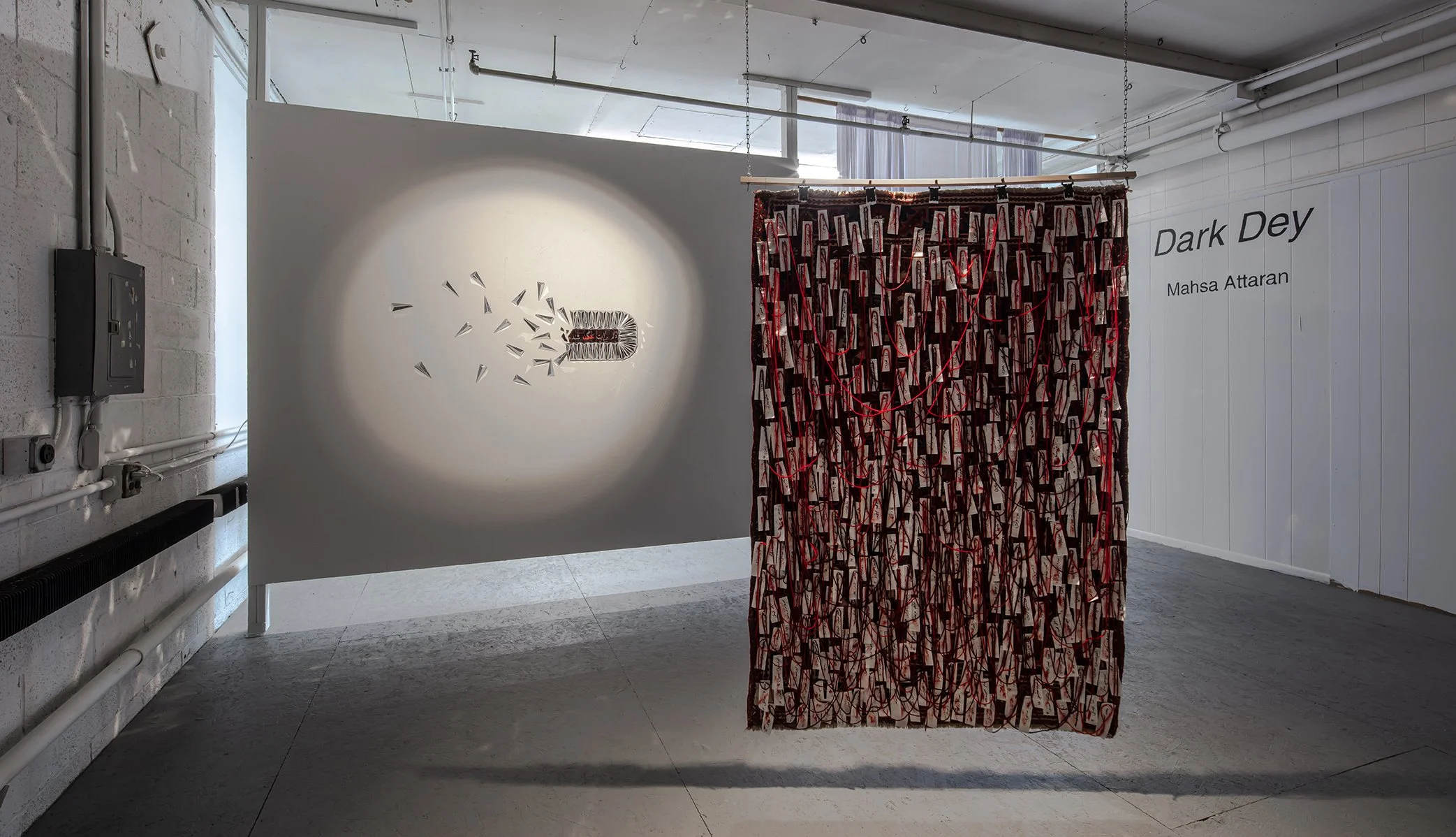
DARK DEY emerges from love for Iran and the urgency of witnessing its present history. Created in exile, Mahsa Attaran’s work responds to ongoing state violence, gendered oppression, and the massacre of over 50,000 civilians across two days—DEY 18th and 19th (January 8–9, 2026)—during the continuing revolution. It stands as both testimony and refusal of silence.
Working from a distance, Attaran positions herself as both witness and subject, tracing how this violence is carried across borders and into the body. Her work reflects the condition of diaspora of living a daily, outwardly ordinary life while remaining internally bound to a homeland in crisis. The experience of teaching, working, and moving through professional space exists alongside an ongoing awareness of loss, where the weight of what is happening to loved ones is continuously present, though often unseen.
Attaran’s practice centers women’s lives, domestic space, and acts of care as sites of political meaning. Her work confronts violence sustained through patriarchal power, religious authoritarianism, and the laws of an extreme Islamist regime, while holding space for the resilience of those living within it.
Addressing particularly Western audiences, the work calls attention to life under state-enforced Sharia law, where rights are known yet systematically denied. Rejecting ideology, it insists instead on lived experience and the ongoing pursuit of dignity, safety, and self-determination.
Rooted in devotion to her homeland and its people, this work is an act of love. It asks viewers to witness, to remain with discomfort, and to recognize that this violence is not distant, but ongoing.
Mahsa Attaran is an Iranian-born visual artist, photographer, and educator whose work explores culture, gender, and belonging through memory, exile, and domestic archives. Working across photography, video, installation, and conceptual wearables, she often uses the archive to preserve and reframe women’s histories. Her work has been exhibited internationally, including at the Iranian Artists Forum in Tehran, Ball & Socket Arts in Cheshire, TheatreWorks in Hartford, and The Sue & Eugene Mercy Jr. Gallery in Windsor, and has been featured in publications such as Hyperallergic and Midbrow.
As an Iranian woman in exile, Attaran is committed to witnessing and refusing silence in the face of political violence and human rights abuses. She also leads workshops and talks that encourage critical engagement with social justice, memory, and responsibility. Attaran holds an MFA in Studio Art from the University of Connecticut and teaches on the Visual Arts faculty at The Loomis Chaffee School.
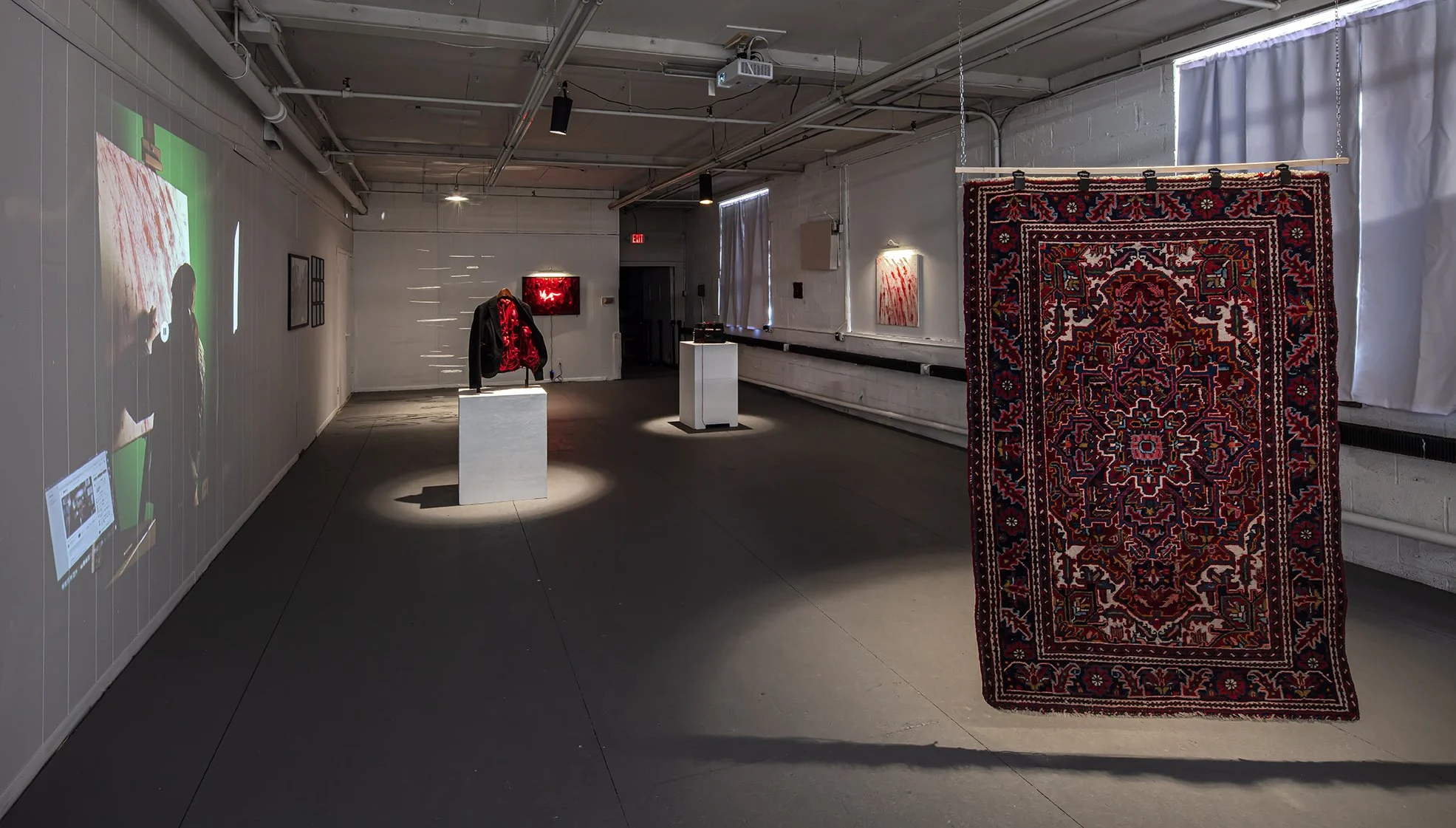
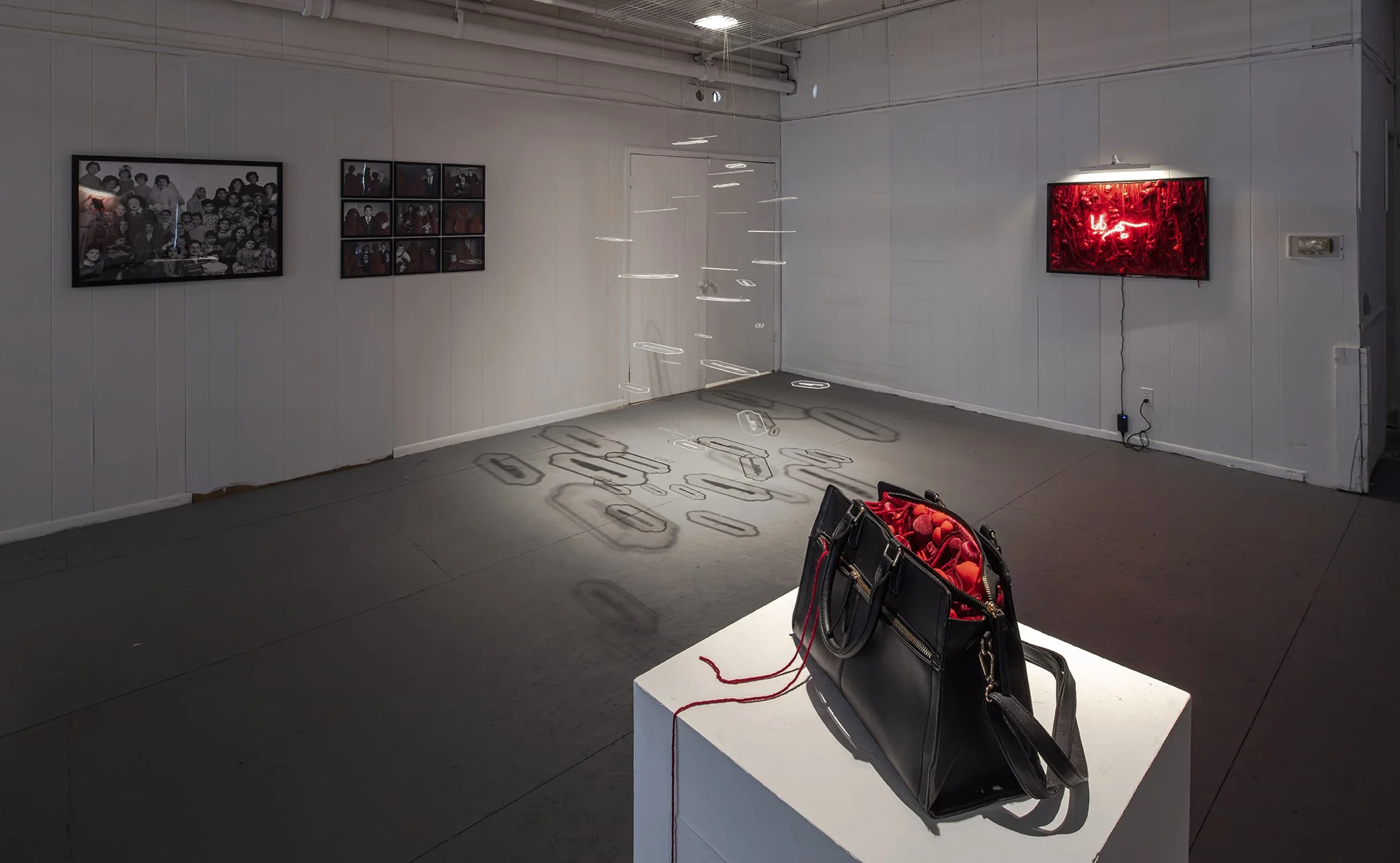
Curated by Maria Markham
Exhibition Dates: April 26 - July 5, 2026
Opening Reception: April 26, 1-4pm
Panel Talk: Date TBD
why and why and why
should i call a white man brother?
who is the human in this place,
the thing that is dragged or the dragger?
-Lucille Clifton, jasper texas 1998
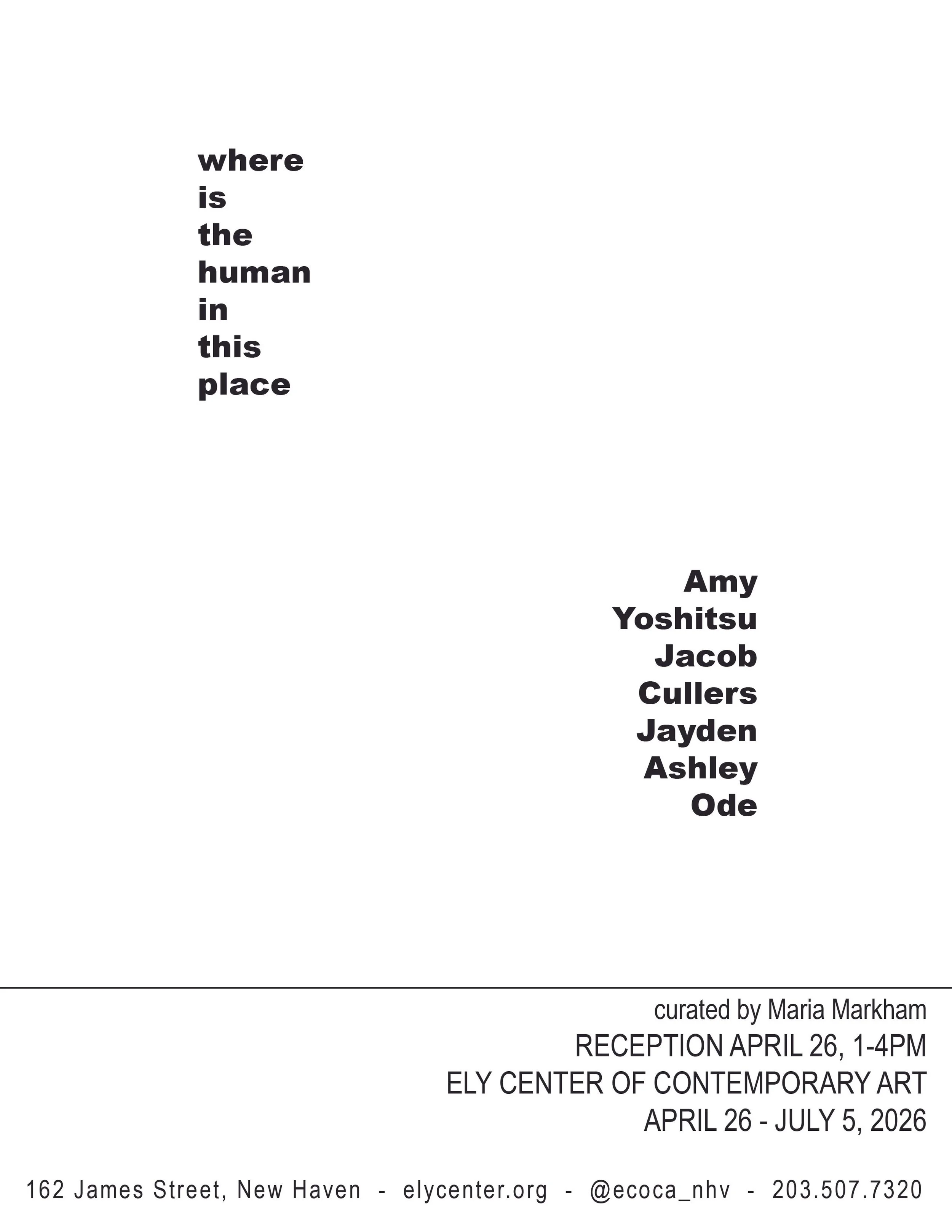
The Ely Center is pleased to announce the group show where is the human in this place, curated by Maria Markham. The title of this exhibit is adapted from Lucille Clifton’s searing poem, jasper texas 1998.* Clifton gives voice to James Byrd in this poem highlighting the horrendous act perpetrated on a black man by white people. Clifton’s powerful condemnation and poetic rendering of Byrd’s humanity grounds the visual work presented in where is the human in this place?. This exhibit opens a discussion around the structures and systems that continue and reinforce racism and other inequities deeply wound within societies.
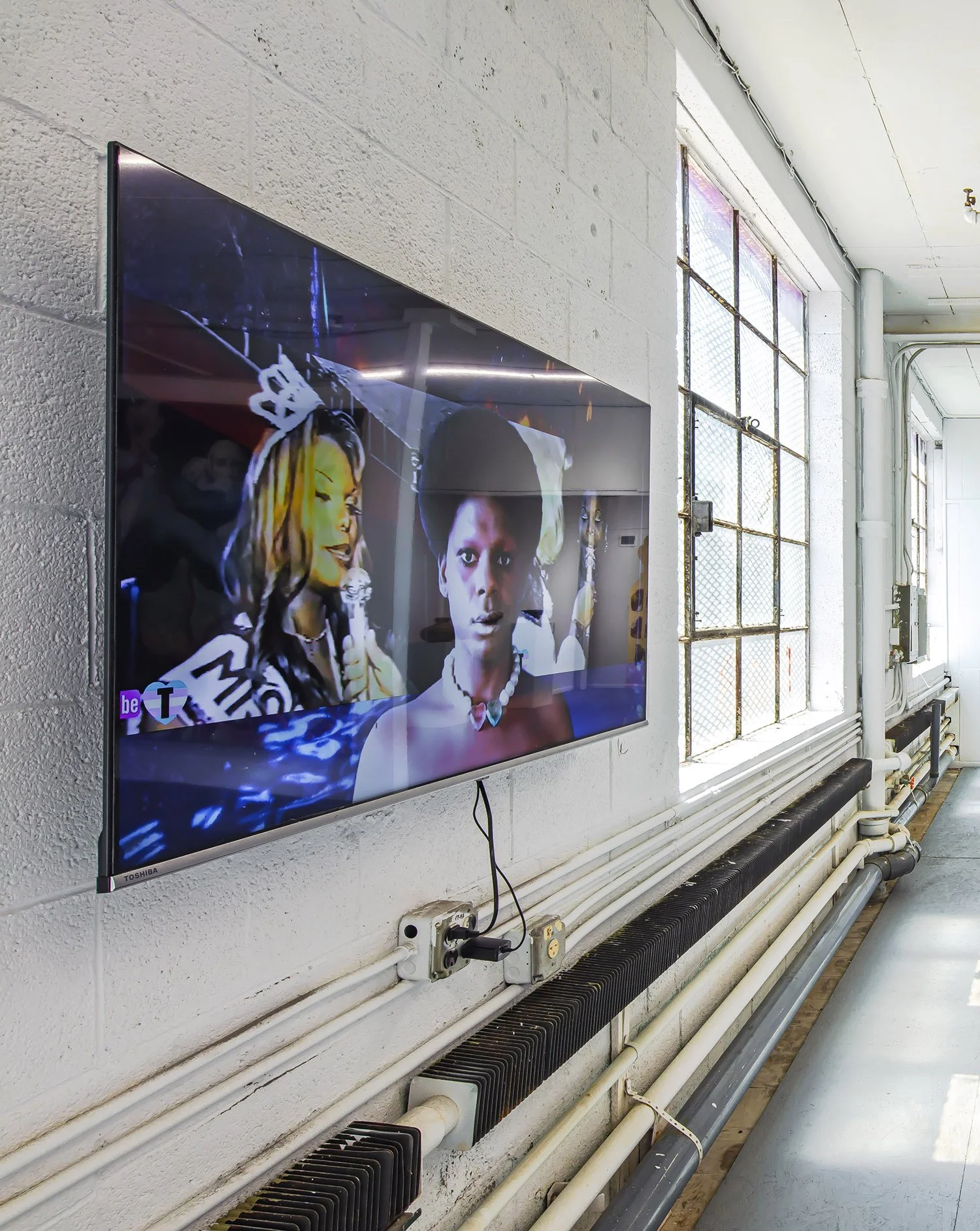
In where is the human in this place, artists Amy Yoshitsu, Jacob Cullers, Jayden Ashley and Ode explore these infrastructures that perpetrate daily violences and inequities against people who differ from the dominant culture, including people of color, poor, and trans people.
Amy Yoshitsu focuses on deconstructing the interconnections between power, economics, labor, and race. Return and Schedule Self-Interest derives from Yoshitu’s own experience and examines how the tax system “perpetuates the black and white ‘logic’ and poles of our society.” Yoshitu notes that the 1040 tax form that workers in America are required to file has built in prejudices that reinforce long-standing hierarchies.
Jayden Ashley explores zoning laws relating to redlining to highlight how institutional policies and structures are a source of sustained and continued systemic violence against Black communities. For this exhibit, using legislative and cartographic sources, Ashley researched redlined geographies in New Haven creating sculptures from concrete that echo the erasures of Black people and their communities, channel absences as a result of these enactments, and questions borders.
In The Man, Jacob Cullers unapologetically highlights the violence of the white male hierarchical power structures in the U.S. In this work, the “Man” is a grotesque abstraction that disgorges intestines from its mouth. On the left, a mask resembling those worn by the Klu Klux Klan receives the intestine signaling the white male supremacy that is embedded within the system. In the background, the monumental faces of the Mount Rushmore Presidents George Washington and Thomas Jefferson locate the viewer squarely within the American political system.
In her video, Travecacceleration, Ode examines how the logic of capitalism and cisgender capitalism impacts trans people, specifically travesti in Brazil. According to Ode, the video showcases how the “cisheteropatriarcal…puts black people and, overall, travestis in a position that does not allow us to claim our own images, enunciations, and epistemologies.” Through video montage, she reinforces how black people and travesti are defined within the system and how they are specifically absent from rapid growth in capitalism and its underpinnings including technology.
The works in where is the human in this place respond to questions of humanity and as echoed in Clifton’s poem the lack of it. They show the invisible and visible systems and structures that deliberately exclude, perpetuate violence, and impact vulnerable people’s lives with tragic certitude. The exhibition will be on view from Sunday, April 26 through Sunday, July 5. Please join us for the opening on Sunday, April 26, 1-4pm.
-Maria Markham
*Written for James Byrd, Jr. who was gruesomely lynched in Texas on June 7, 1998, the original line from the poem is “who is the human in this place.”
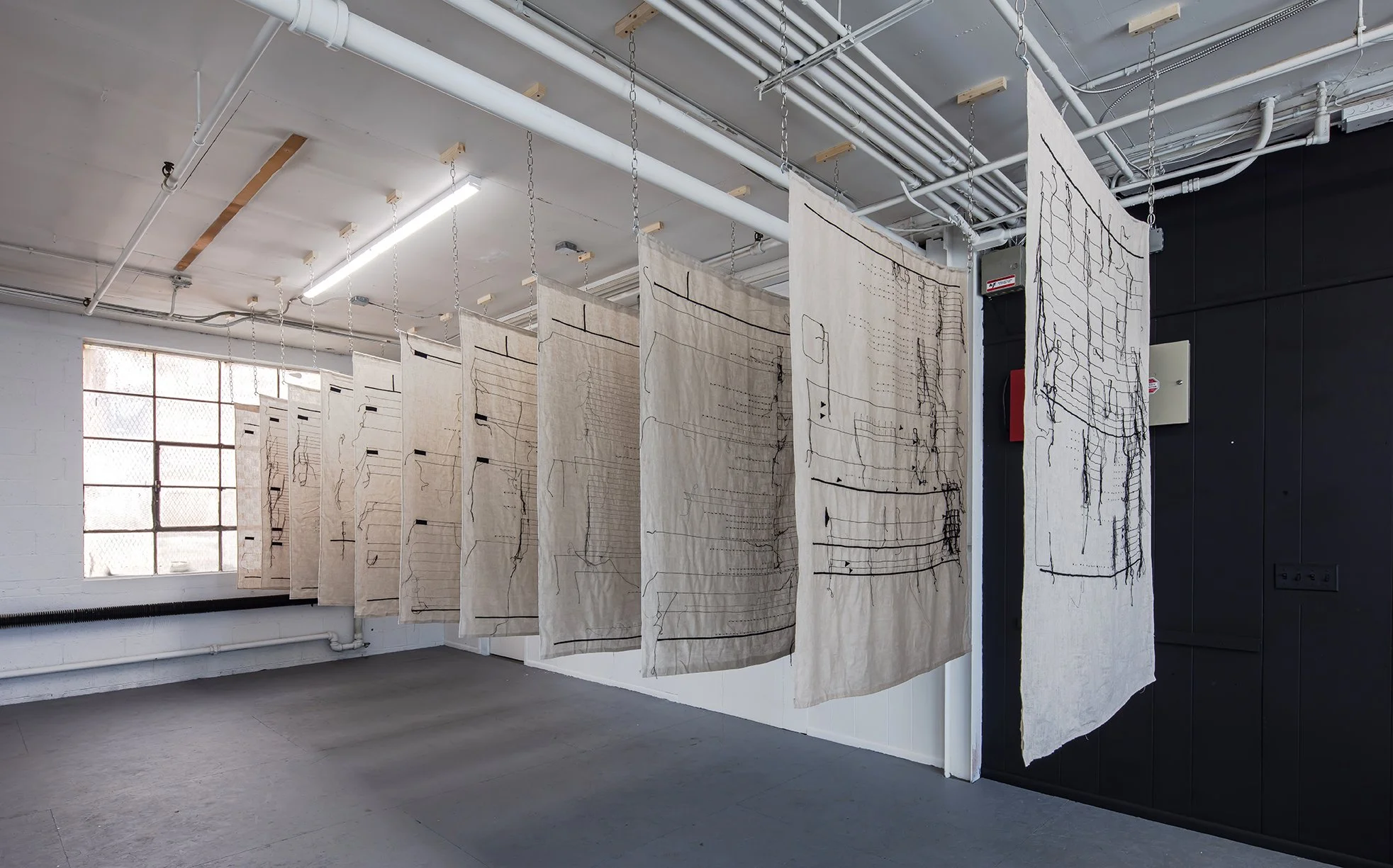
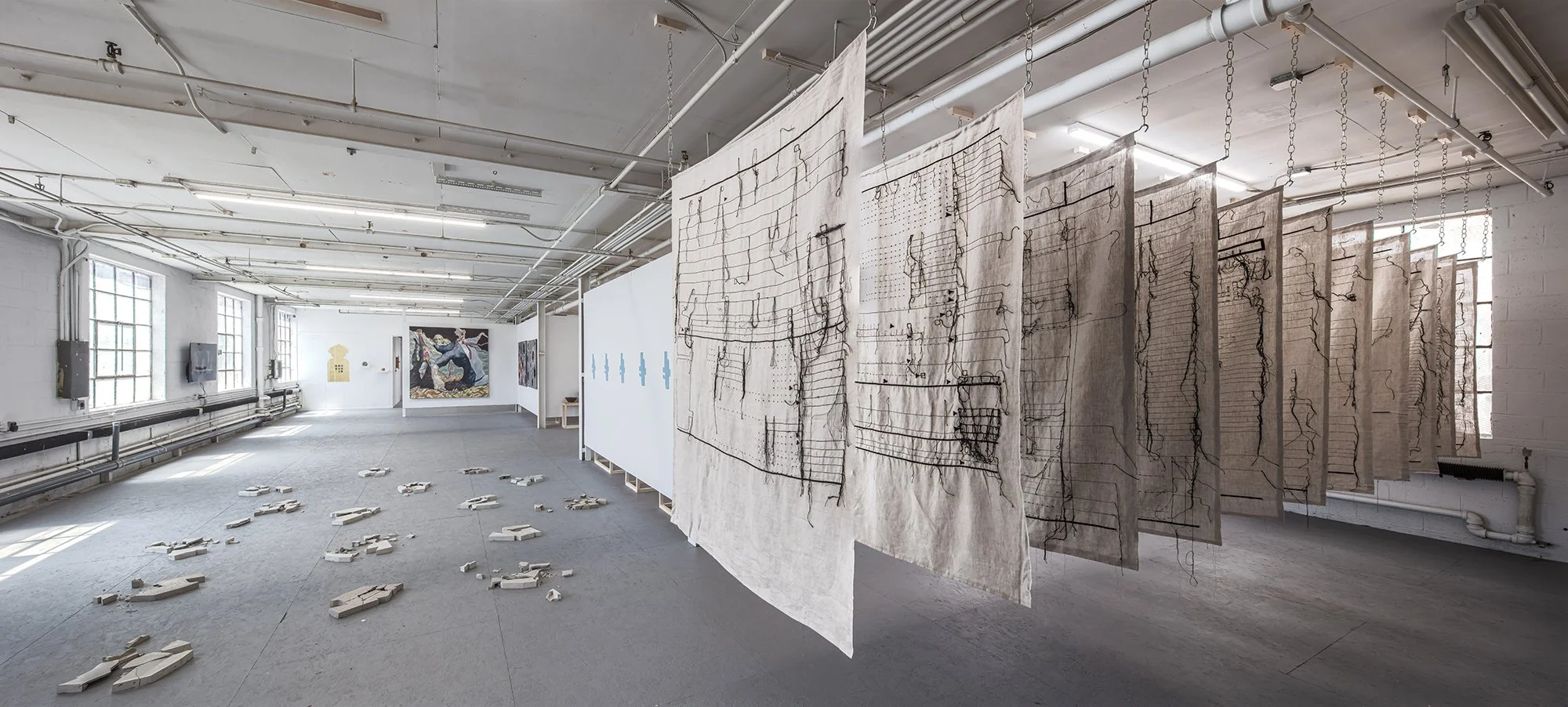
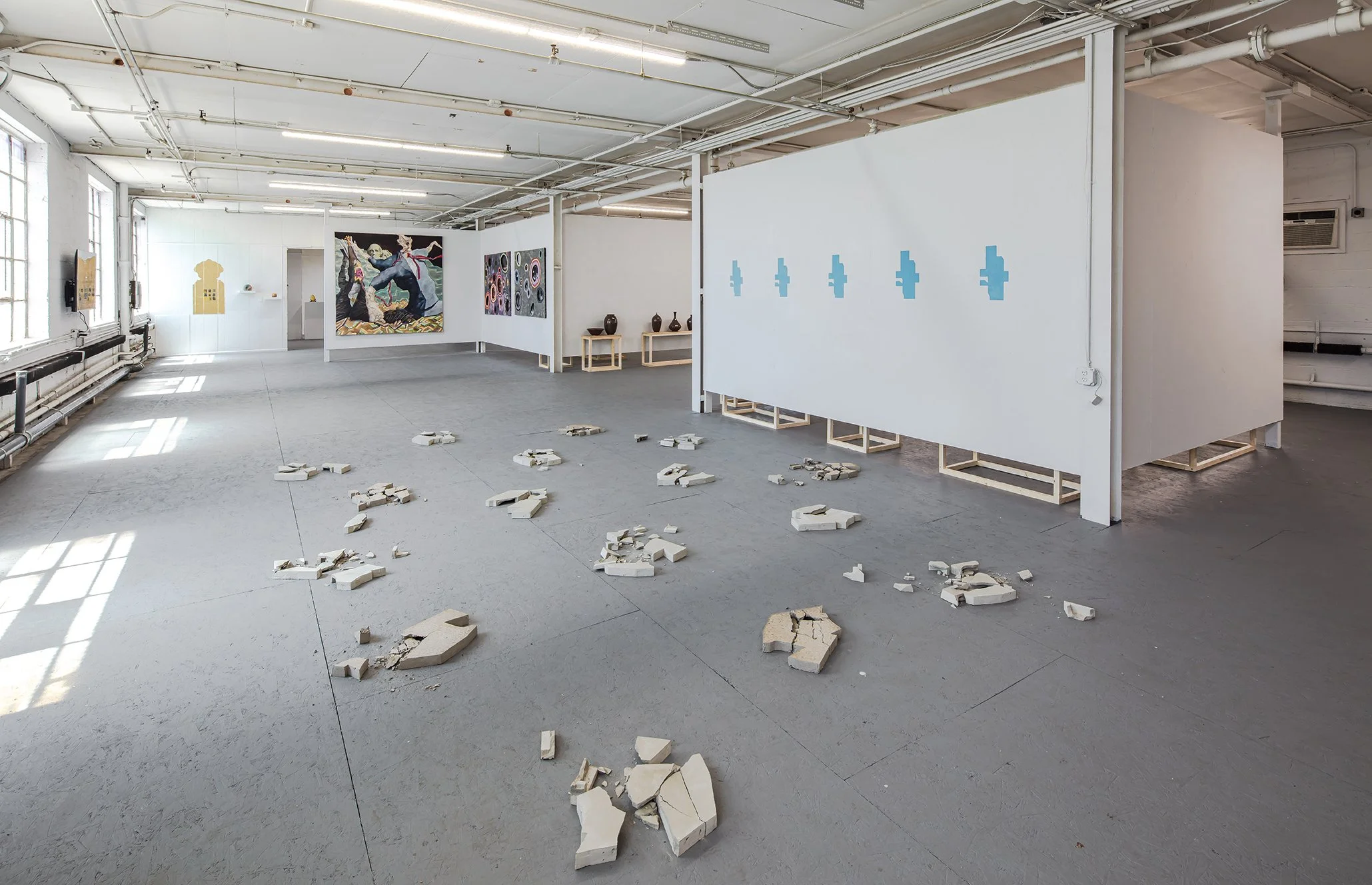
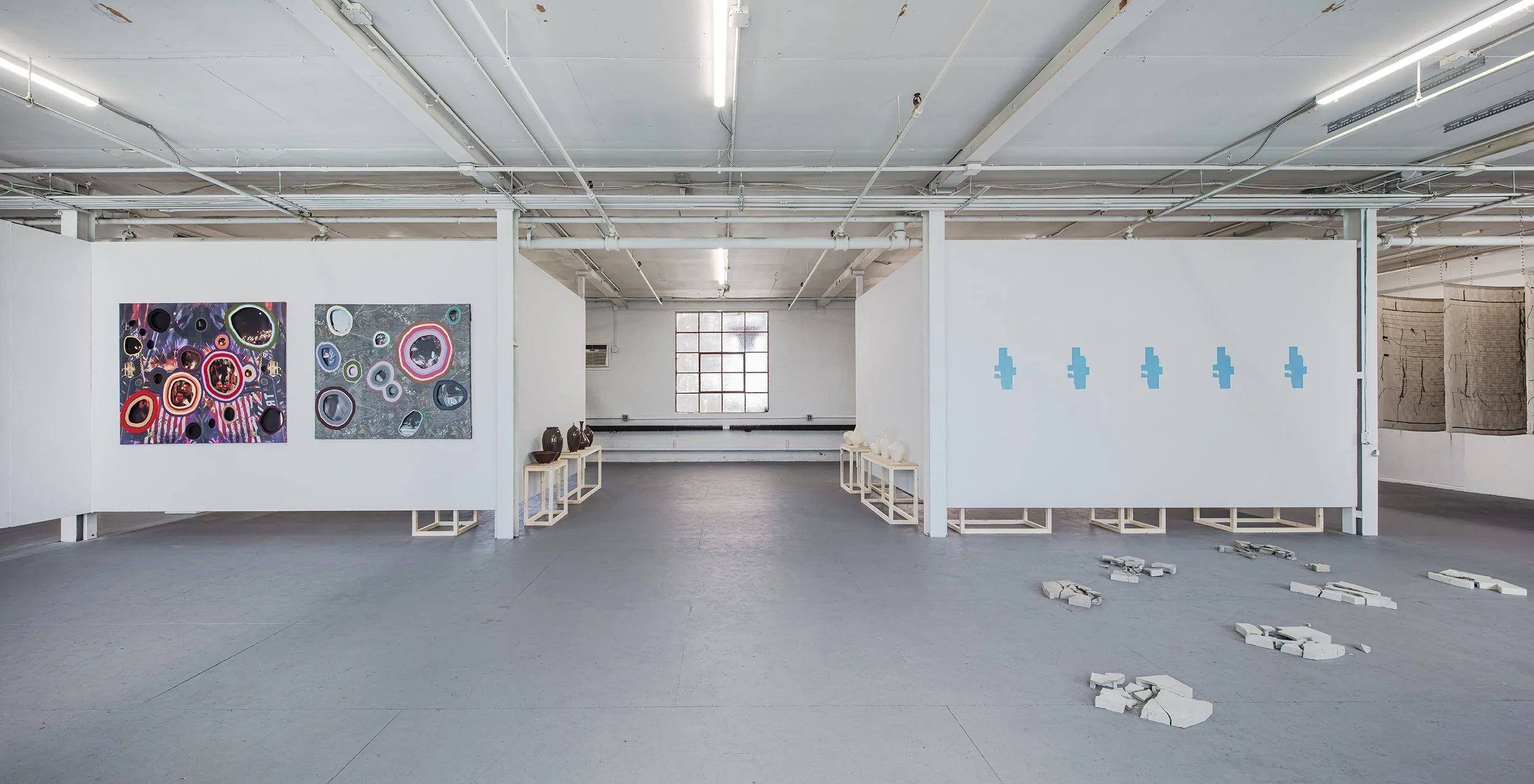
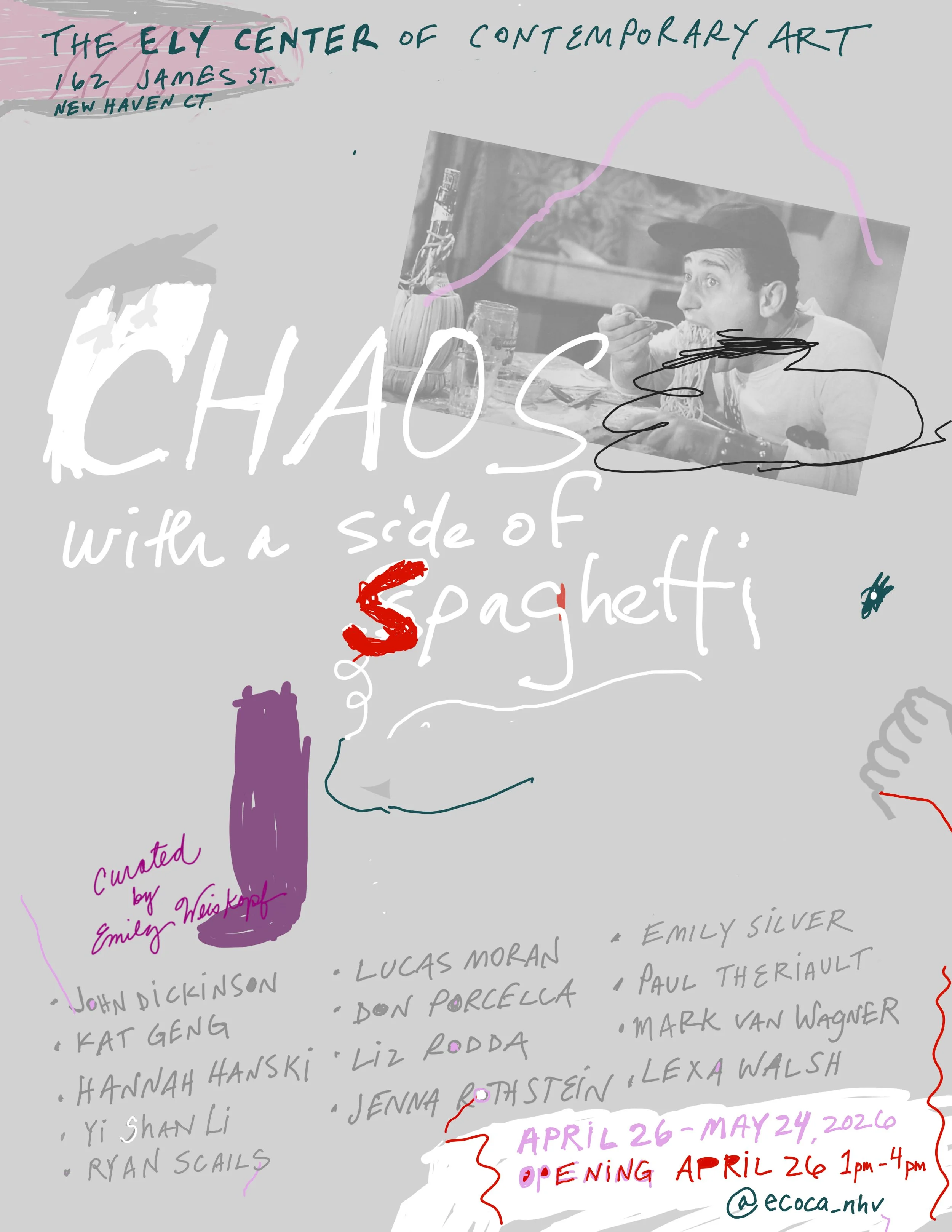
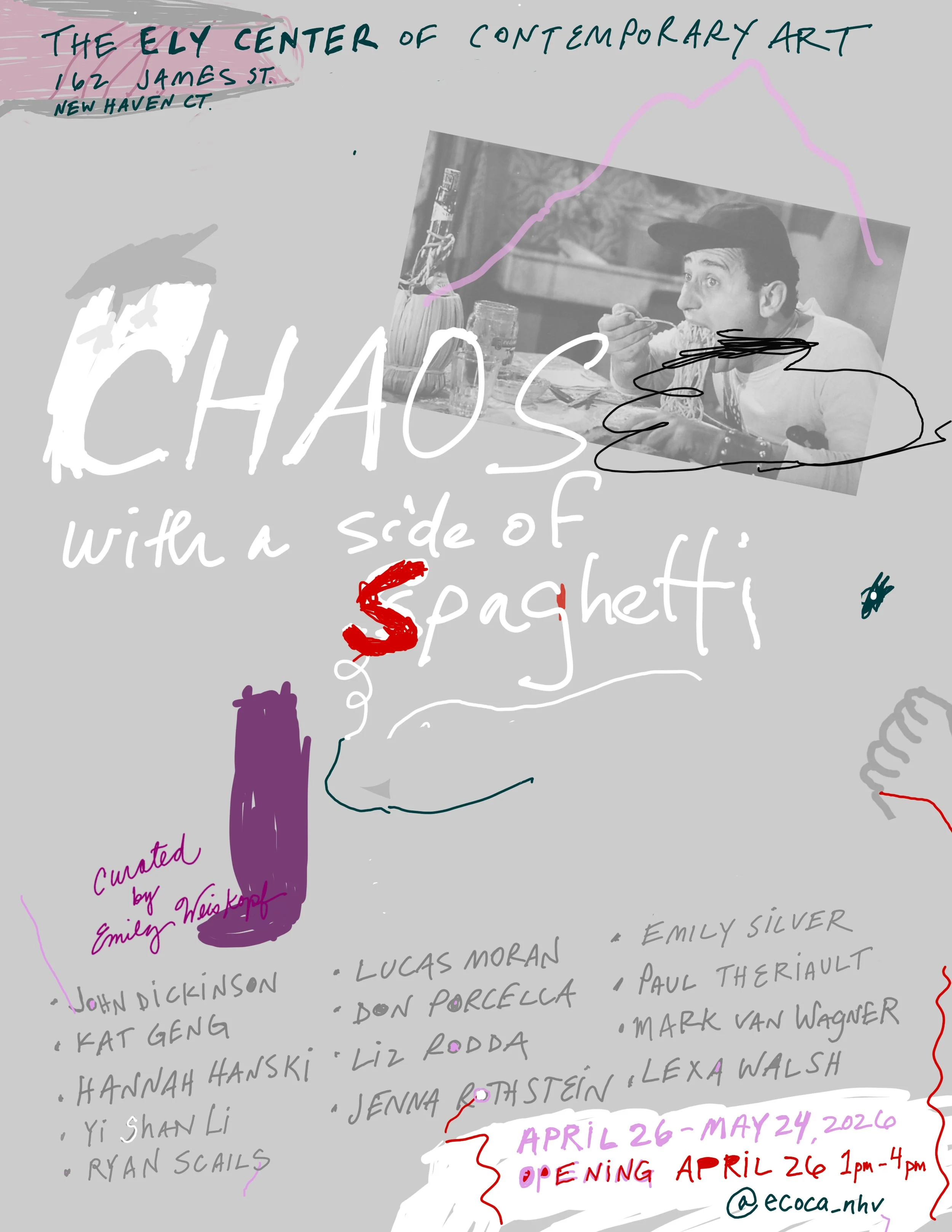
Curated by Emily Weiskopf
Exhibition Dates: April 26 - May 24, 2026
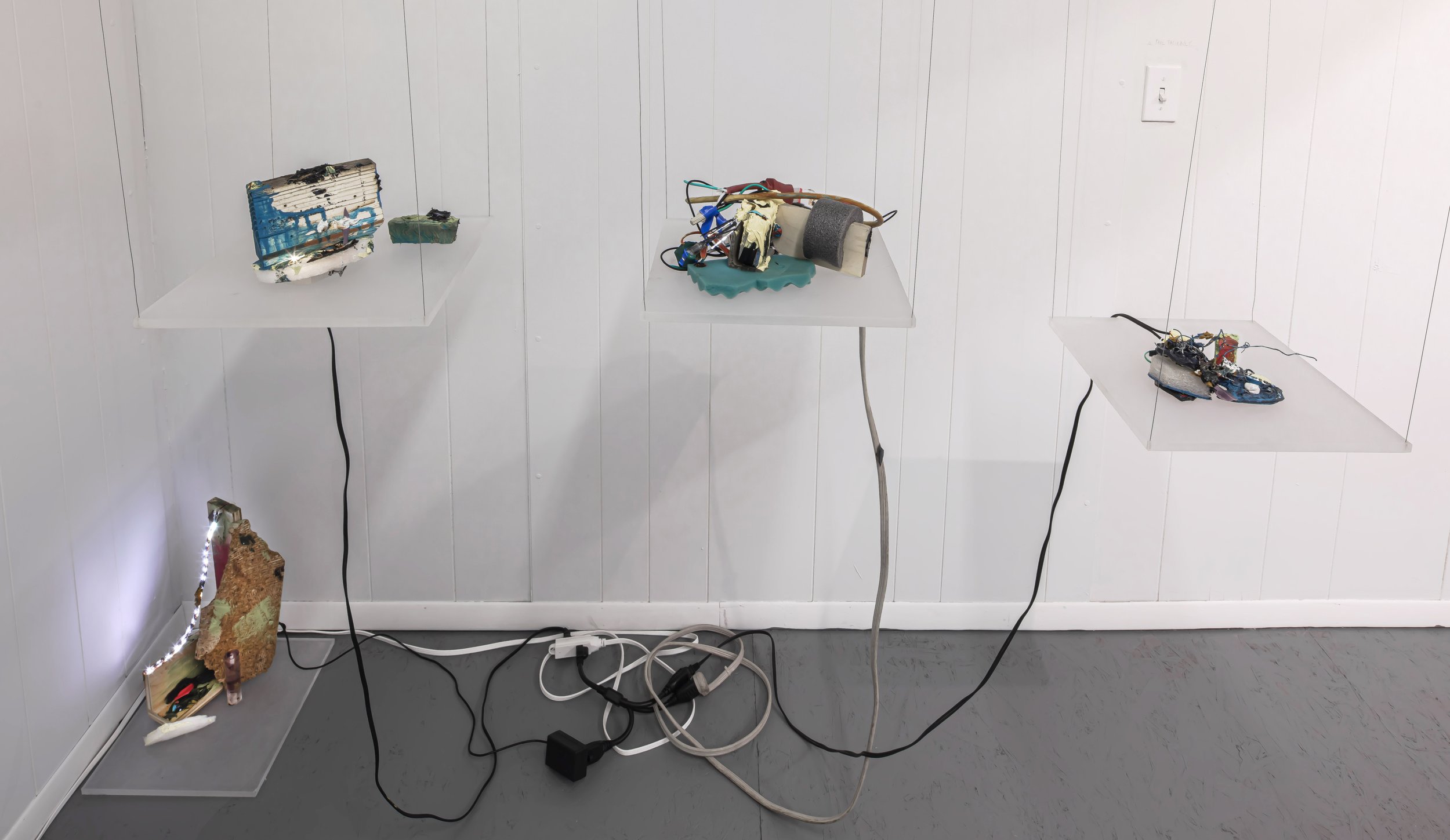
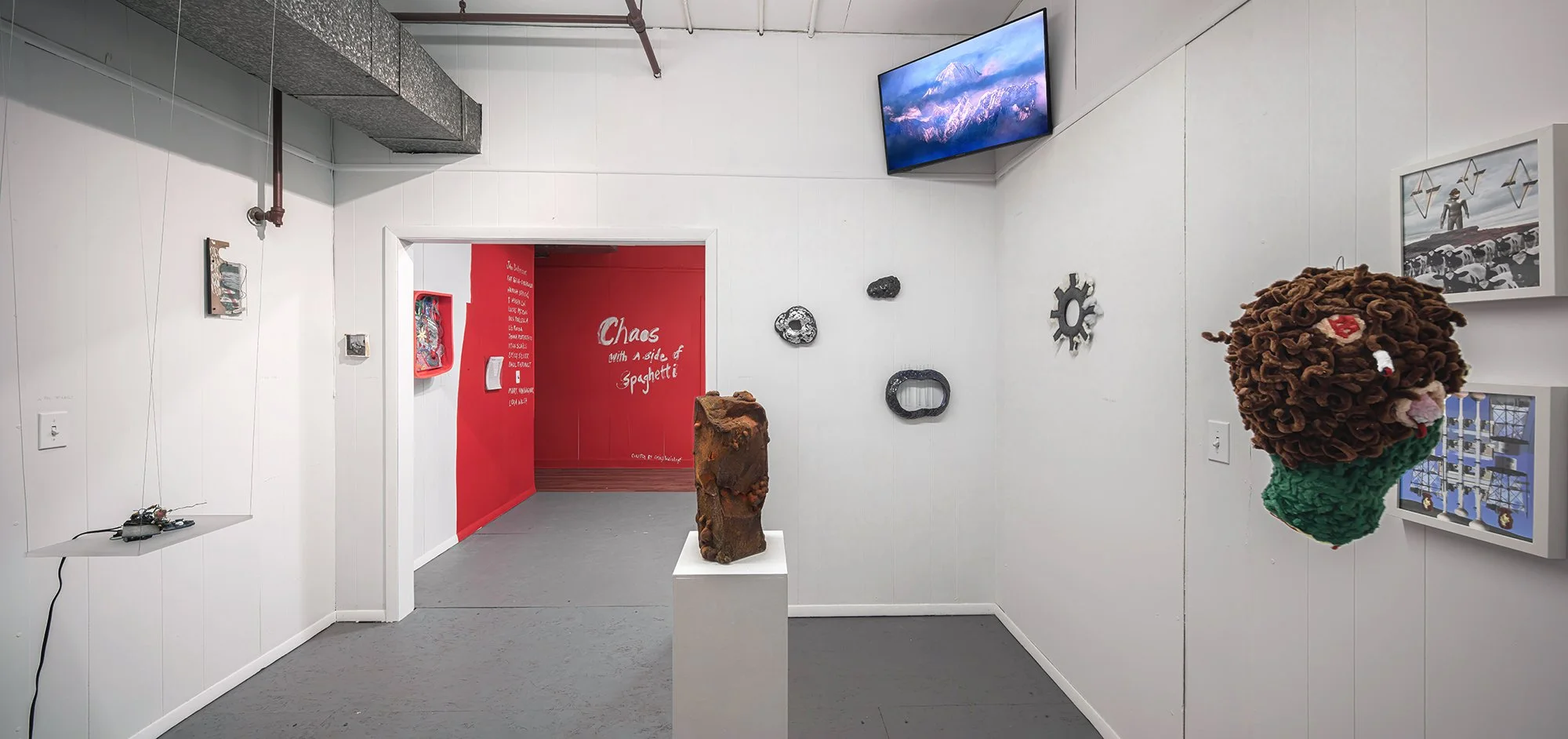
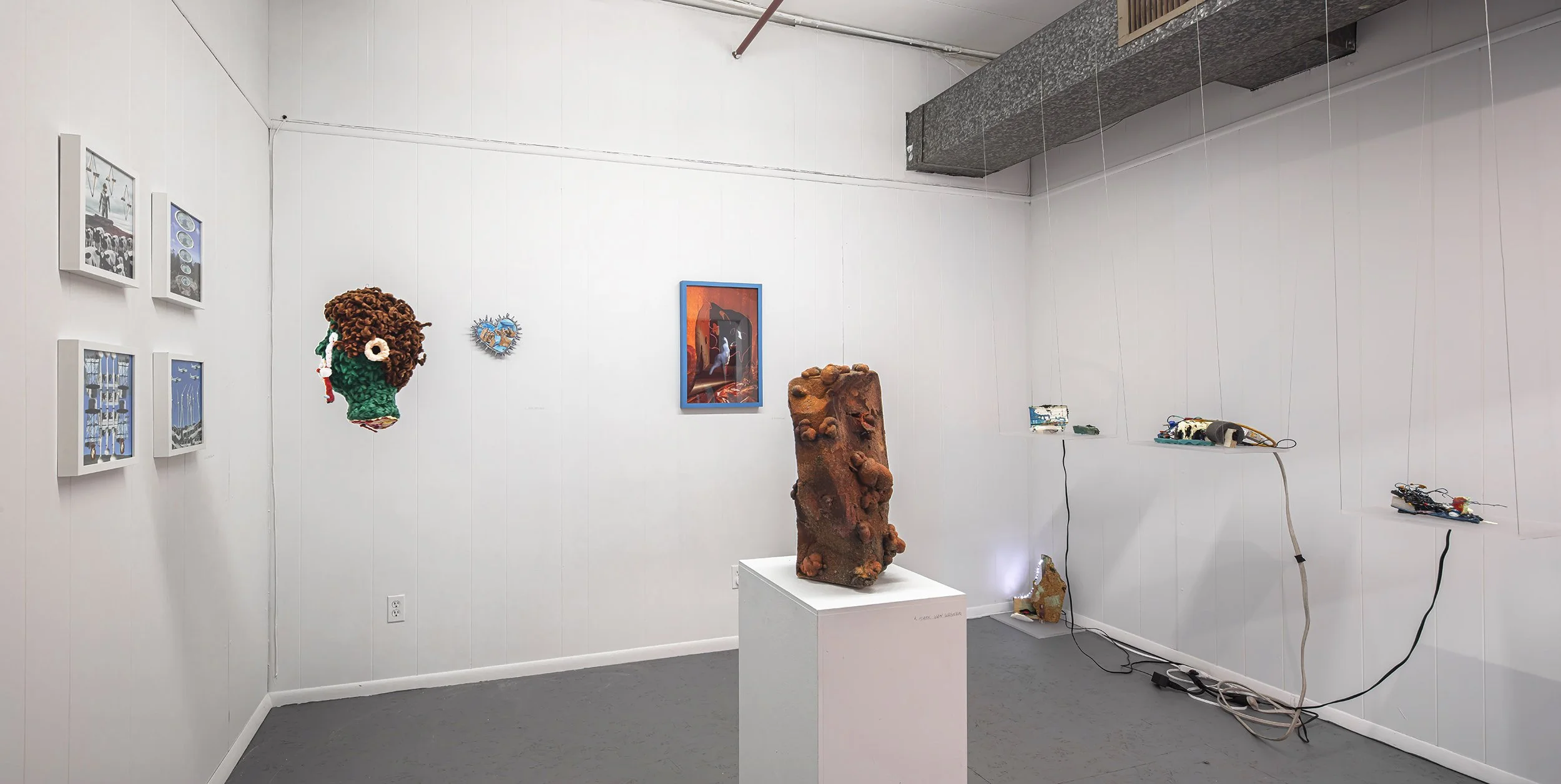
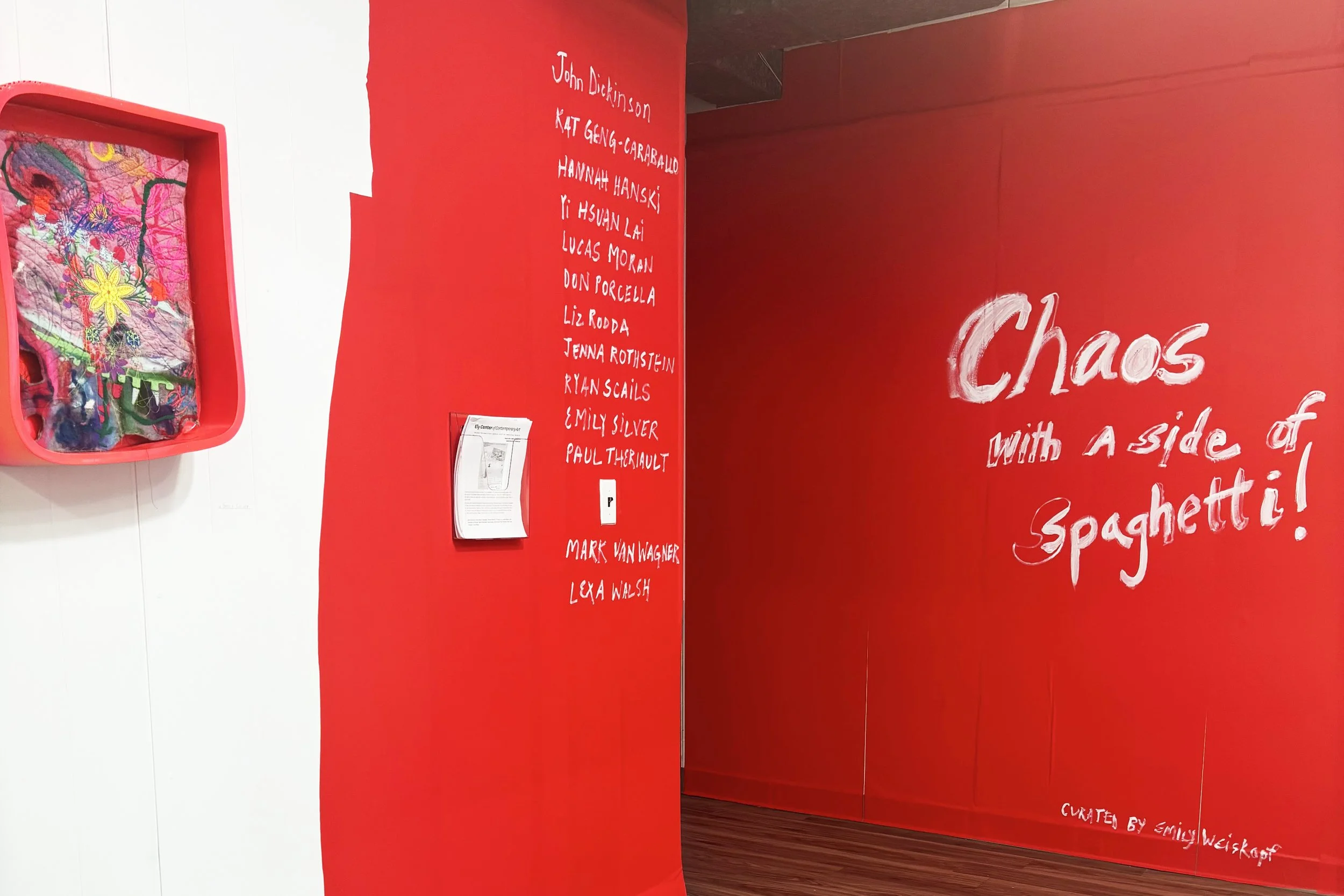
We are hurtling toward the unknown. The unrelatable. The bizarre and disorienting shape of this moment. The endless news cycle feeds instability at every turn, every click. Comfort slips from under our feet, our eyes look for the sun. What once felt real, what once felt safe, is gone. Poof. In the wind.
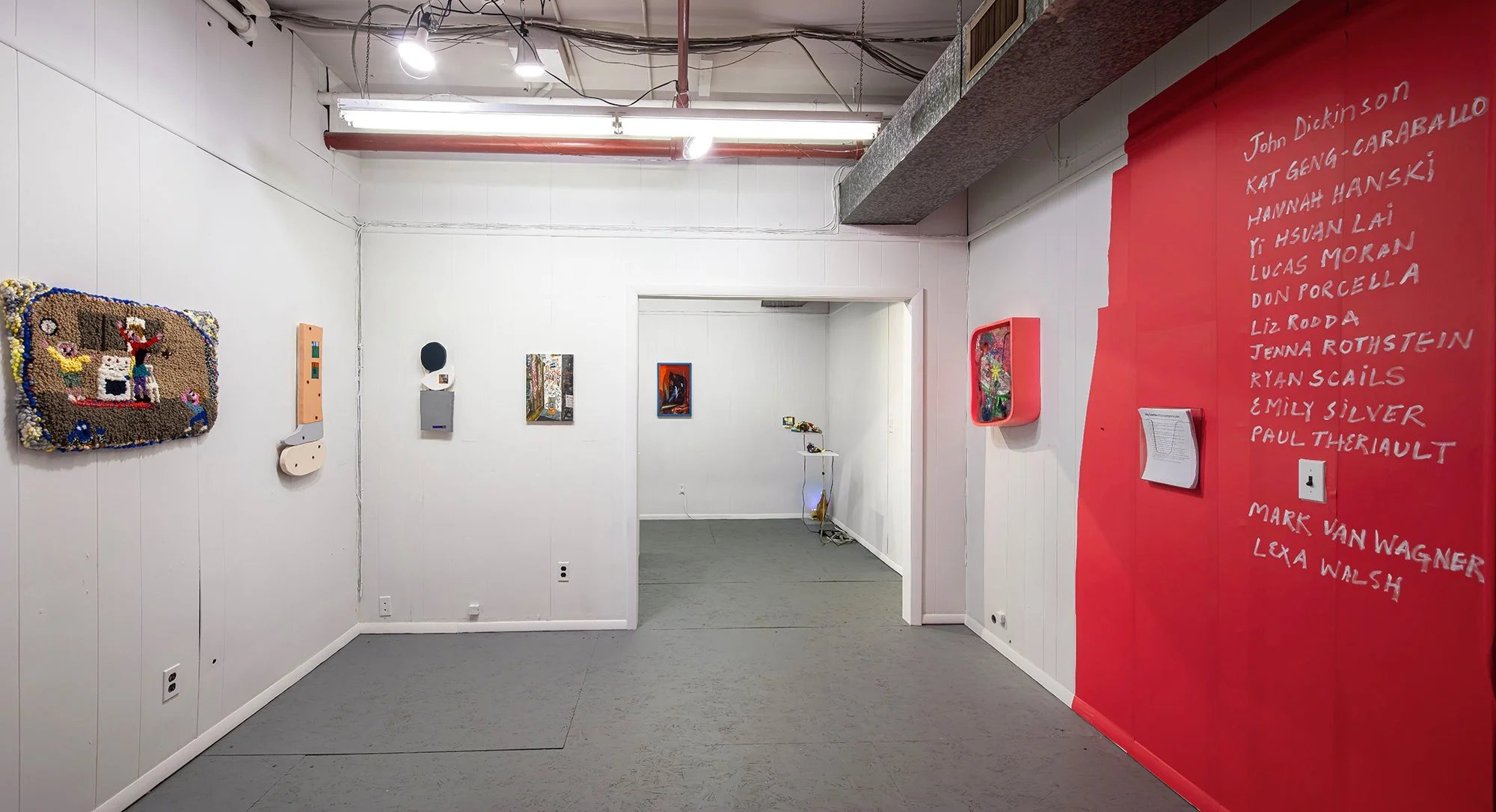
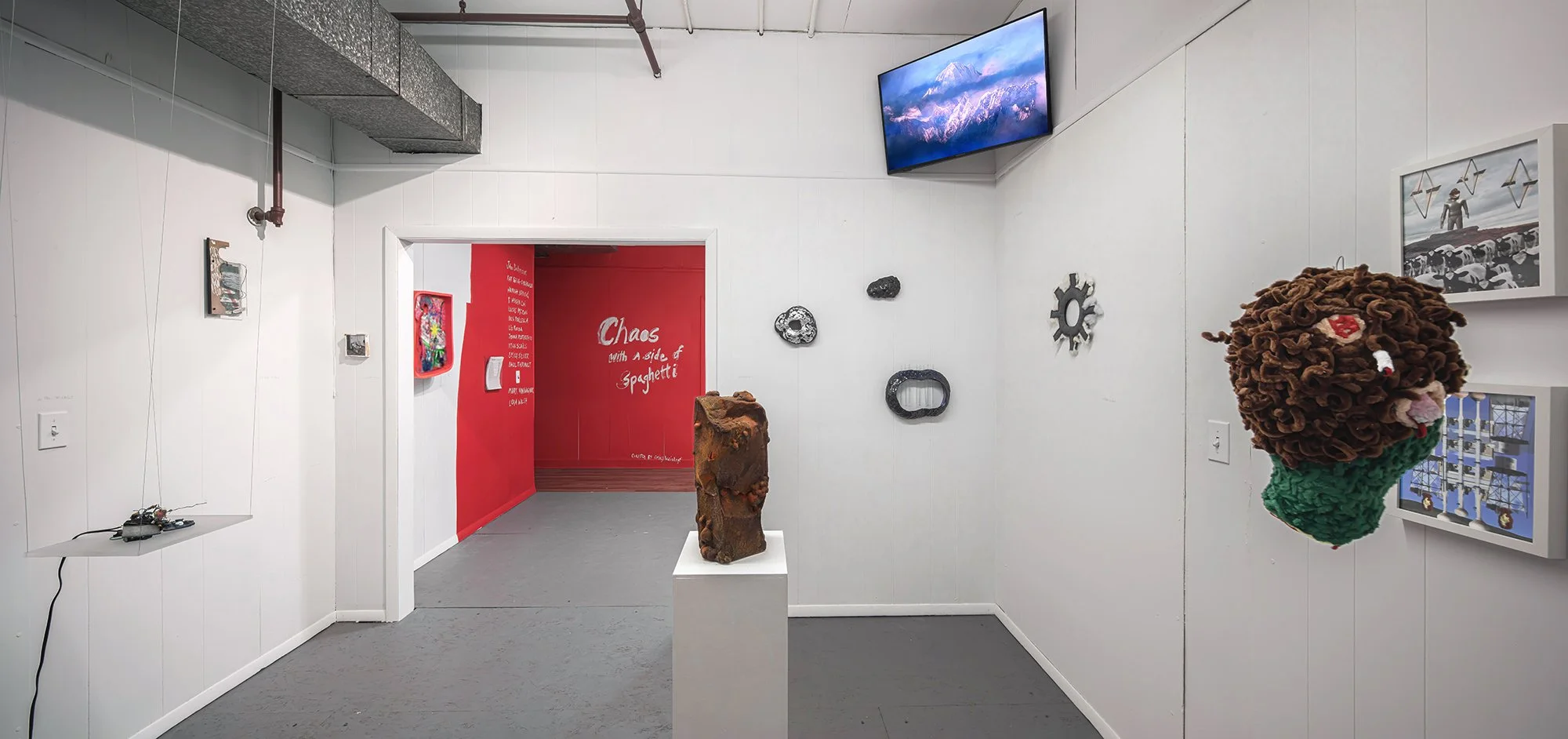
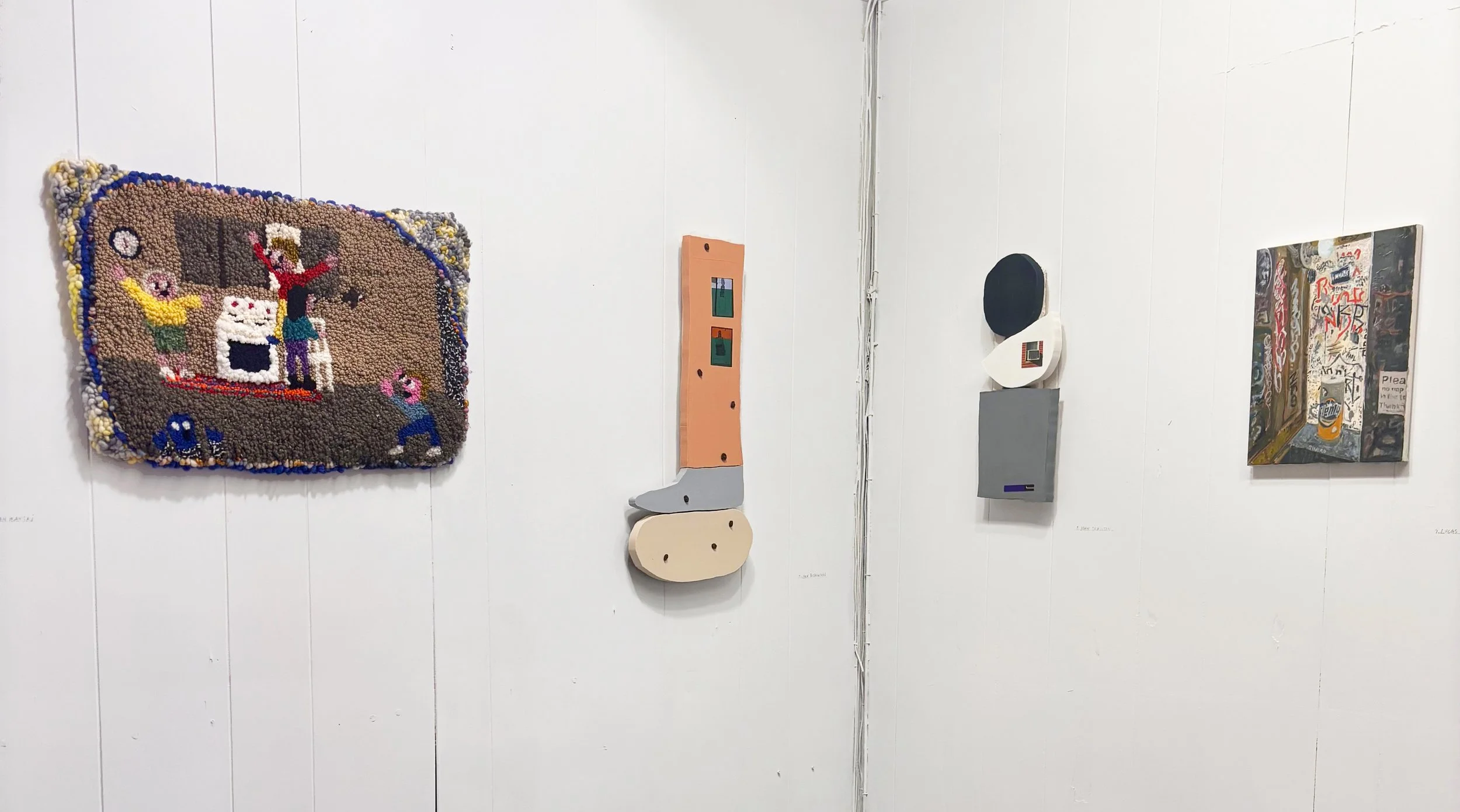
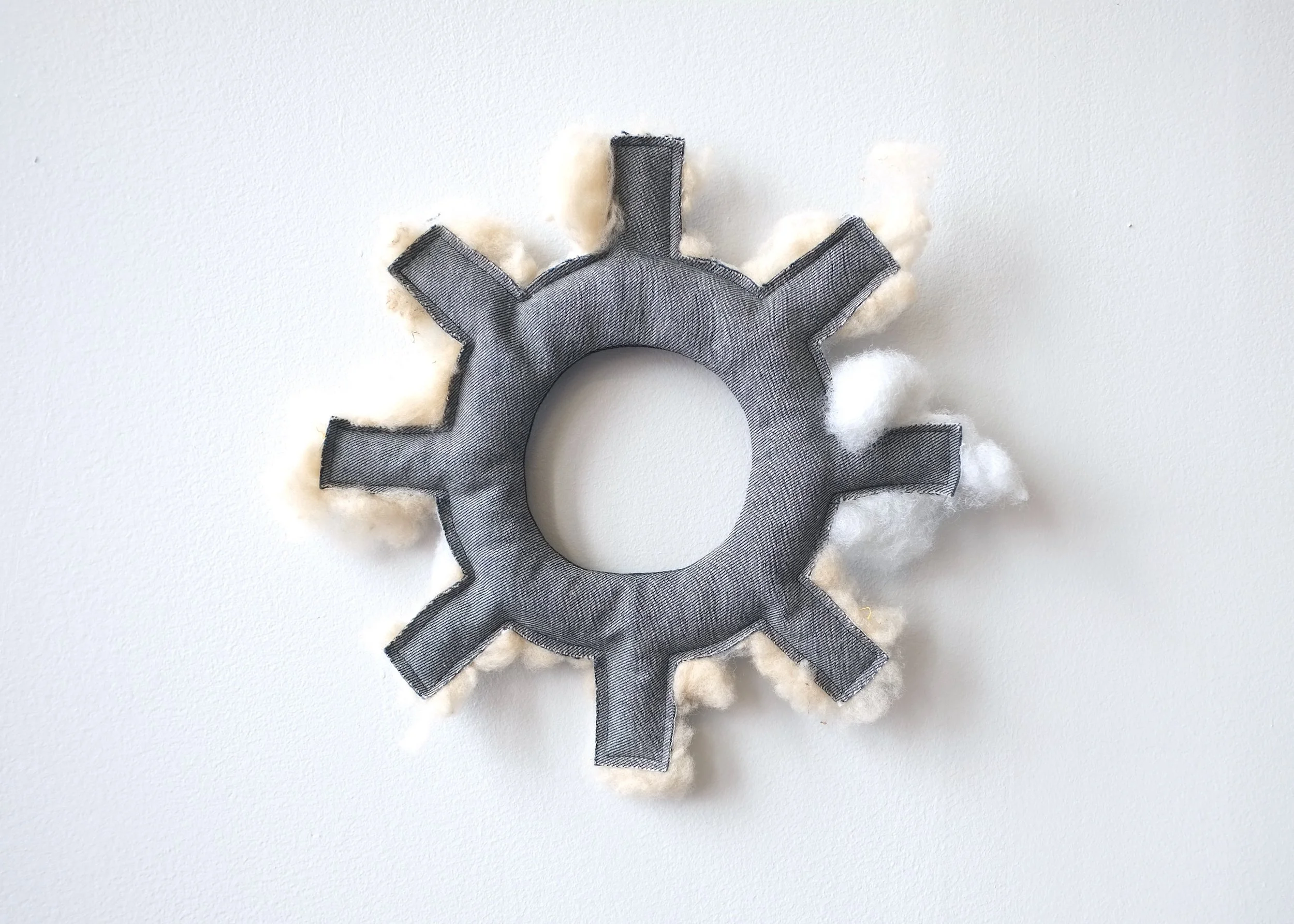
Chaos with a Side of Spaghetti is response and survival. The artists laugh in the face of impossible odds. You take our healthcare, we pick up the brush. You wage wars, we build worlds. For every right stripped away, there is a video, a painting, an assemblage. We meet the absurd with humor, comfort, vices, and despair, still searching for beauty, for joy and laughter. Like spaghetti thrown at the wall. We’ll see what sticks. Today, if only to take your mind off things for moment.
Dedicated to my bombastic, brilliant and whole-hearted dear friend, "world-famous art critic" Charlie Finch on what would have been his 74th Birthday on April 22, 2026 and our memorable dinners at John's of 12th St in the East Village, NYC over a dish of spaghetti.
Artists: John Dickinson, Kat Geng-Caraballo, Hannah Hanski, Yi Hsuan Lai, Lucas Moran, Don Porcella, Liz Rodda, Jenna Rothstein, Ryan Scails, Emily Silver, Paul Theriault, Mark Van Wagner, Lexa Walsh
EVENT: SPONTENTION -- intentionality spontaneous : Thursday, May 21, 2026, 6:30 PM-8:30 PM Featuring the New London Drone Orchestra in response to Chaos with a side of spaghetti. See more info here.
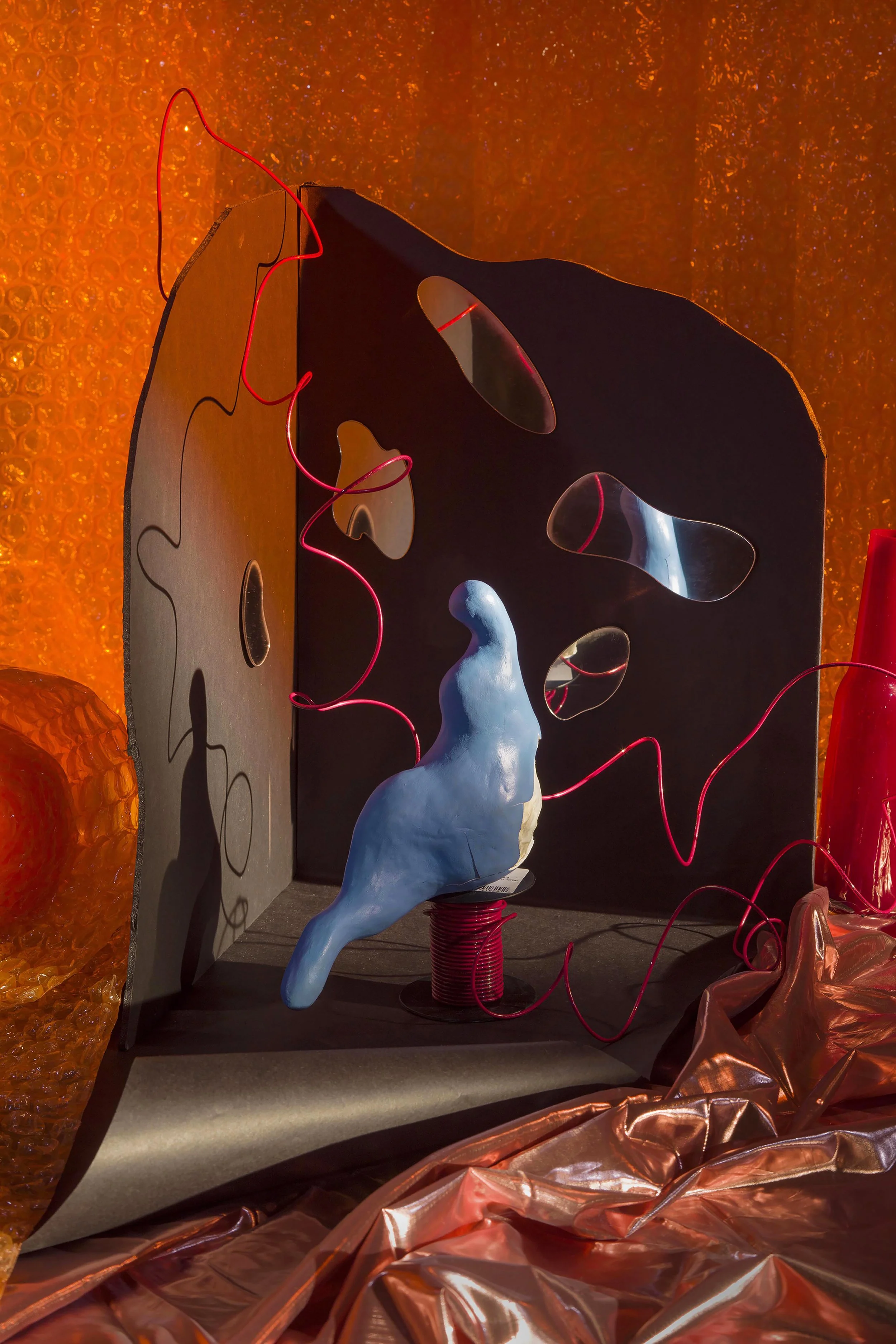
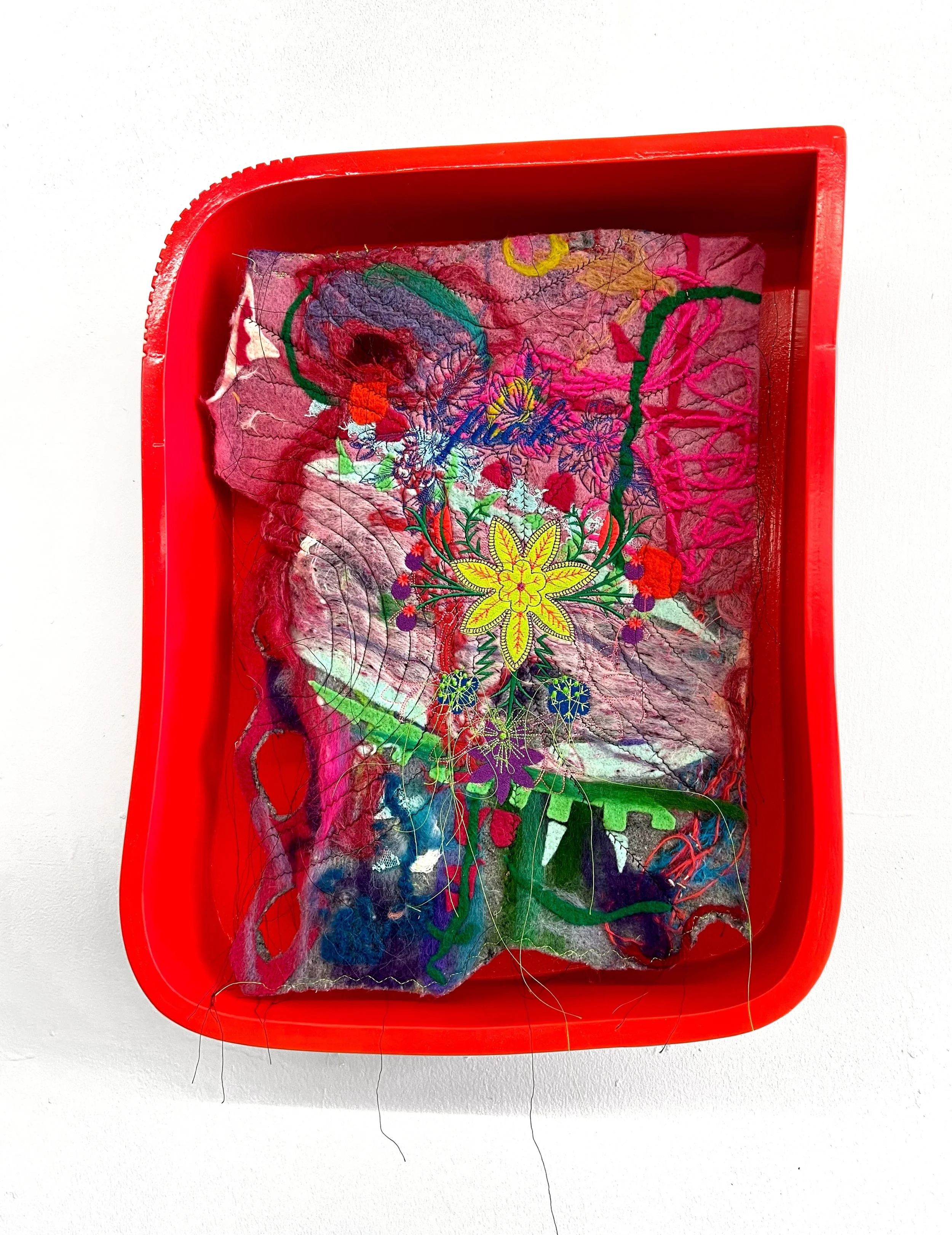
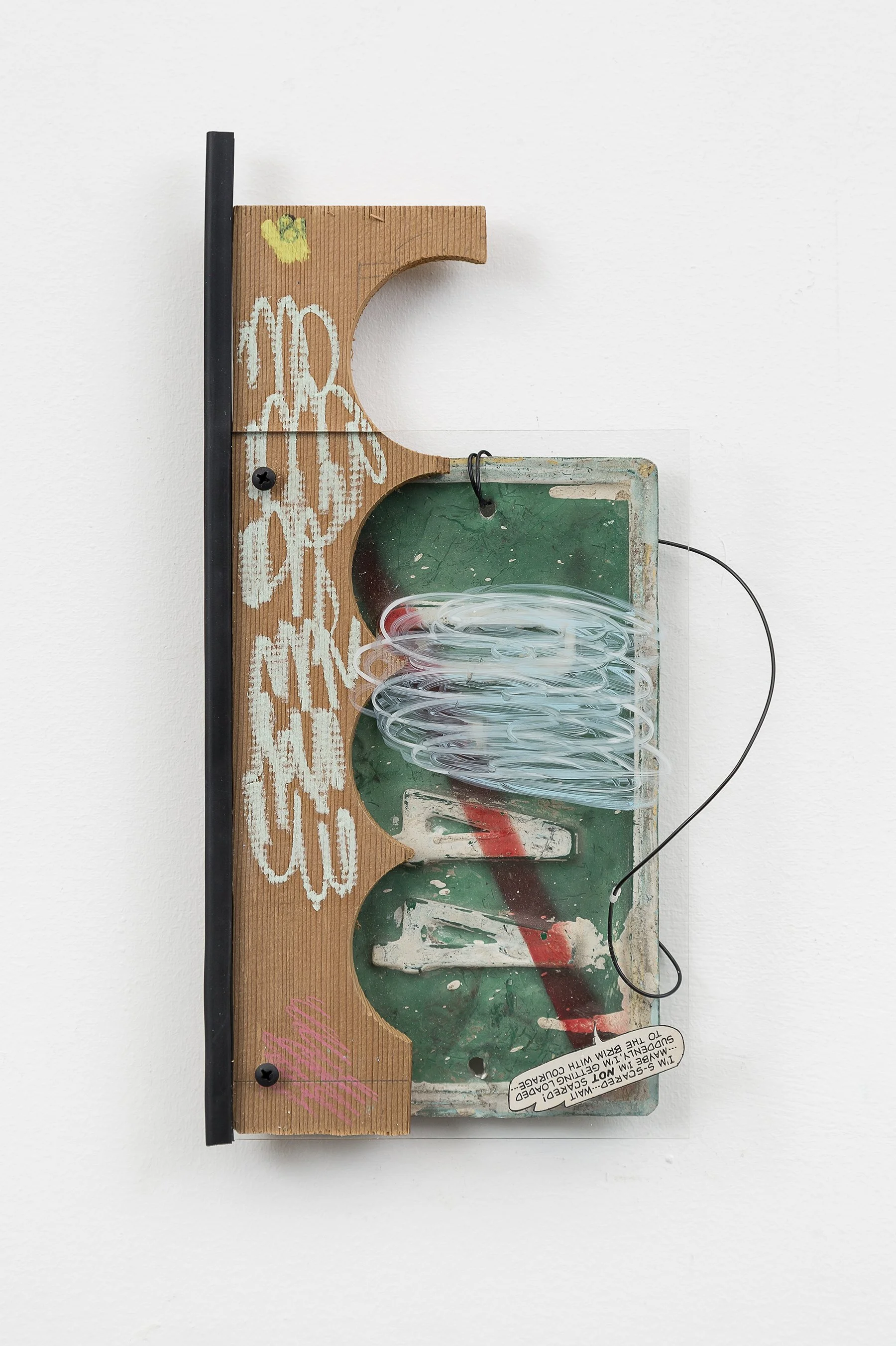
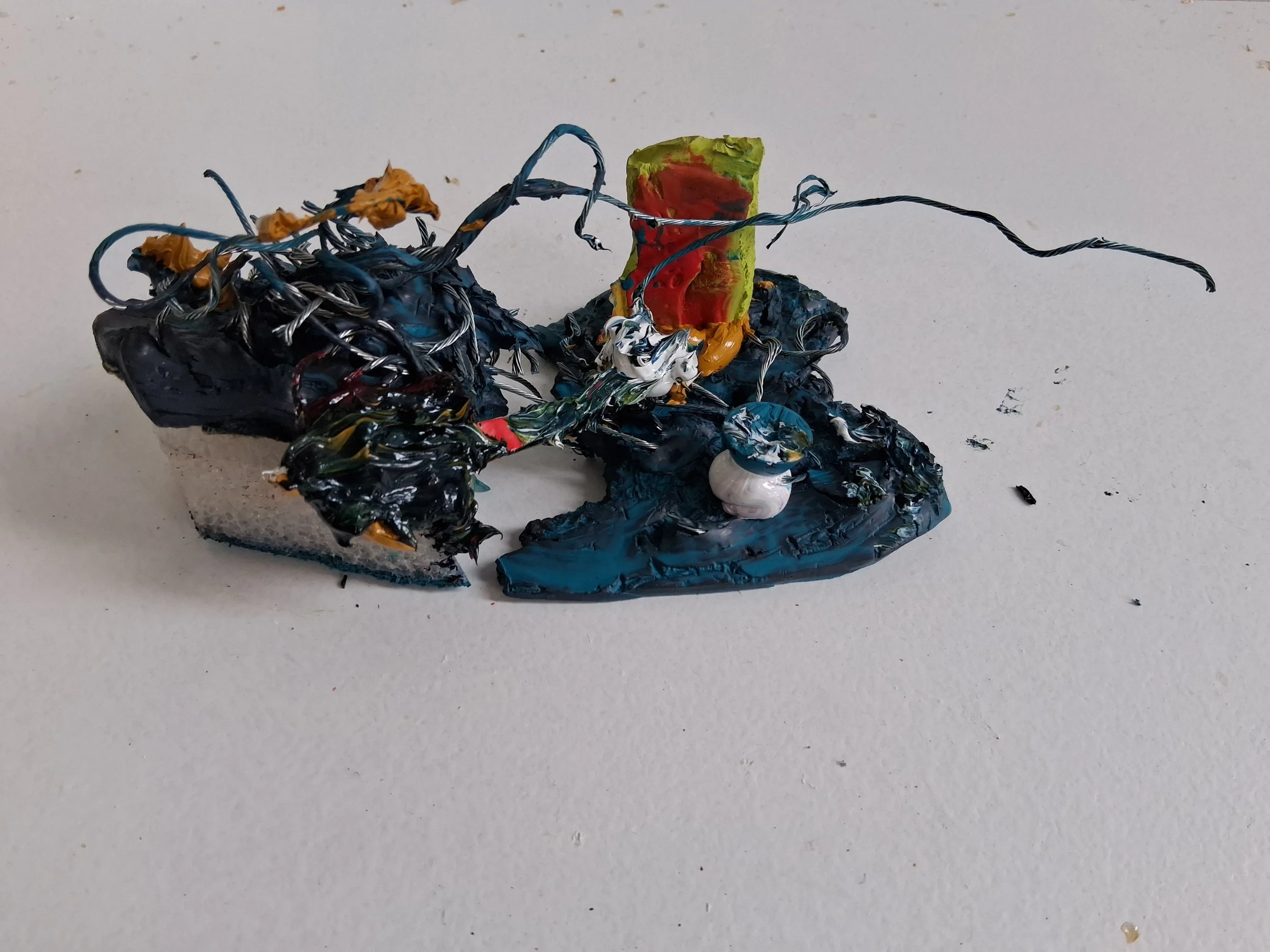
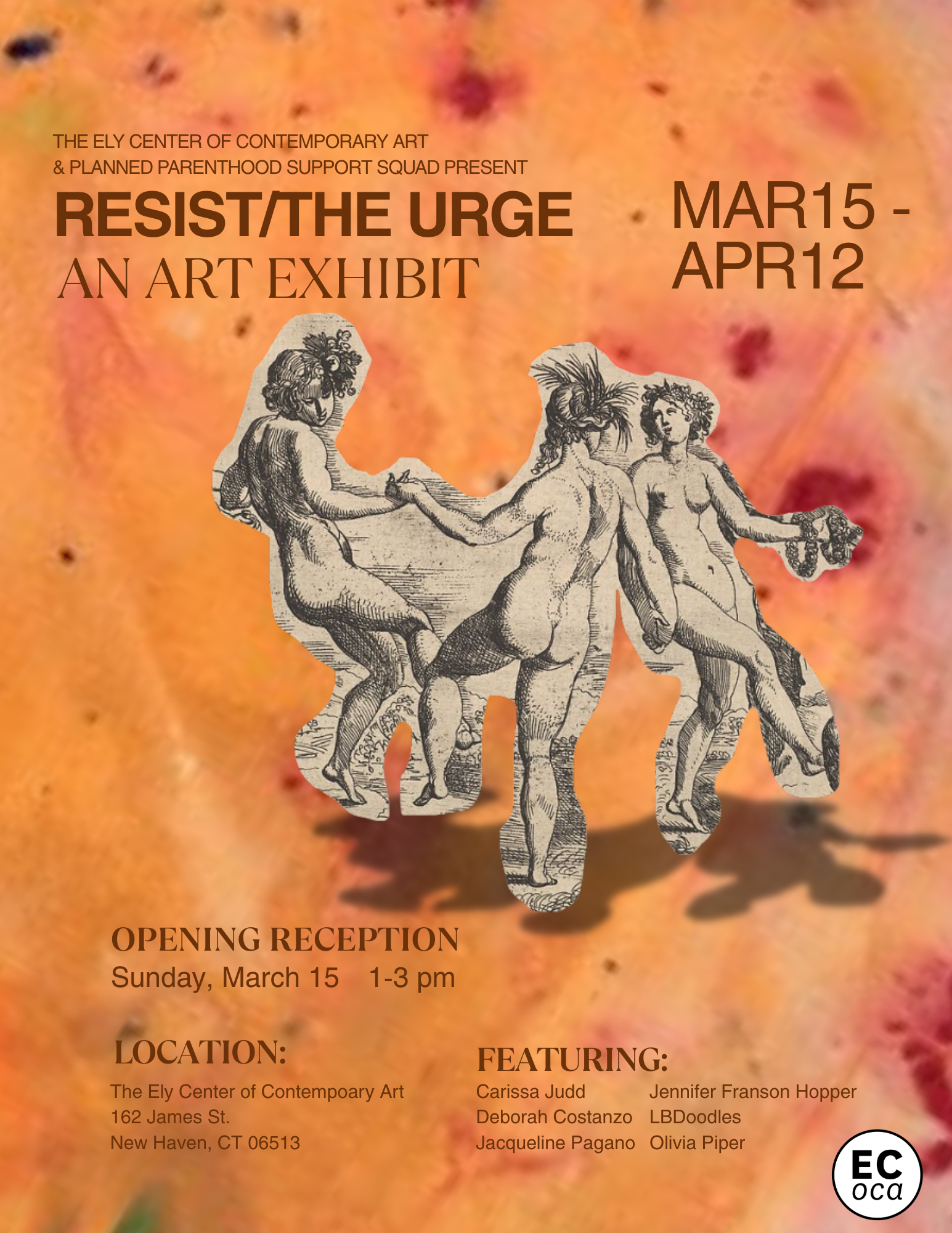
Opening Reception: March 15, 1-3pm
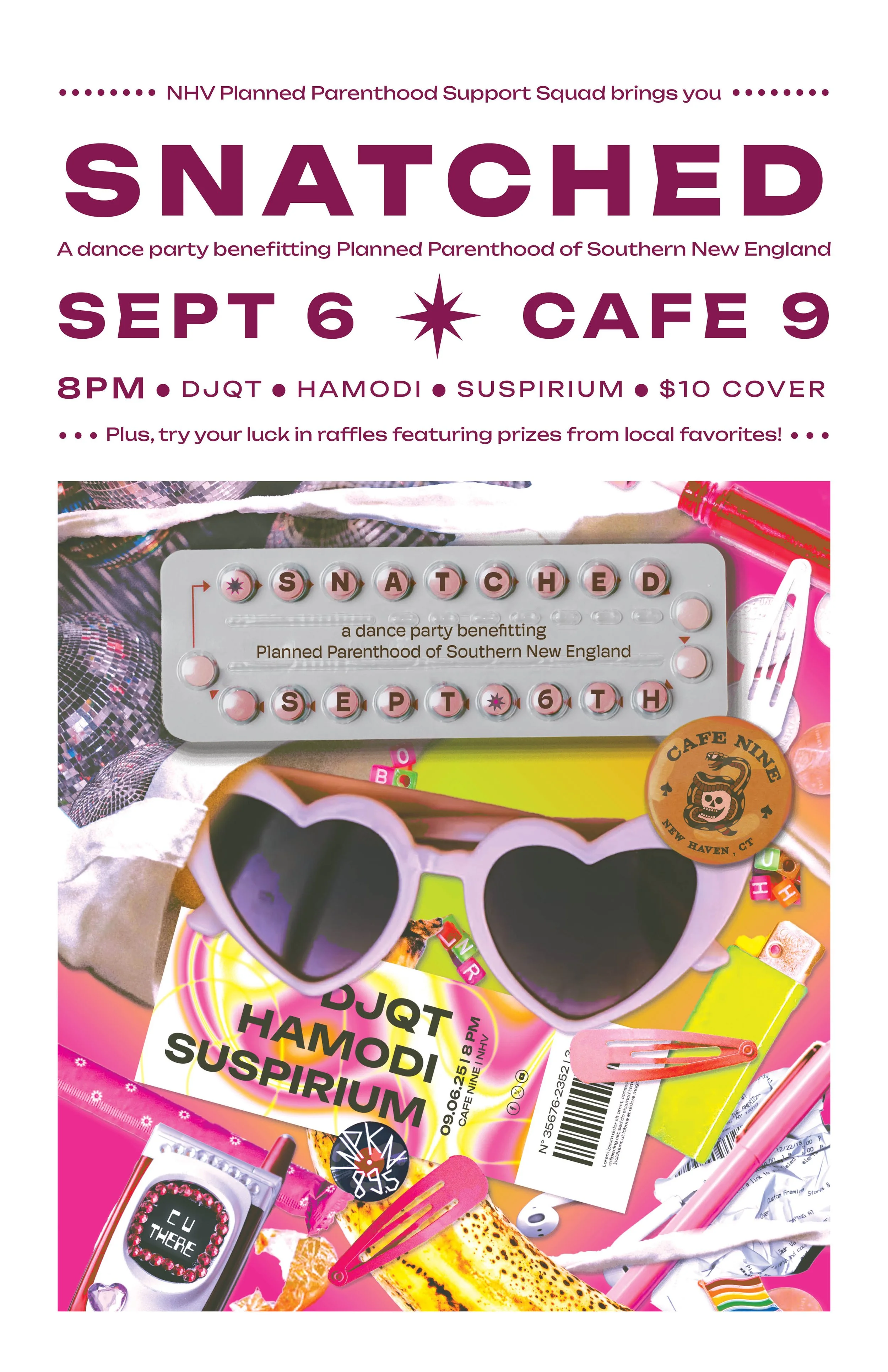
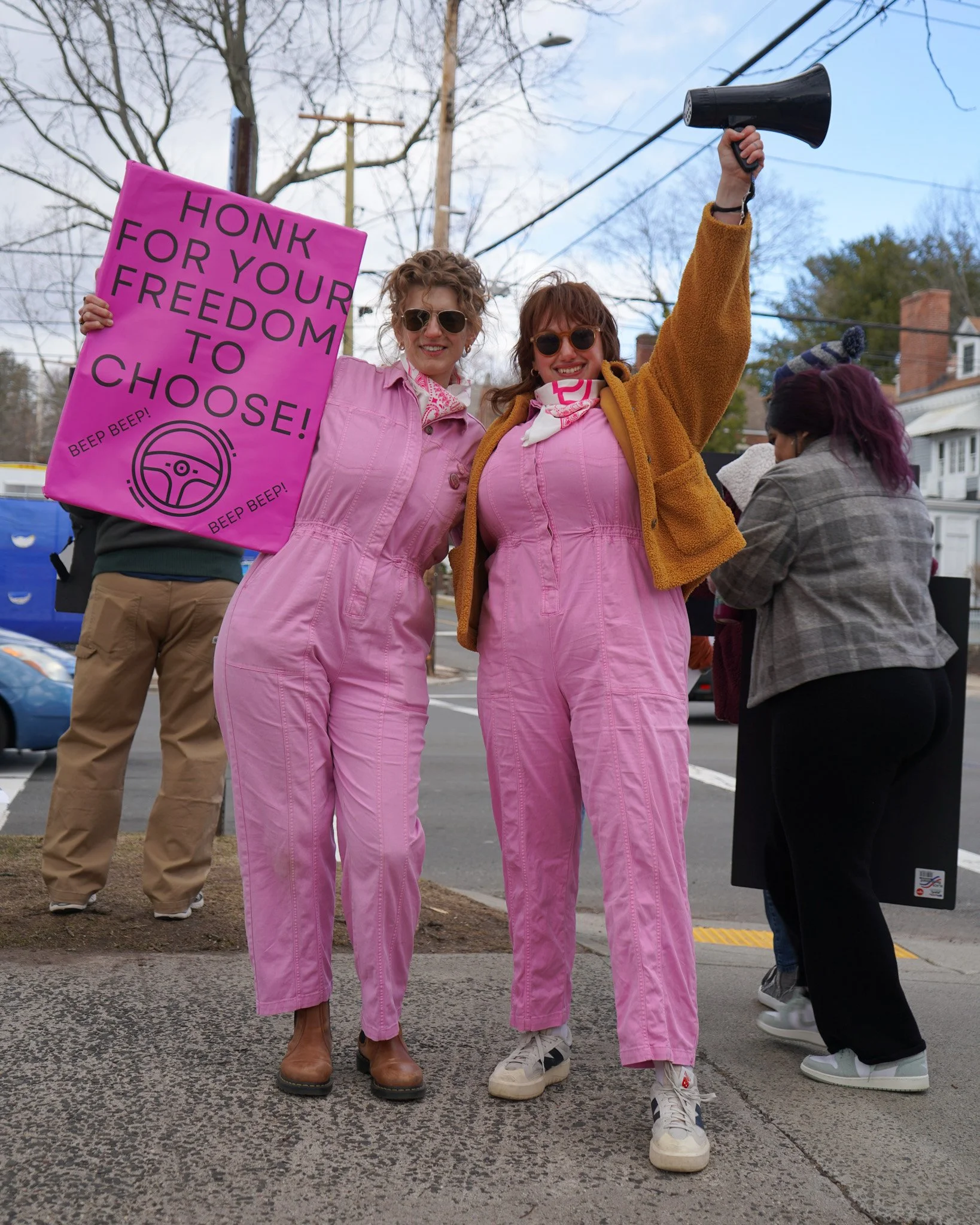
The Ely Center of Contemporary Art is pleased to present RESIST/THE URGE, an exhibition featuring work by artists from the Planned Parenthood Support Squad (PPSS). The opening reception will be held on Sunday, March 15, 1-3pm.
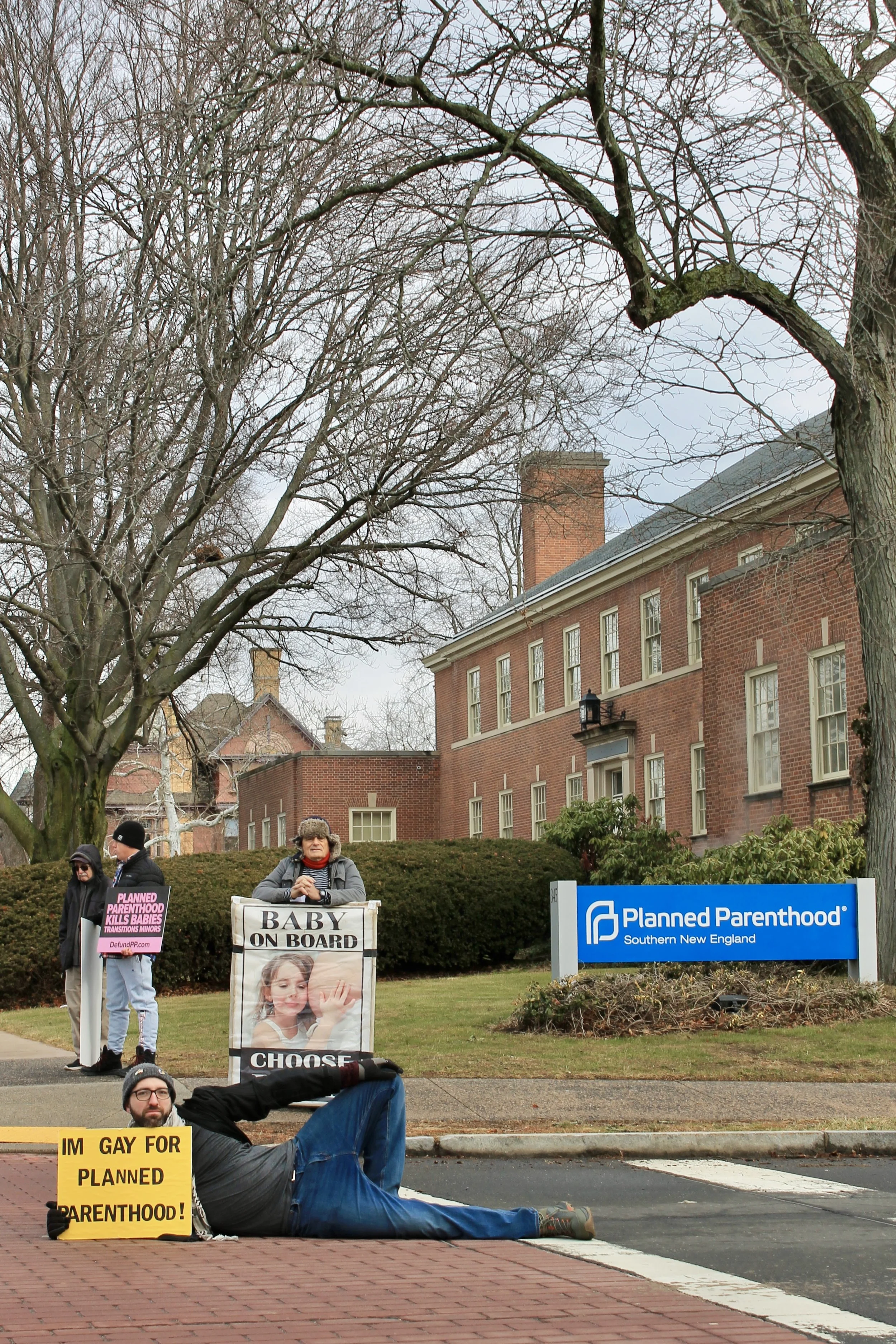
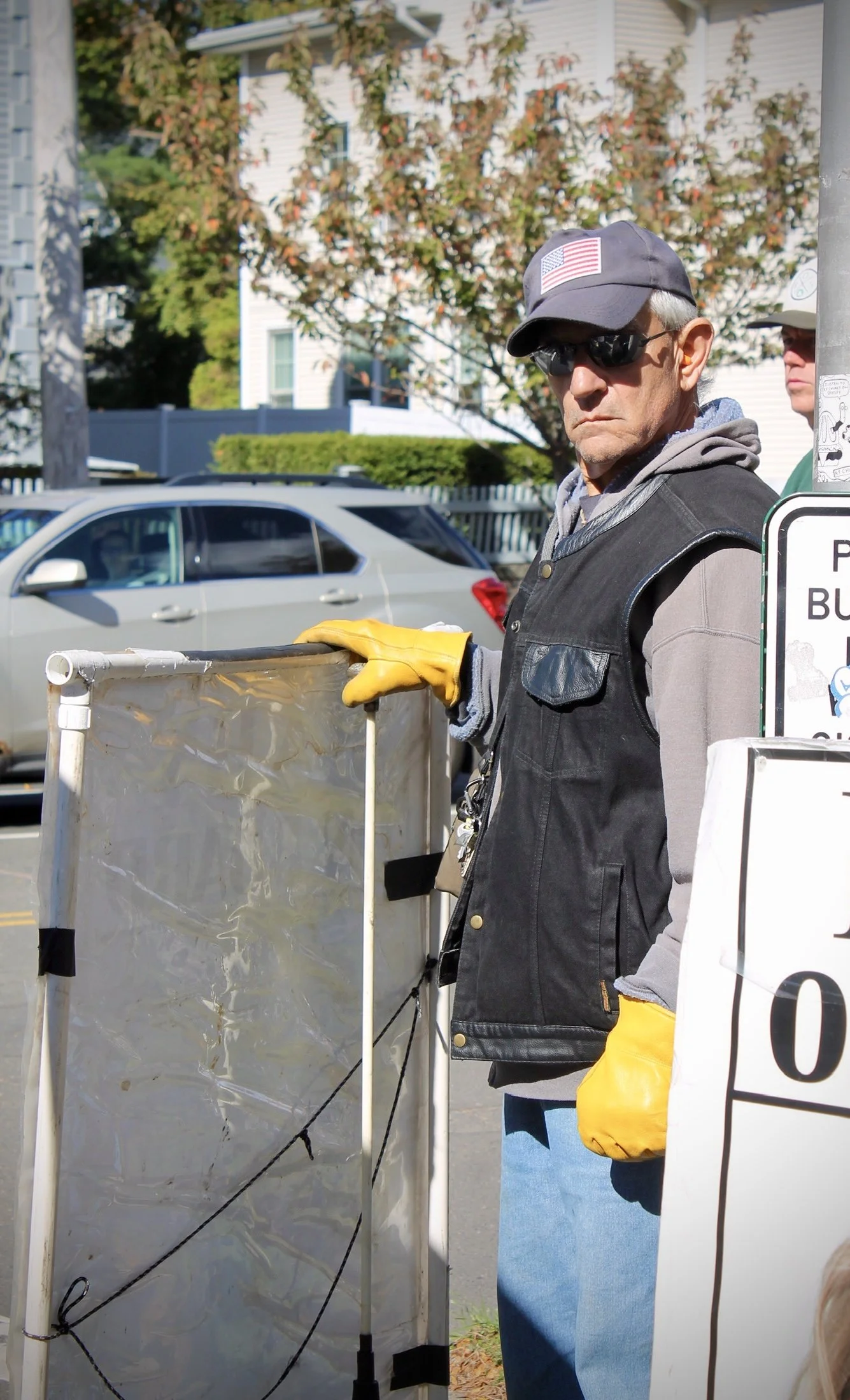
Founded in New Haven in March 2024, the Planned Parenthood Support Squad began as a grassroots effort to demonstrate community support for bodily autonomy and access to healthcare, while raising funds to help sustain healthcare providers such as Planned Parenthood of Southern New England. The group gathers weekly outside clinics to counter anti-abortion demonstrators who seek to shame patients and spread misinformation. Their approach is one of joyful resistance: dancing, music, handmade signs, and collective presence.
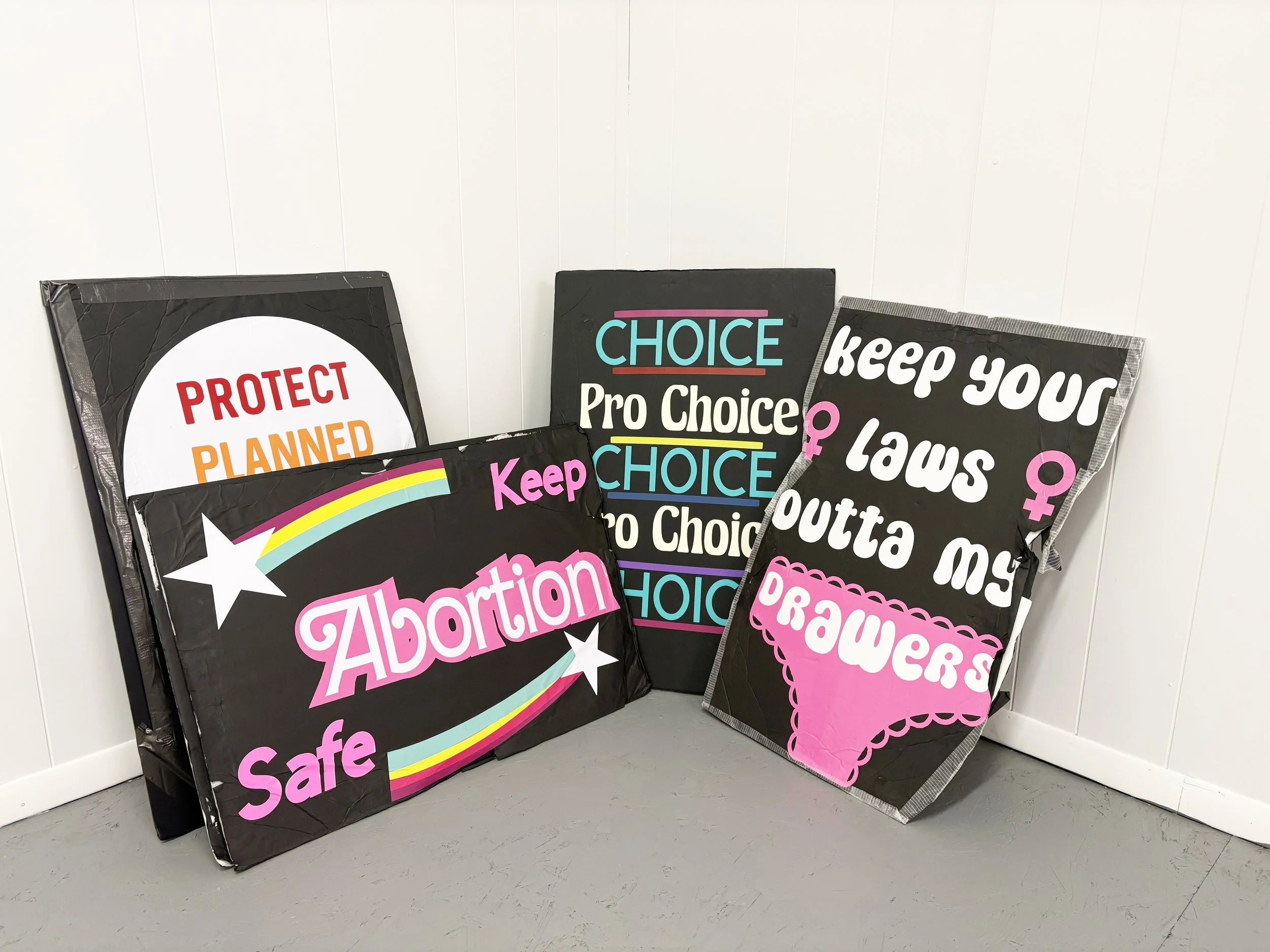
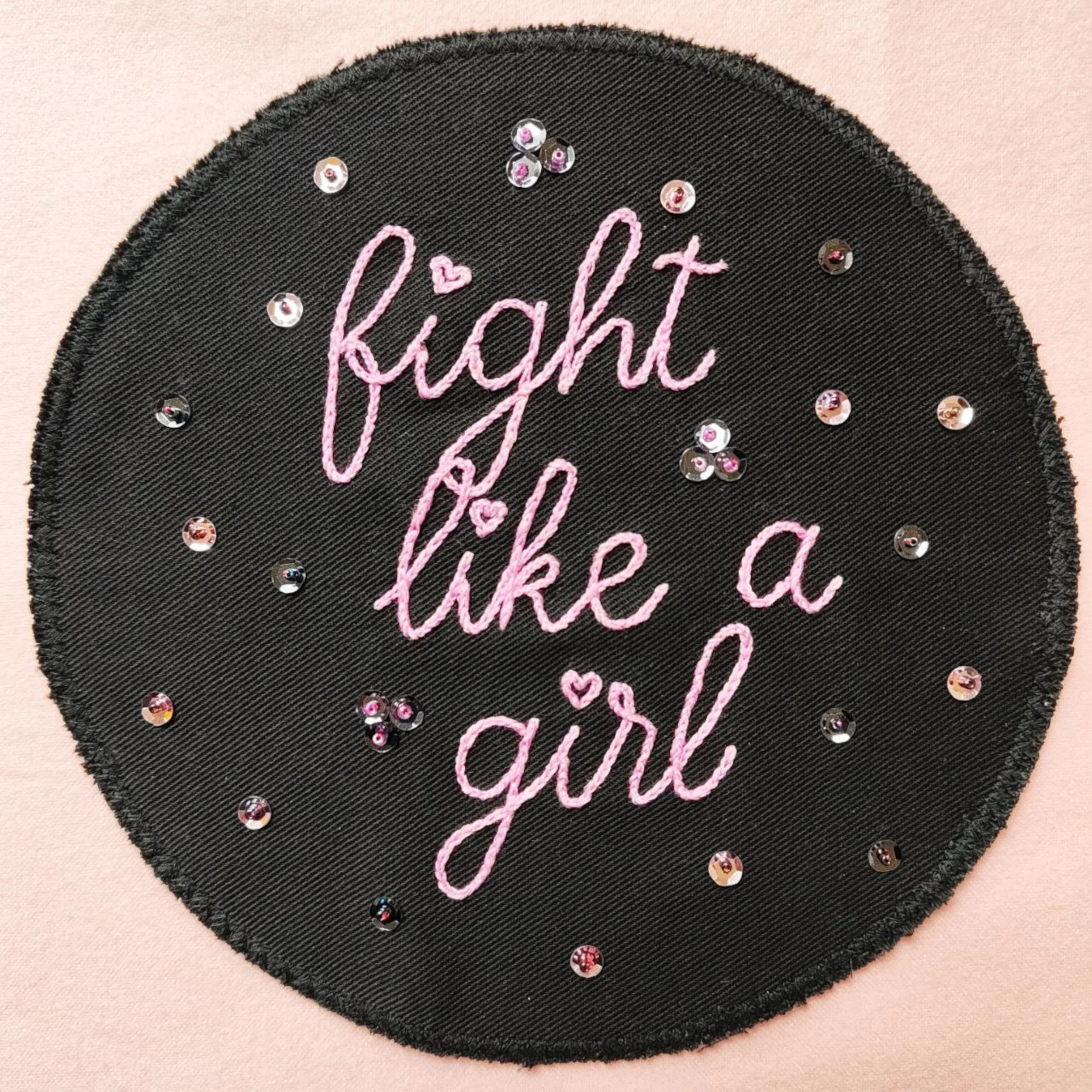
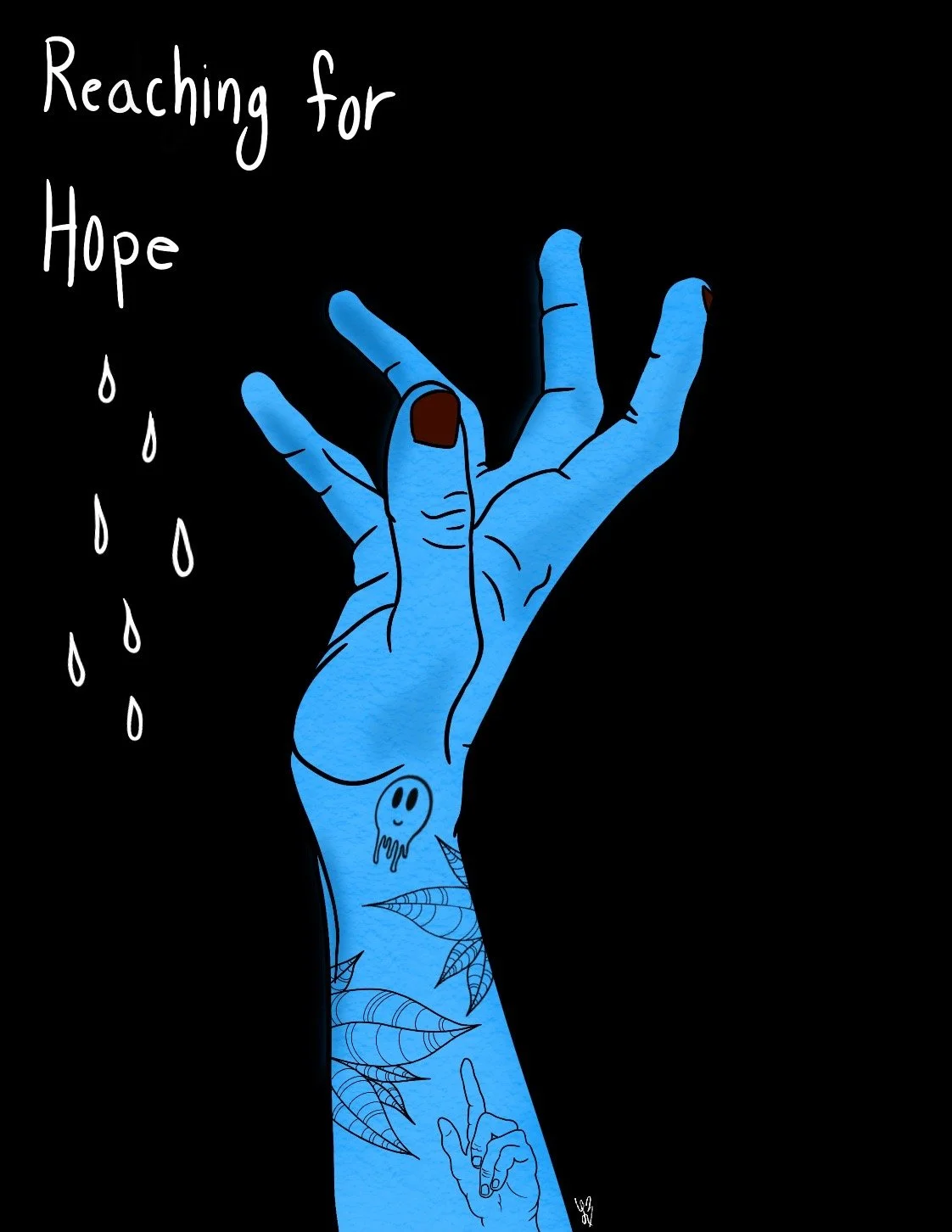
RESIST/THE URGE presents a visual timeline of the group’s growth and activism. The exhibition includes protest signs, artwork created for fundraisers, digital media used to spread awareness, and photographs documenting the Support Squad in action. Together, these materials reflect the creativity and energy that has fueled the group’s expanding community.
Protest signs and printed messages have long served as powerful tools for expressing beliefs, values, and collective missions. They offer a voice for those who may not otherwise feel able to speak publicly, allowing individuals to share their views through humor, urgency, poetry, imagery, or bold declarations.
Through these forms of expression, RESIST/THE URGE highlights the ways everyday people can come together to build something larger than themselves. The exhibition underscores the importance of community solidarity while acknowledging that the struggle for bodily autonomy continues and that collective action remains vital.
This exhibition marks the first presentation in the Ely Center’s Project Space Gallery, a new initiative inviting artists and curators to submit exhibition proposals for consideration by the Ely Center’s Curatorial Advisory Committee. The space is intended to support experimentation, collaboration, and timely artistic responses to contemporary issues.
Carissa Judd
Deborah Costanzo
Jaqueline Pagano
Jennifer Franson Hopper
LBDoodles
Olivia Piper

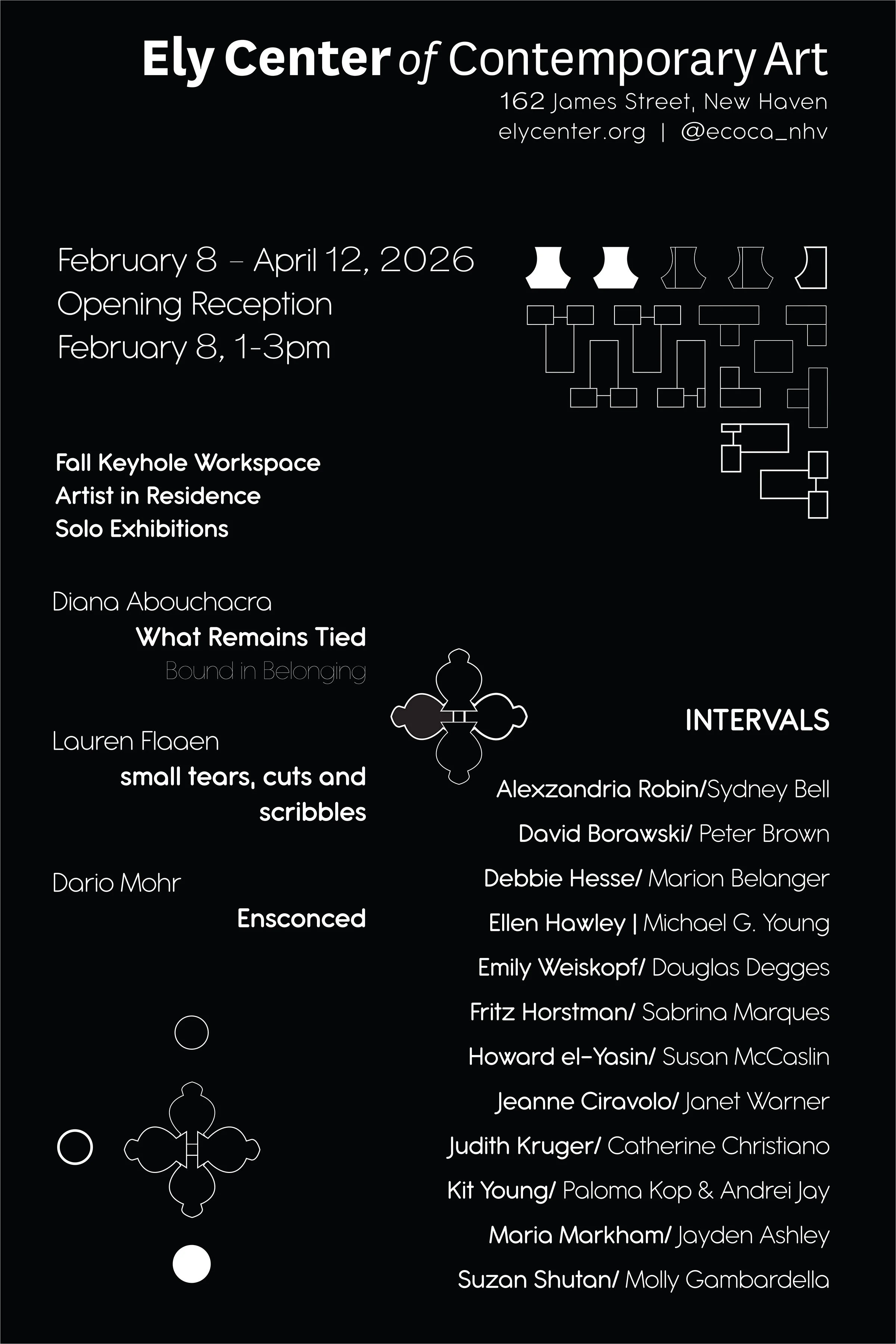
a group exhibition from the Ely Center’s Curatorial and Programming Advisory Committee
Exhibition Dates: February 8 - April 12, 2026
Opening Reception: Sunday, February 8, 1-3pm
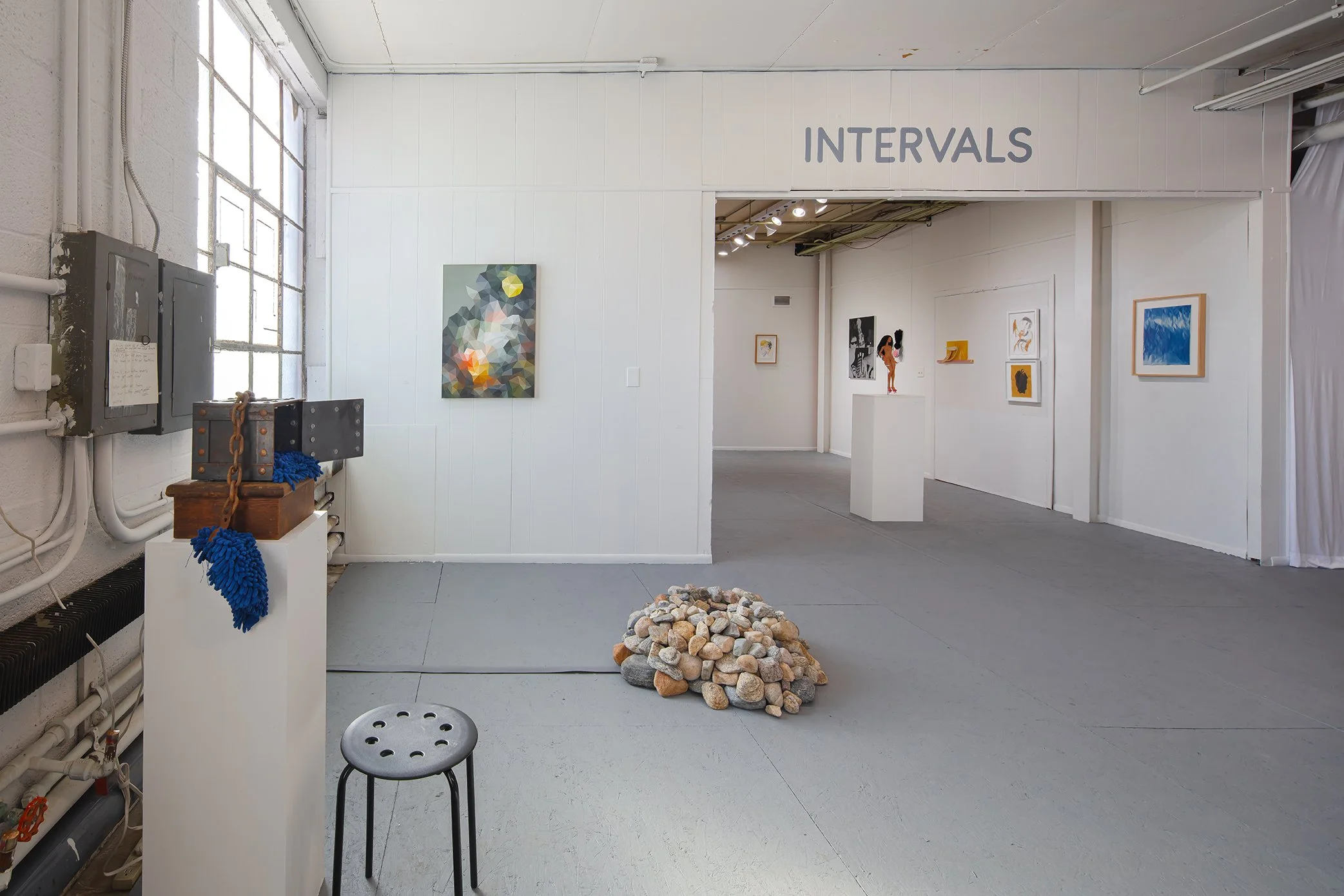
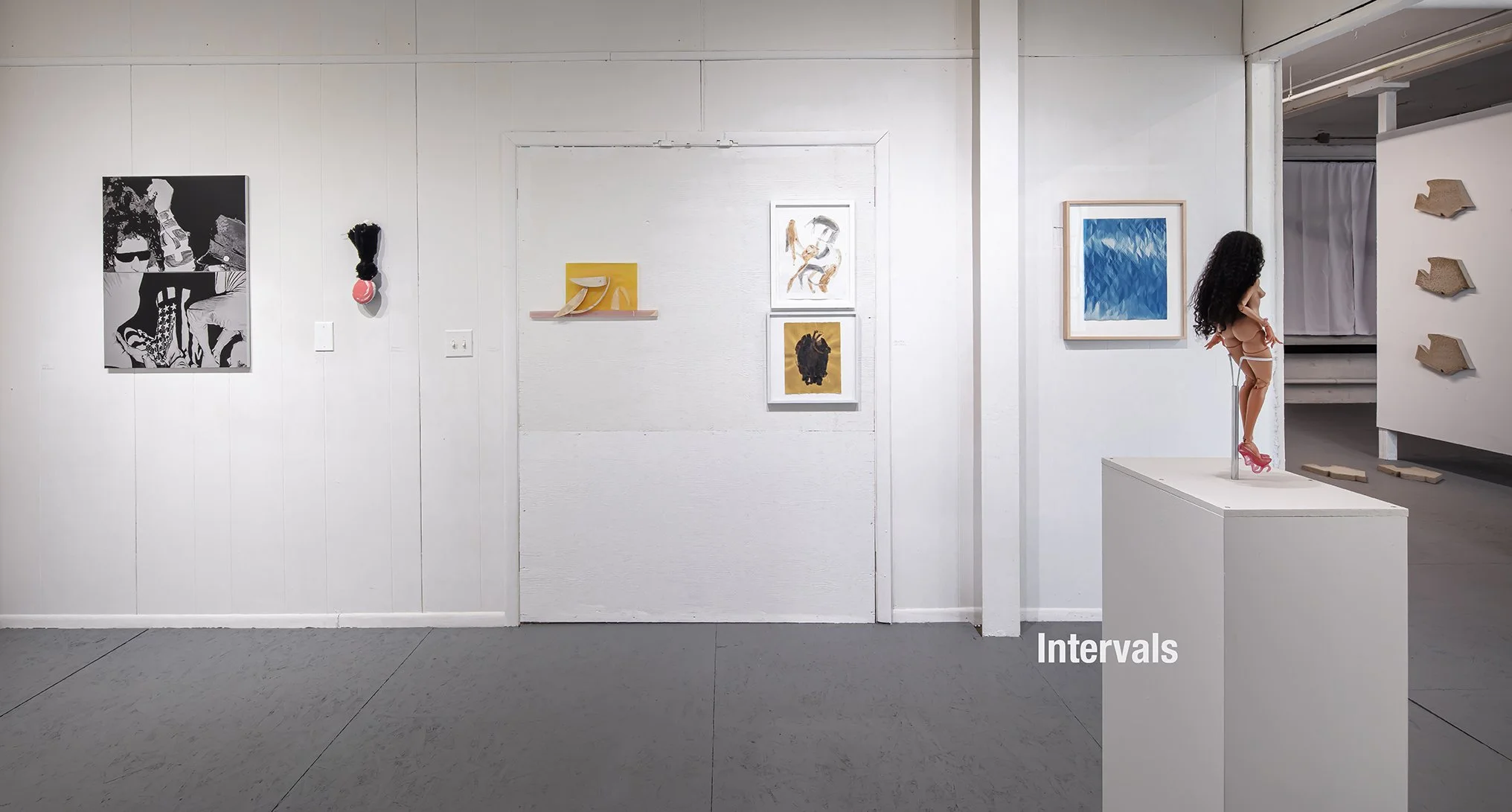
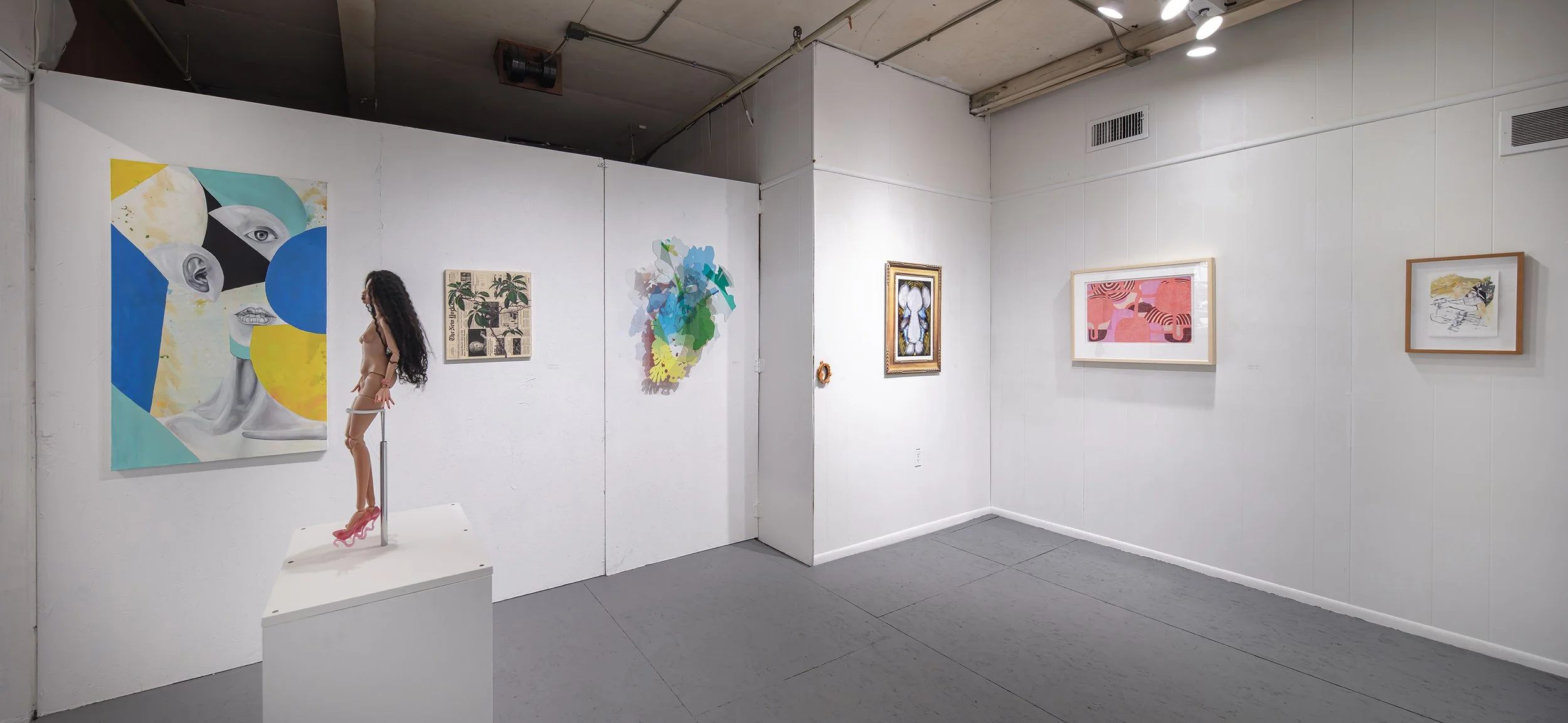
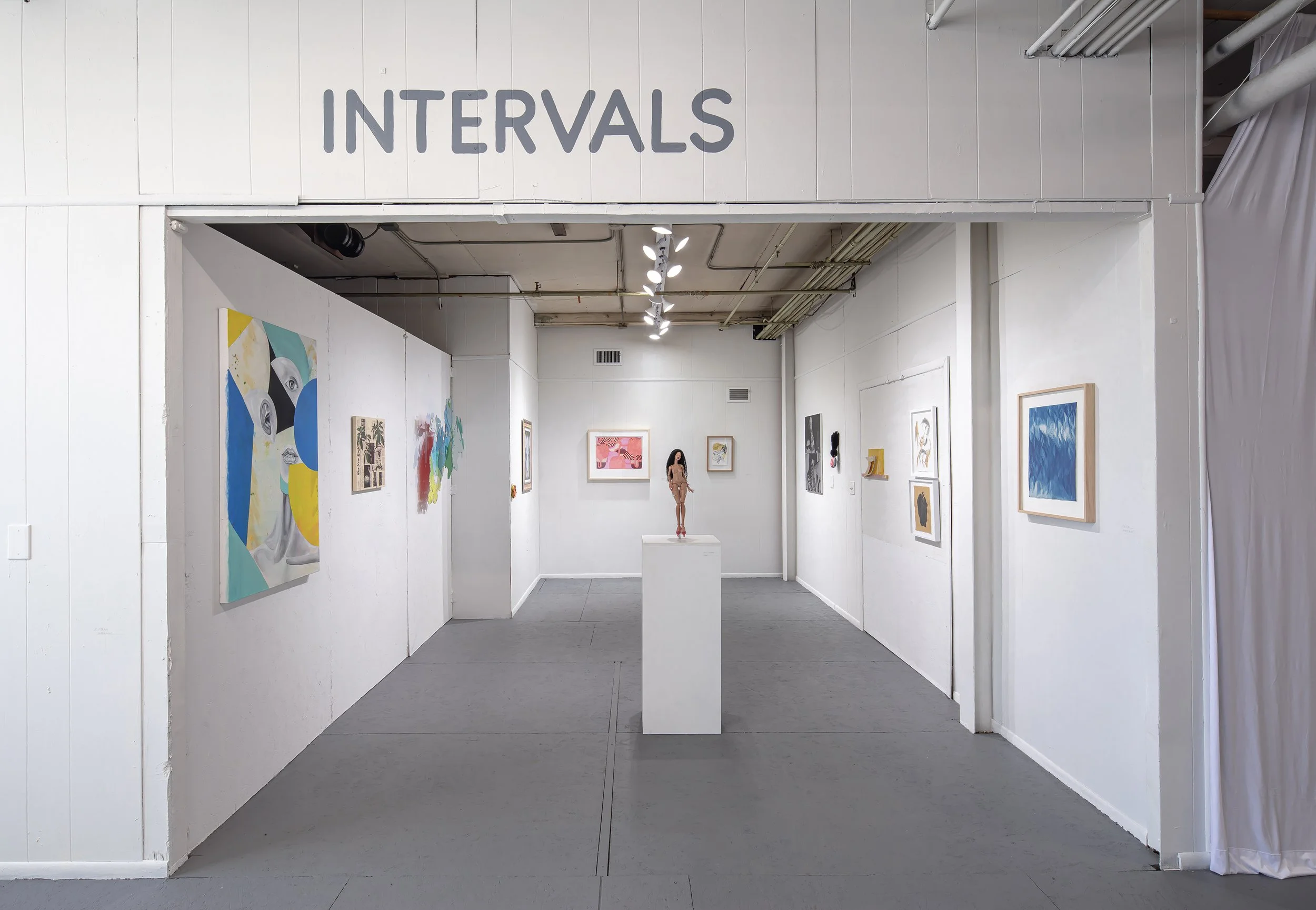
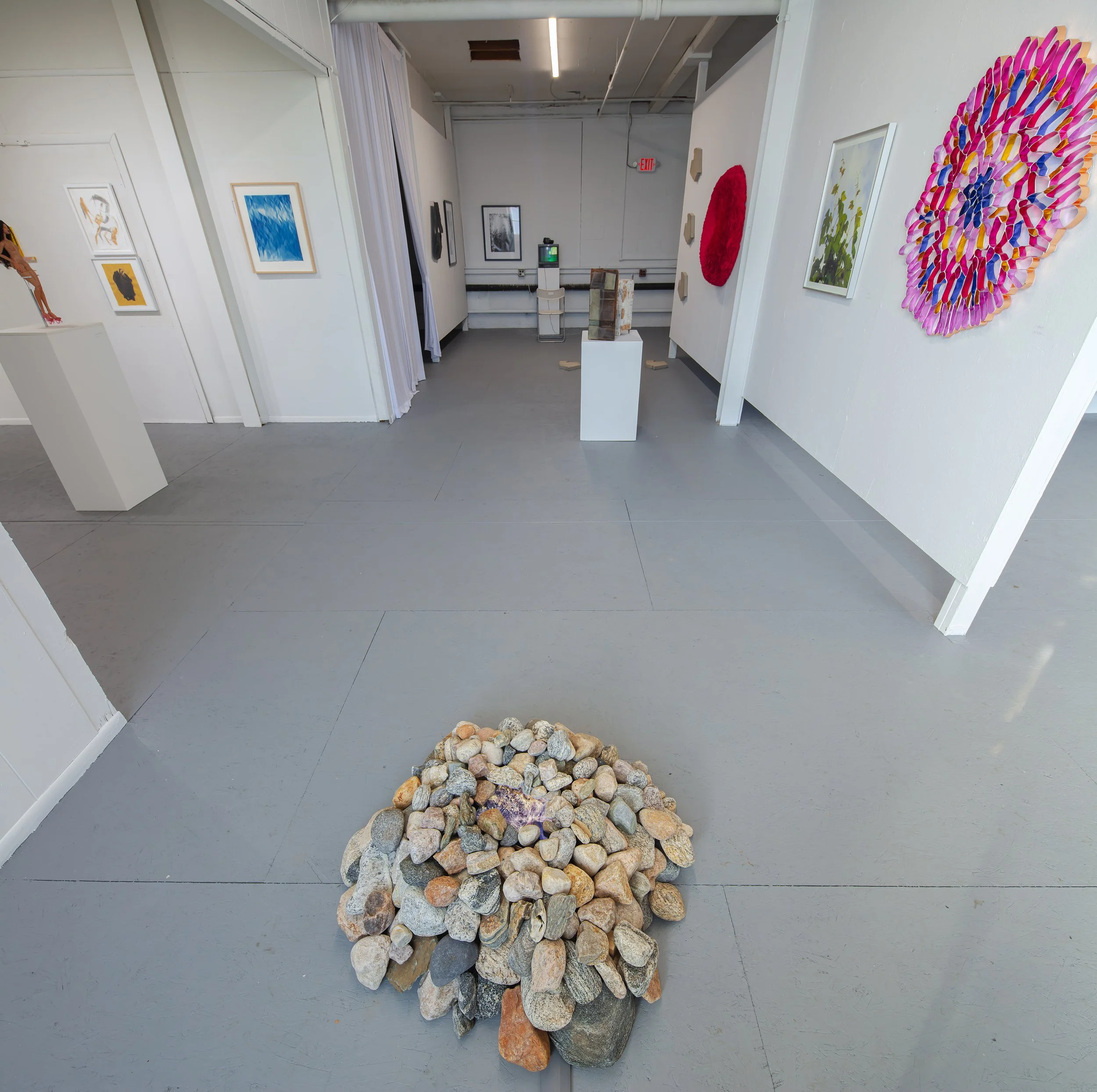
Intervals mark both pauses and beginnings. Presented by the volunteer artists and curators who make up Ely Center’s Curatorial and Program Advisory Committee, this group exhibition reflects on the spaces between places and moments of change. This invitational exhibition, where our incumbent committee invited artists to join them, responds to another interval, a temporary relocation of our gallery.
The title speaks to these in-between conditions—a break, a measure of time, or a structural division; something that separates while also connecting. Here, it gestures toward the shifting site of the gallery, the dual positions held by artist-curators, and the transition into the organization’s next decade. Intervals is a reflection on where we have been and an opening toward what is to come.
The works in Intervals respond to ideas of construction, duration, conversations, and connectedness. Together, the works support the idea of the Ely Center as a fixed container and a living framework shaped by collective effort. In this moment of temporary architecture and long-term vision, Intervals affirms the importance of art, volunteer labor, shared authorship, and the spaces we build together.
Alexzandria Robin/ Sydney Bell
Ellen Hawley | Michael G. Young
Emily Weiskopf/ Douglas Degges
Fritz Horstman/ Sabrina Marques
Howard el-Yasin/ Susan McCaslin
Judith Kruger/ Catherine Christiano
Kit Young/Paloma Kop & Andrei Jay
Suzan Shutan/ Molly Gambardella
Press:
BRIAN SLATTERY: MIDBROW
Ely Center Celebrates The In-Between | February 19, 2026
JARELIS CALDERON: ARTS PAPER
Ely Center Reopens In Fair Haven | February 11, 2026
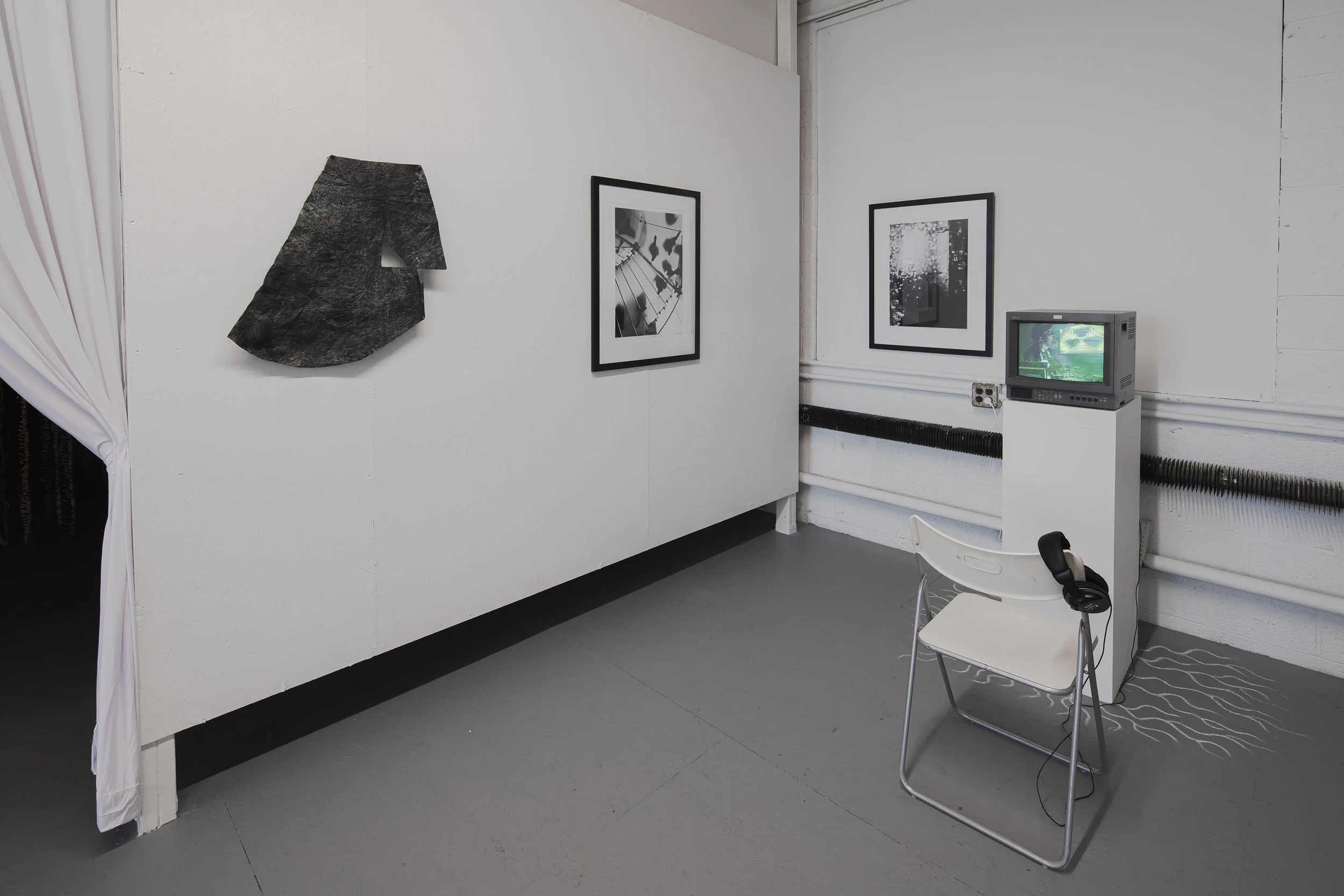
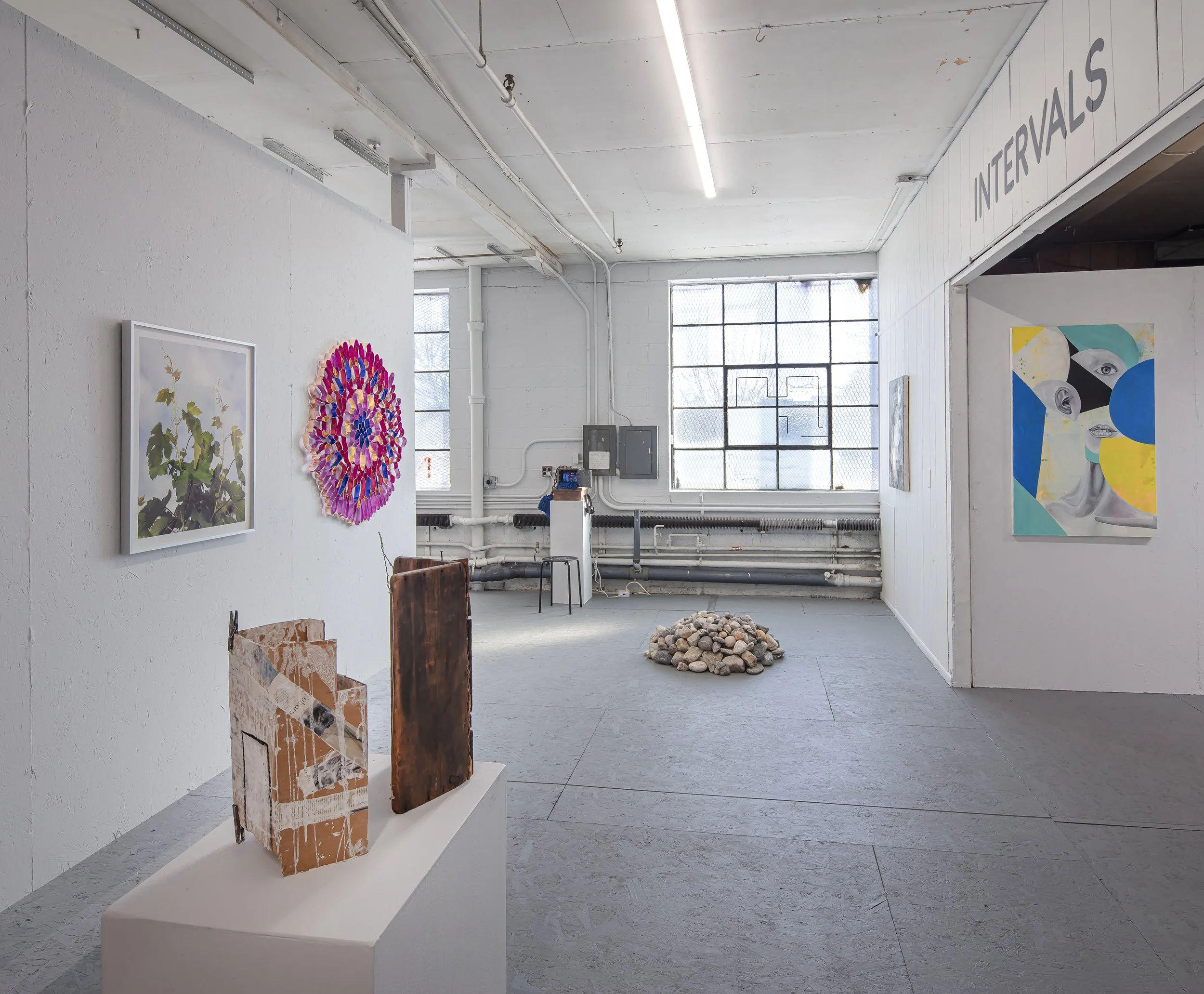
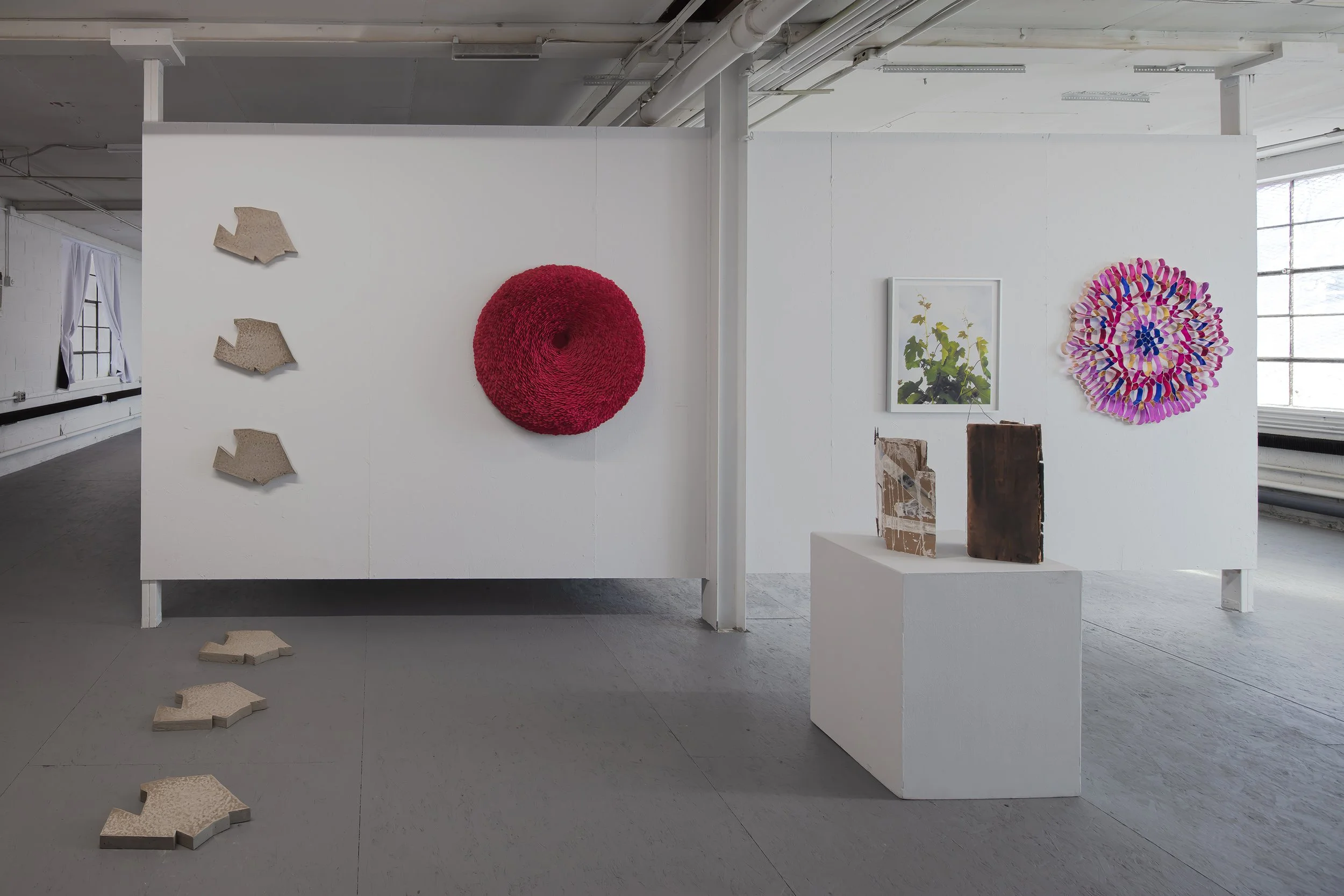
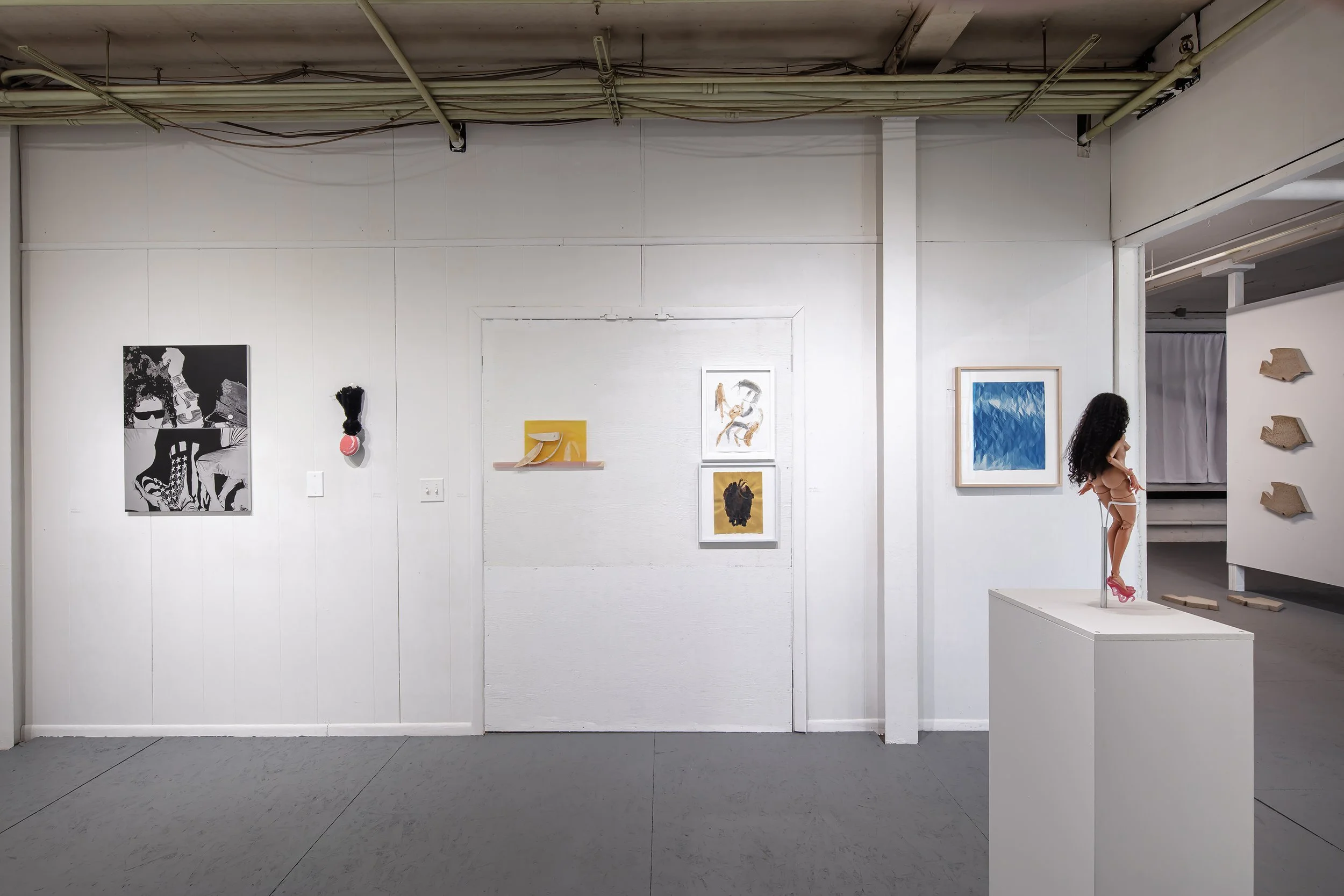

Opening Reception: Sunday, February 8, 1-3pm
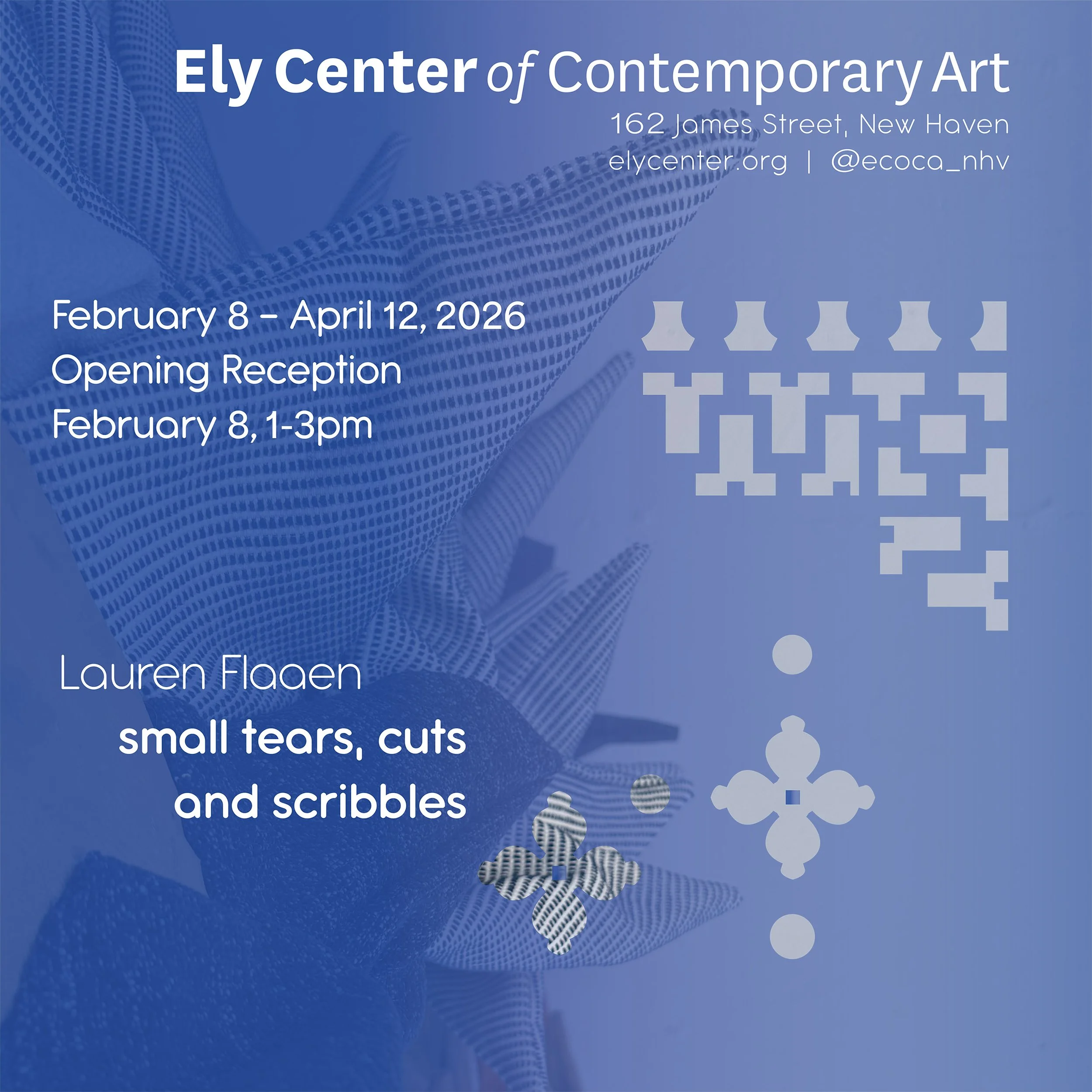
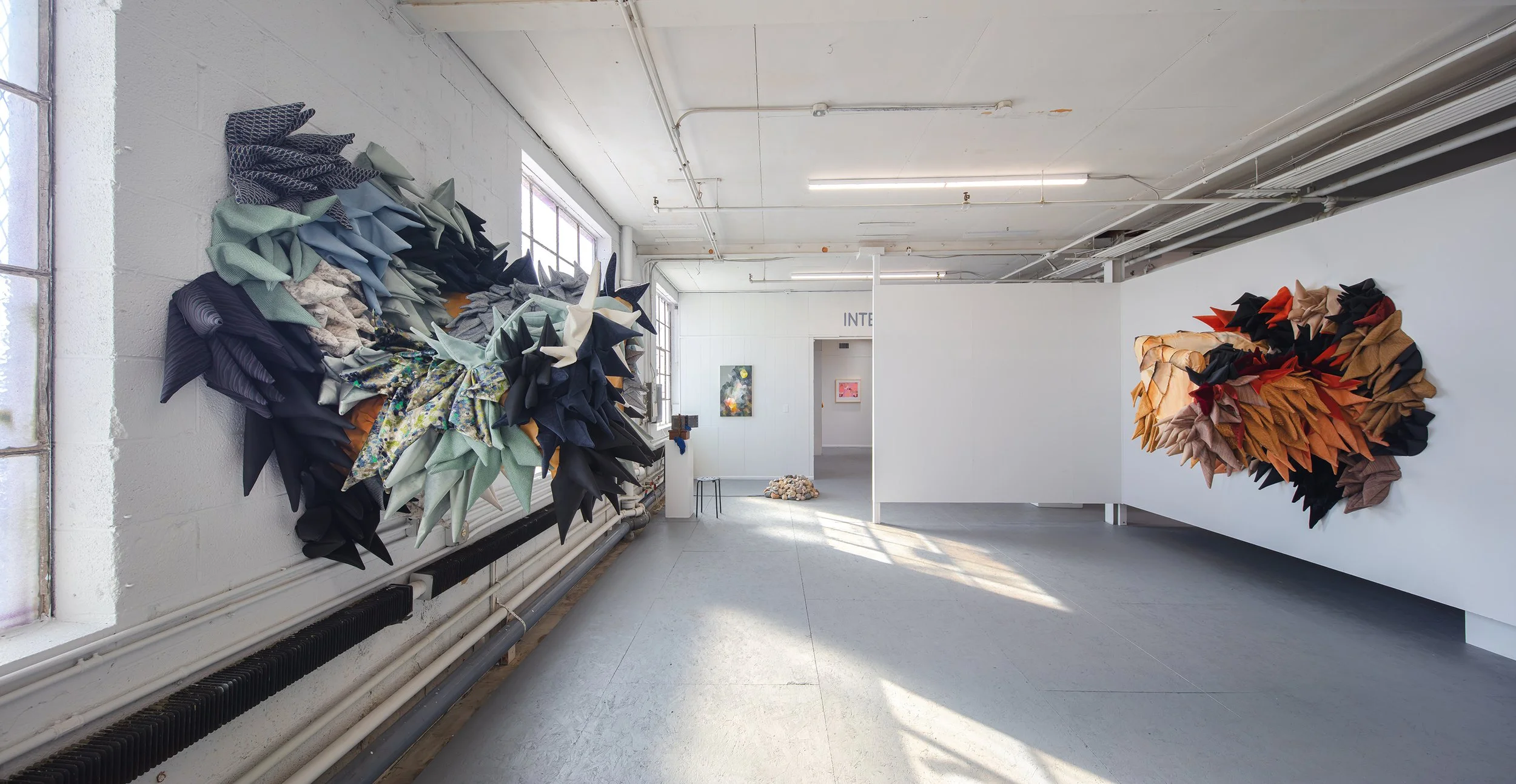
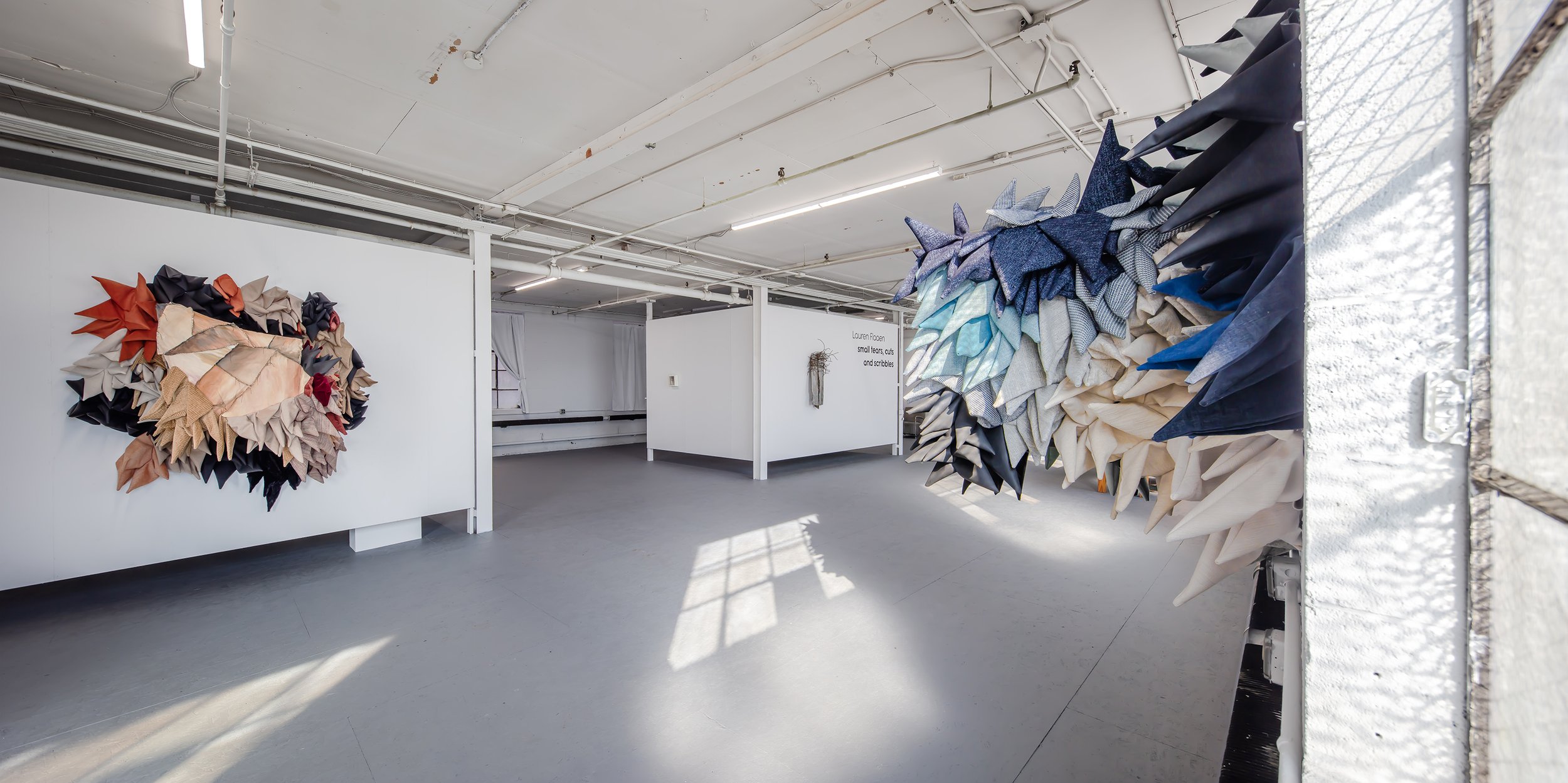
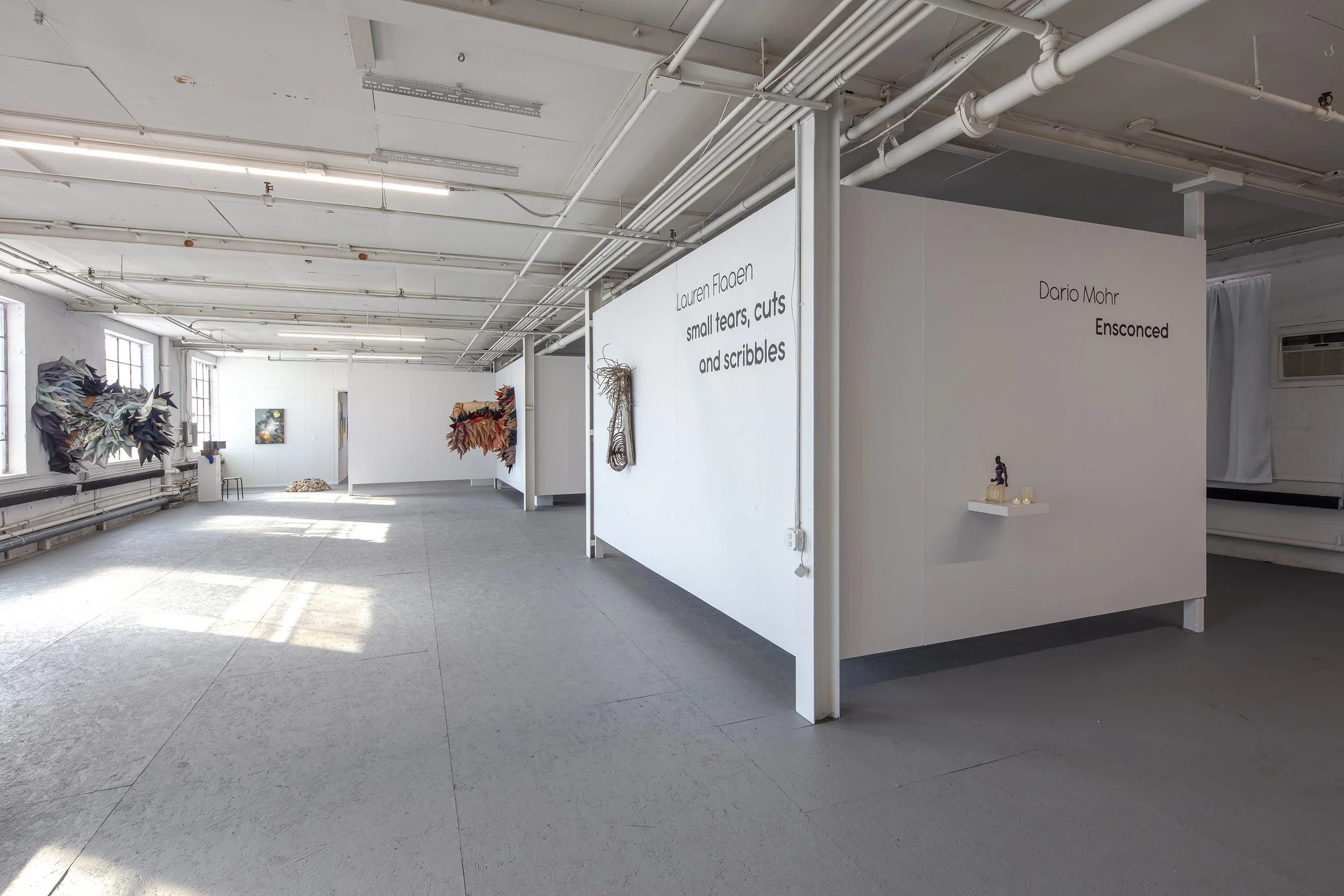
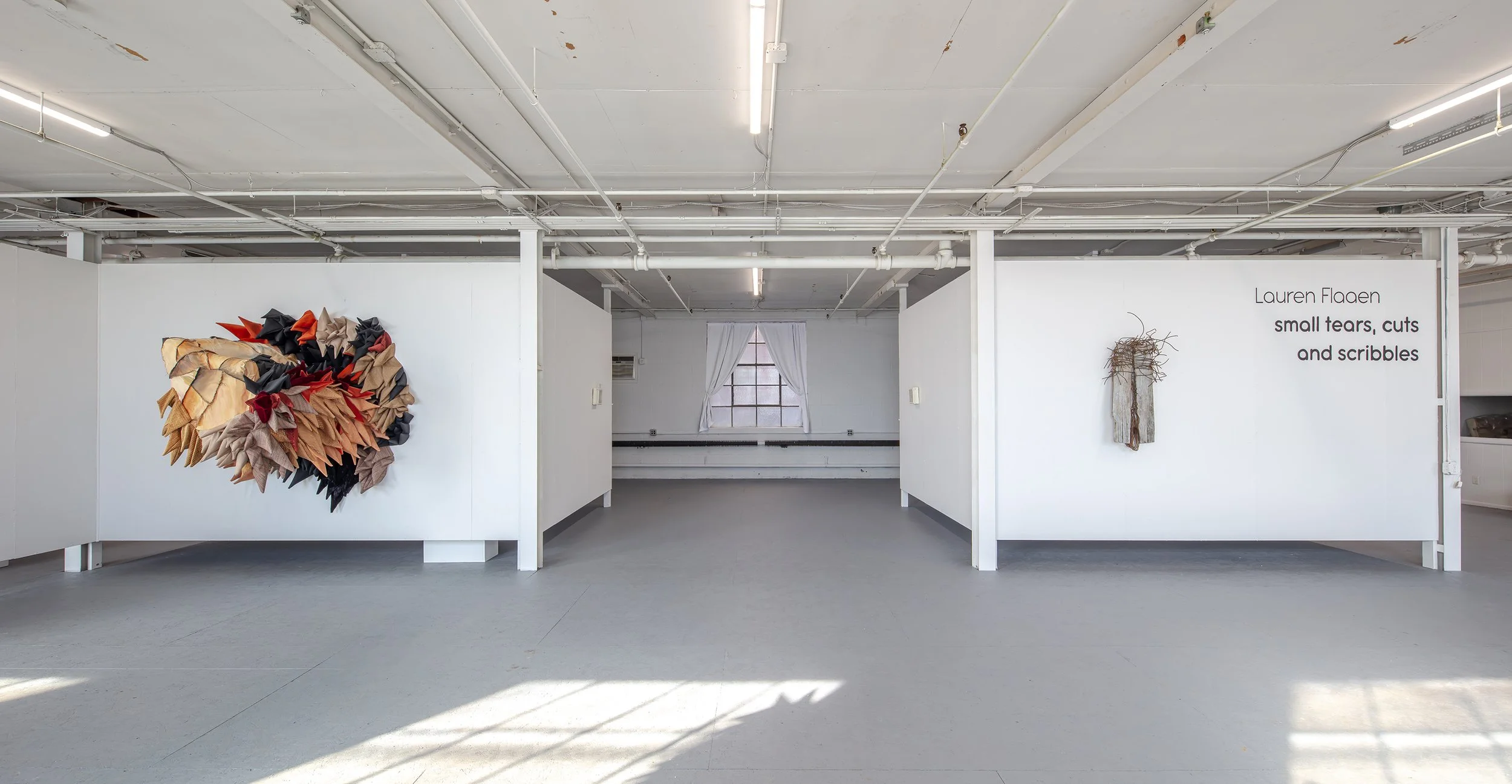
My artistic practice centers around transforming everyday objects into anthropomorphic forms, where the material world splits and reconverges, entangling matter to flow, move, and propel forward. I cut, snip, paint, construct, integrate found objects, building materials, and manipulate steel into corporeal assemblages. This process responds to the embodied and disembodied experiences inscribed with societal expectations and norms. Through exploring an aesthetic of repulsion and attraction, my work holds the tension between fragility and strength, trauma and renewal, and tenderness and violence. It reflects how knowledge and understanding are intertwined with history, culture, and power. -Flaaen
Press:
JARELIS CALDERON: ARTS PAPER
Ely Center Reopens In Fair Haven | February 11, 2026
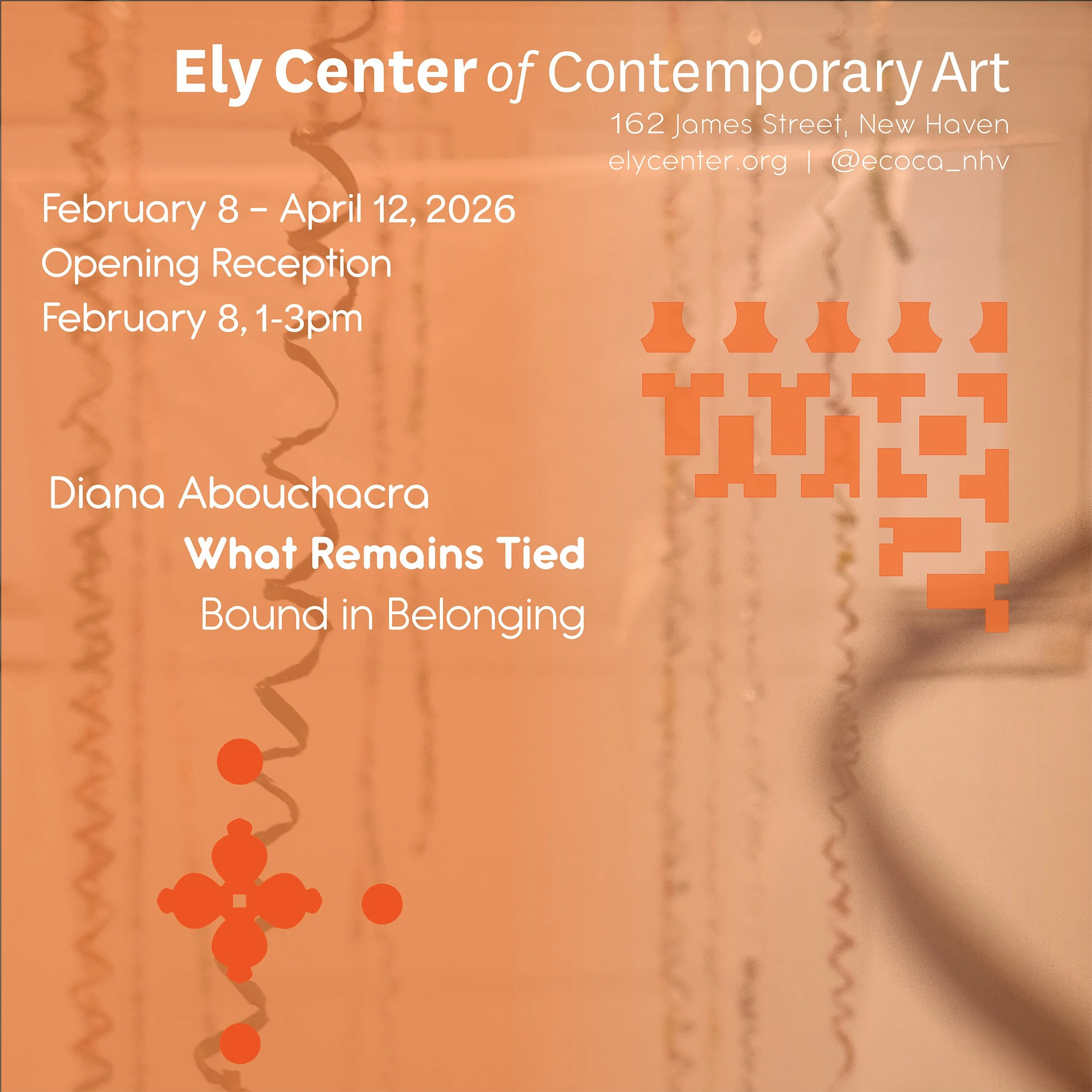
Opening Reception: Sunday, February 8, 1-3pm
Art making is an intuitive exploration for me, a way to investigate memory and process emotions. Themes of belonging, ephemerality, multiplicity, and transformation recur throughout my work. Repetition and layering act as both process and structure, creating a meditative, reflective rhythm. In my practice, I examine how moments of interaction can be translated into tangible form and how process and method generate expanded meaning.
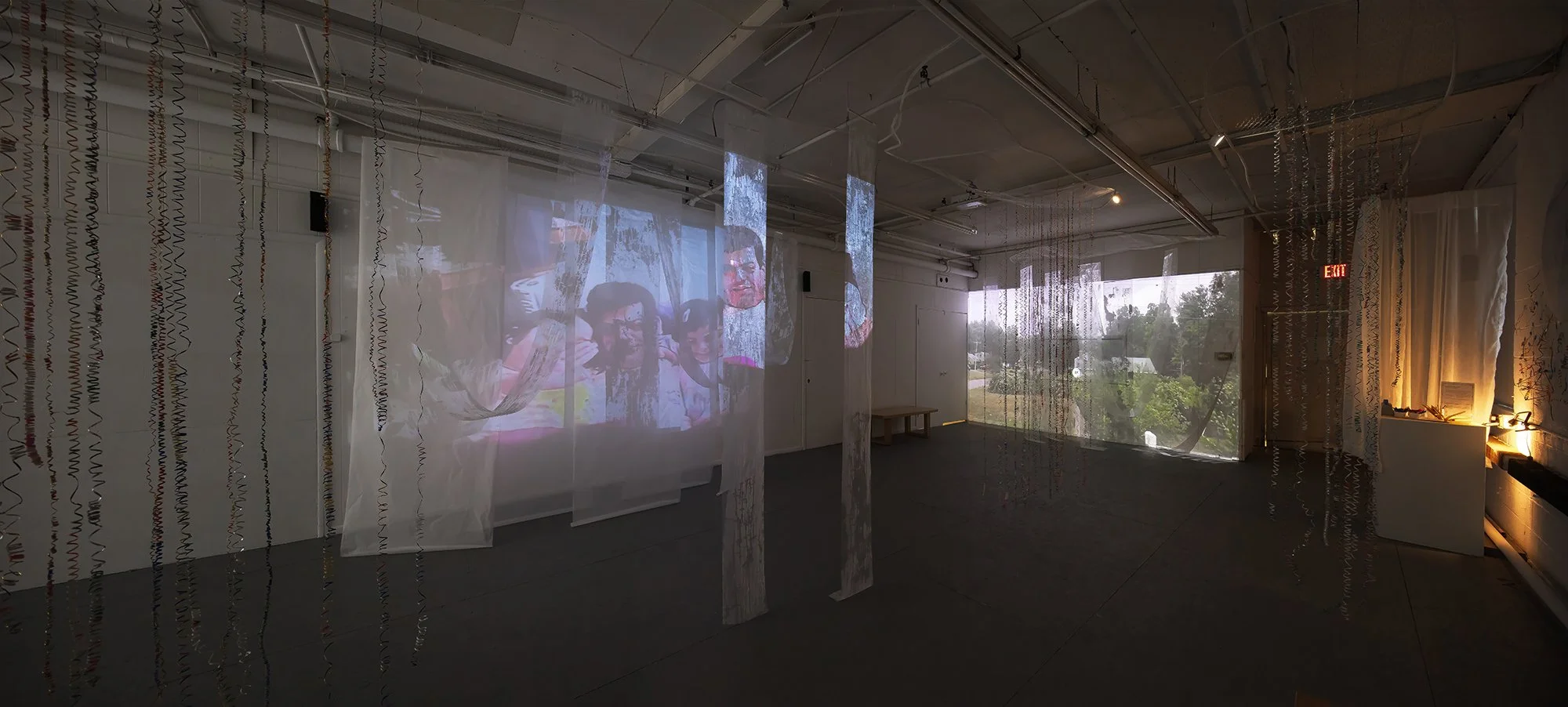
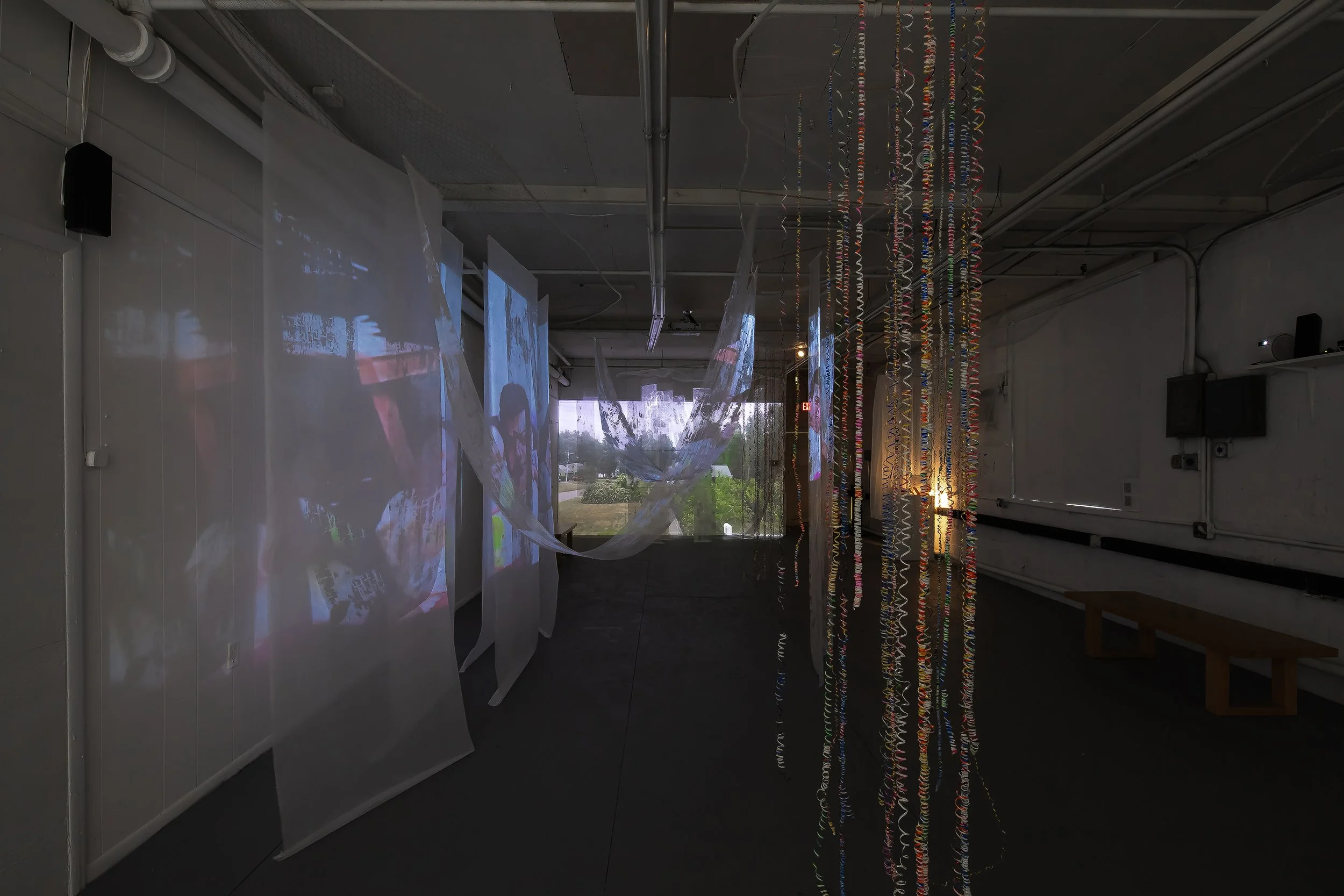
What Remains Tied, Bound in Belonging is an installation that explores the relationship between emotion, memory, and belonging — how these elements shift over time and become intertwined with our present experiences.
Hanging from the ceiling are long spiral twist ties inspired by my discovery of bread ties from my late mother’s kitchen drawer. Collected from family, friends, and newly gathered sources, these ties function as material traces of memory and feeling, made tangible through their form and varied colors. Made into long spiral coils - what I refer to as “memory ties’ - their structure suggests continuation, growth, and interconnectedness.
While audio echoes throughout the space, home videos of my childhood project across the room, fragmented by suspended paper rolls, fabric, and memory ties. The resulting moving images reflect the subjective nature of memory, some moments resurface vividly while others soften or fade away. The installation becomes a site of accumulation, suggesting that wholeness and belonging are not found intact but gradually built - layered over time.
Press:
JARELIS CALDERON: ARTS PAPER
Ely Center Reopens In Fair Haven | February 11, 2026
Opening Reception: Sunday, February 8, 1-3pm
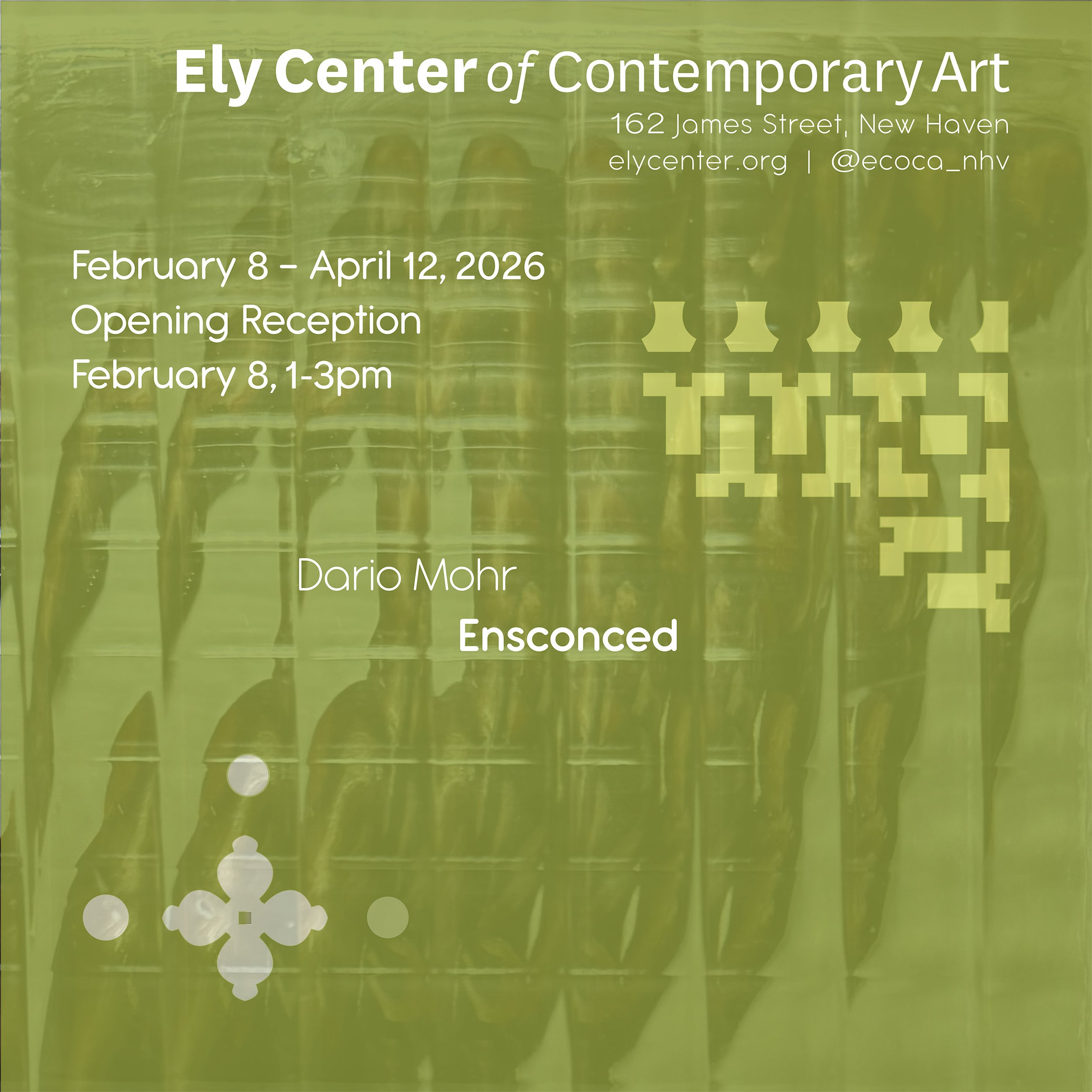
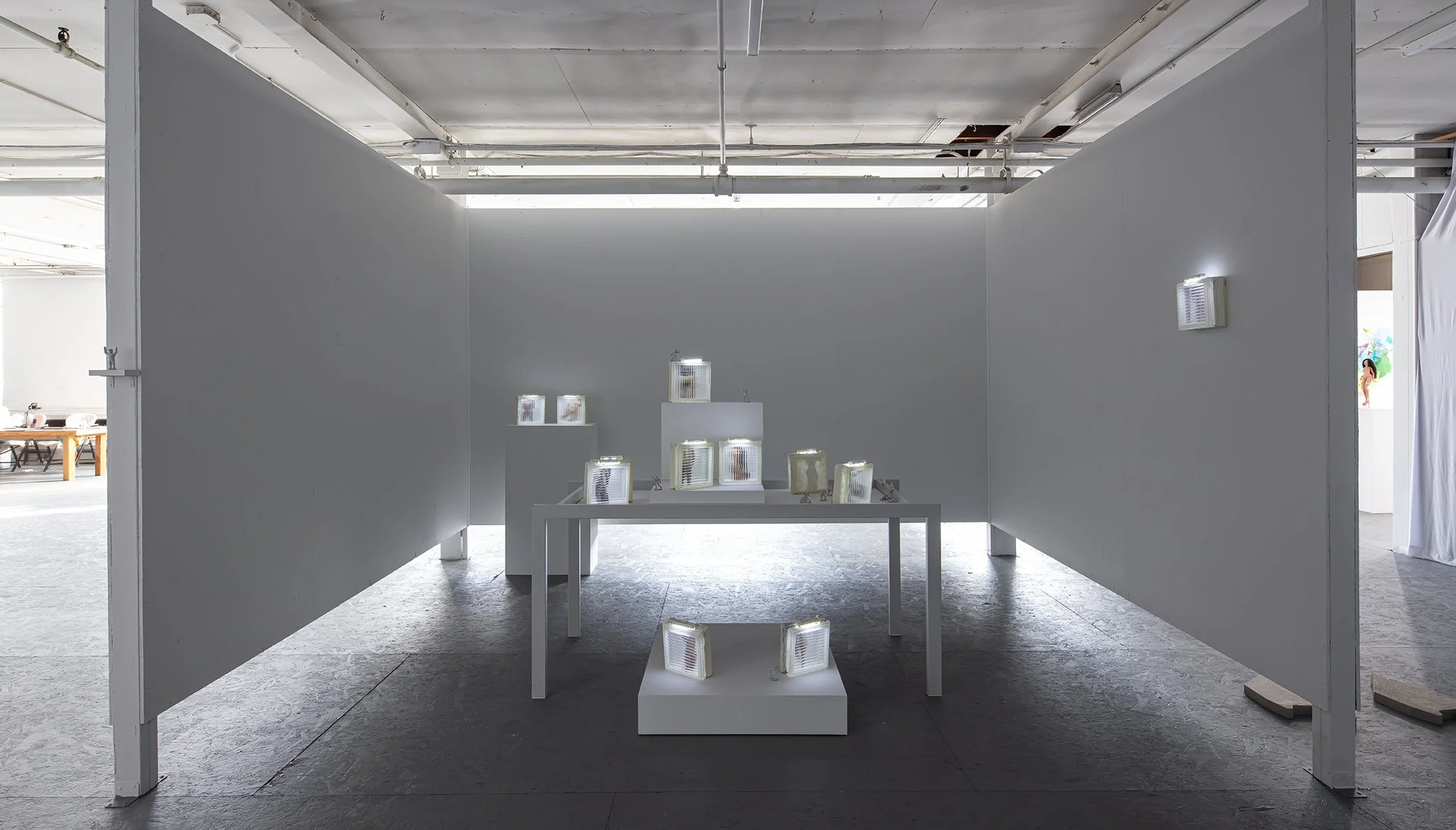
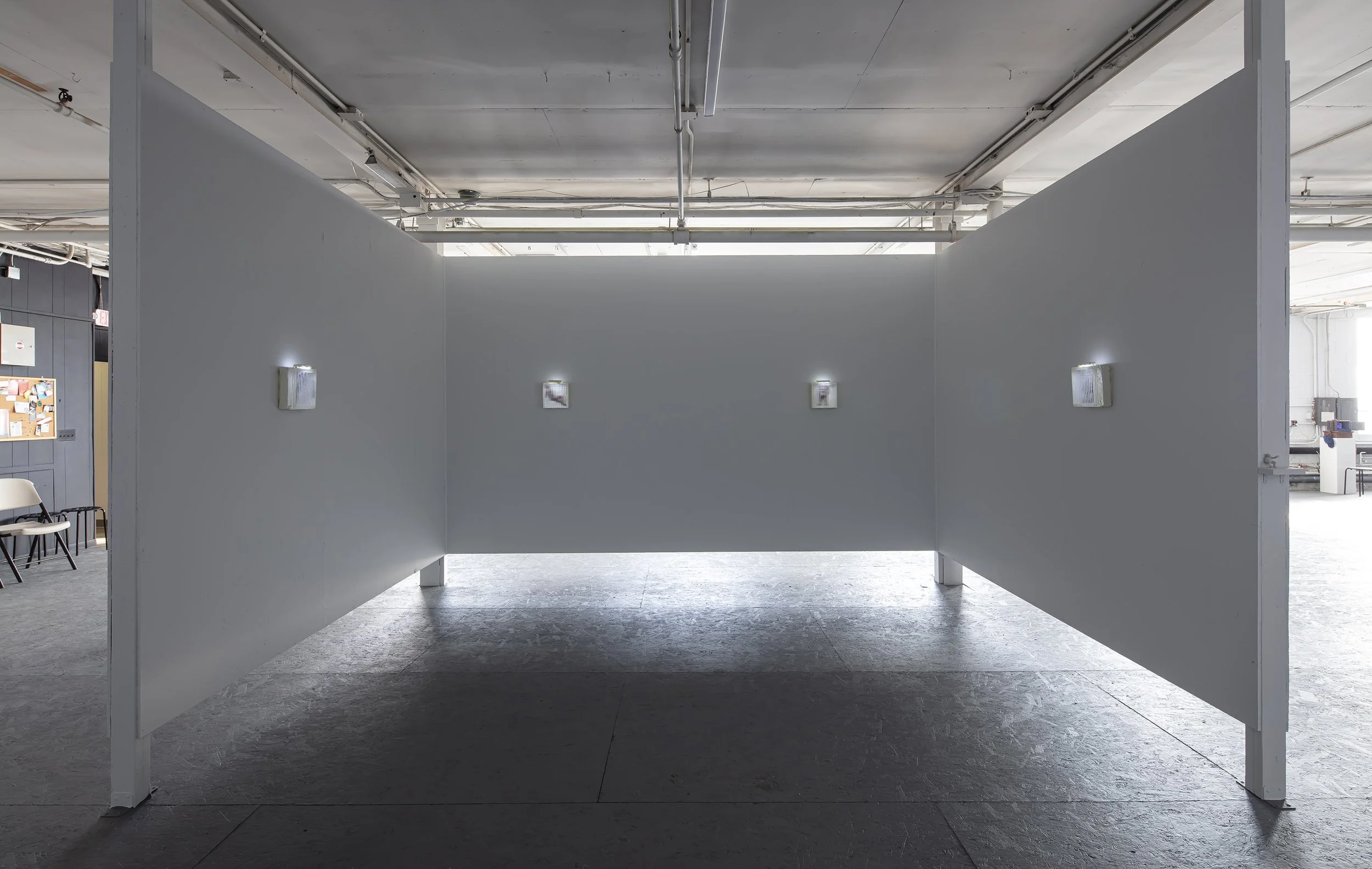
This exhibition brings together a body of work that reconsiders objects of display: architectural fixtures, vessels, and framing devices as mechanisms through which visibility, desire, and power have historically been negotiated. Drawing from the formal language of sconces, the works examine how bodies are illuminated, elevated, or concealed, and how these gestures continue to shape contemporary ways of seeing.
The term sconce originates from the Old French esconce and the Latin absconsa, meaning “to conceal” or “a hiding place.” Historically, sconces were designed to hold light while obscuring its source, producing controlled illumination that shaped interiors and the bodies within them. In this exhibition, illuminated window-block sculptures house painted nude Black male figures, refracted through glass and lit from above. The figures exist in a suspended state, visible yet mediated, where illumination becomes both an offering and a constraint. Light functions not as a neutral tool, but as an active force that frames the body through histories of surveillance, desire, and selective visibility.
This inquiry extends into vessel-based works that draw from the lineage of trophies. Once understood as monuments of conquest and “prizes of war,” trophies transformed domination into object form. By reworking these shapes without naming them directly, the vessels in this exhibition shift away from triumph toward intimacy, asking what it means to hold presence, memory, and embodiment rather than victory.
Together, the works position familiar forms: fixtures, containers, architectural fragmentsas thresholds rather than endpoints. They invite viewers to consider how systems of display shape meaning, and how Black male bodies, in particular, have been illuminated, obscured, or monumentalized under inherited visual regimes. The exhibition does not seek to resolve these tensions, but to hold them in light, allowing concealment and revelation to coexist, and opening space for new ways of seeing, lingering, and encountering the body.
Press:
JARELIS CALDERON: ARTS PAPER
Ely Center Reopens In Fair Haven | February 11, 2026
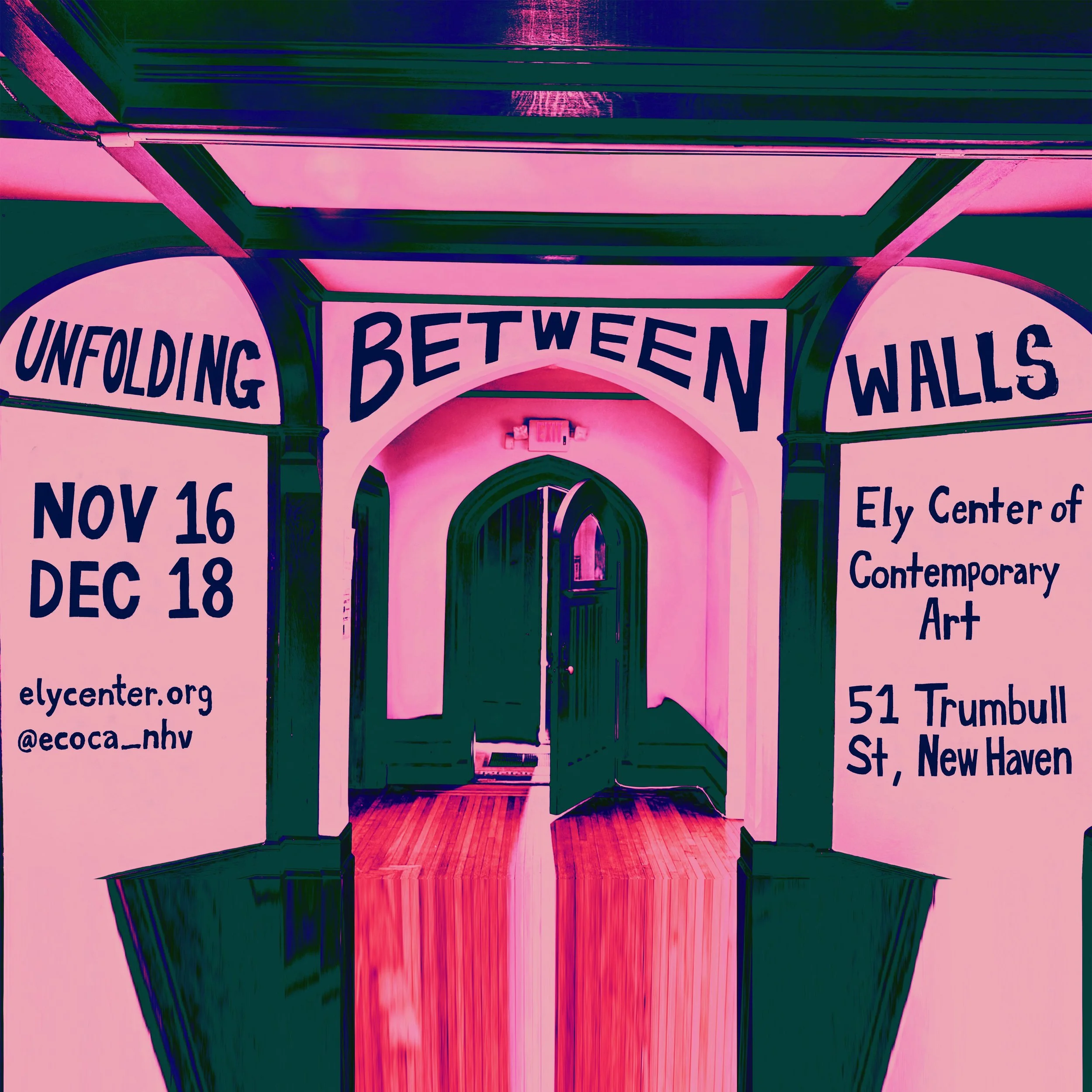
Curated by Kim Weston & Aimée Burg
Exhibition Dates: November 16 - December 18, 2025
Opening Reception: Sunday November 16, 2:30 - 5 pm
Unfolding between walls is a farewell to the building, and a hello to the next chapter for the Ely Center of Contemporary Art. Over 70 local (New Haven and CT) artists were invited to include small works that touch upon the idea of change for this salon style exhibition curated by Kim Weston and Aimée Burg. This is a collaboration between old and new friends of this building. These artists include photographer Marjorie Wolfe who took art lessons in the basement of 51 Trumbull back in the early 1960’s, Anna Bresnick who curated in the building when it was still the John Slade Ely House, and Ross Dener, a Maine-based artist with roots in CT portraying the rapidly changing American landscape and its attendant implications for lives of those within it. These artists represent our commitment to honoring our past while preparing for a new beginning.
Kwadwo Adae Kelsey Archbold Mahsa Attaran Brock Bowen Rosa Bozhkov Marquis Brantley Sr. Jay Bright Anna Broell Bresnick Joy Bush Jennifer Cadoff Noa Cancelmo Leah Caroline Liz Celotto Junior Charles Odette Chavez-Mayo Susan Clinard Maura O Connor Christian Crowley Phyllis Crowley Christian Curiel Amartya De Ross Dener Vincent Dion Dooley O Madeline Eldridge Camilla Fallon Avery Fazio Dan Gries Eddie Hall Luke and Mistina Hanscom Charlotte Hecht Shaunda Holloway JAHMANE Noé Jiminez Katie Jurkiewicz Helen Kauder Lisa Kereszi Rui Kez Jennifer Knaus DAVID KUEHLER Marcy LaBella Lucy Le Bohec Parker Lee Linda Lindroth Zach Lytle Linda Mickens Christian Miller Maria Morabito Ken Morgan Aisha Nailah Nyemer Moshopefoluwa Olagunju Miller Opie Adrian Panaitisor Alison Pasquini Jonathan Peterson Raymond Pinto Caleb & Felix Portfolio Cynthia Beth Rubin Gerald Saladyga Roxy Savage Erik Schoonebeek NOIZ SIN Erin Koch Smith Sydney Smith Remy Sosa Paul Theriault monica tiulescu Lydia Viscardi John Frederick Walker Jamia Weir Yves François Wilson Marjorie Gillette Wolfe Kit Young
For Layout and Price List PDF Click HERE
For Artist Information PDF PART 1 HERE
For Artist Information PDF PART 2 HERE
For Artist Information PDF PART 3 HERE
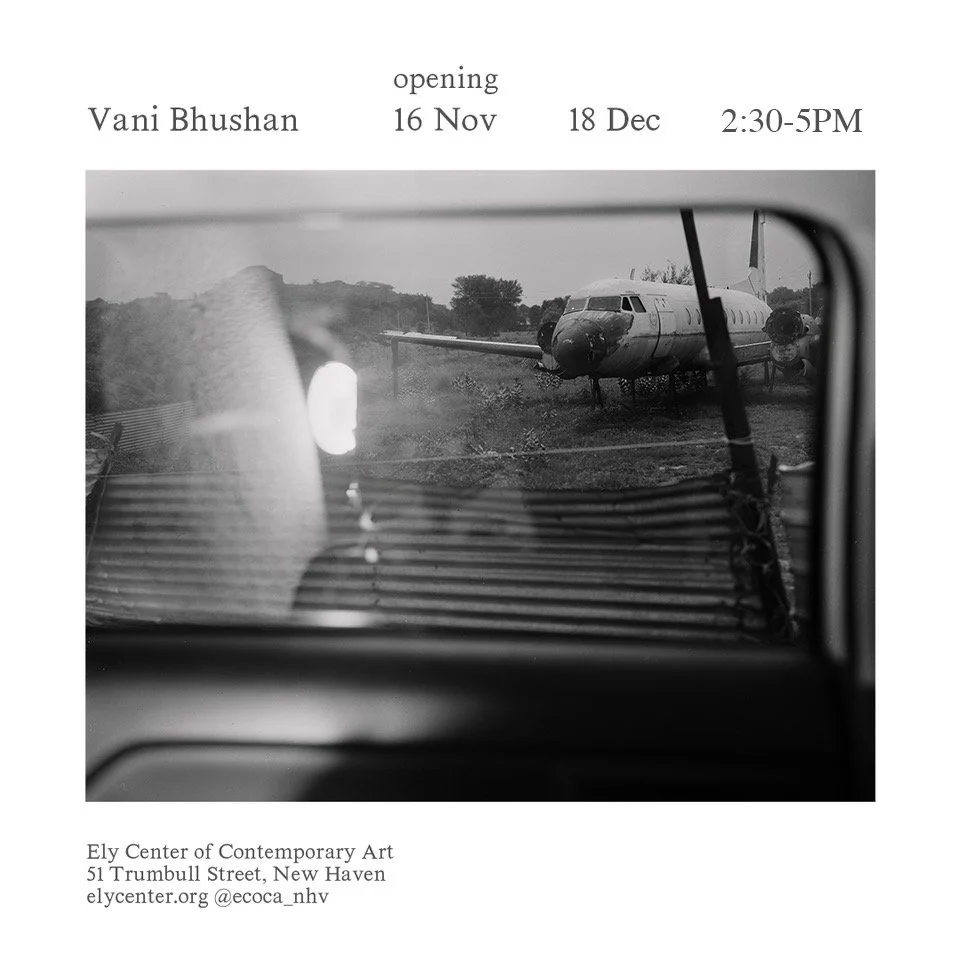
Vani Bhushan
Untitled, India questions the limits of witnessing. I photograph landscapes in New Delhi marked by protest and erasure. The work lingers in the provisional—where looking is uncertain, where presence remains conditional.
In 2024, multiple international news forums recirculated an image of Delhi’s heatwave that had first been used in 2022. Its title was casual — no pointers to place or condition. I read it as visual training in dehumanising the fact; a landscape imaged to exhaustion, its meaning decentered. I began to actively seek out these same landscapes and turned them into my photographic stage.
Journalistic imagery within India has predominantly been mediated through the male form. Documentary practice, in its purest form, is tethered to the street — but the street isn’t available to me as a backdrop; it isn’t permitted. The photographs in Untitled, India are staged out of this understanding — a way for me to account for witnessing, my witnessing — an inquiry limited both by news media censorship and by a gendered denial of access.
What, then, is required of imagery that is made after the fact? Should it be conceived as a practice of necessity — an account of that which is withheld? And how does one mimic the exhaustion of events contained within the documentary photograph?
My collaboration with actors feels necessary for this replication. They are people who have either experienced or witnessed acts of aggravation and brutality. The darkroom is also an important part of my process — I print on discontinued paper and move the prints through an aging chamber to replicate the materiality of the archive. When I show the work, I mix these prints with photographs I find in secondhand markets in India, whose sources are unknown.
Sometimes the camera restructures the world in ways I could not have anticipated. My optical choices —using a view camera (which indexes stillness but here is deliberately unsettled) and a 35mm camera with a shutter drag — are meant to create conditions in which the photograph resists predetermination. Film, for me, functions as a conduit for latency and delay. Might I evade totalising authorship by employing a (seeming) lens of ambivalence? Could that open up new narratives in the reading of presumably familiar images?
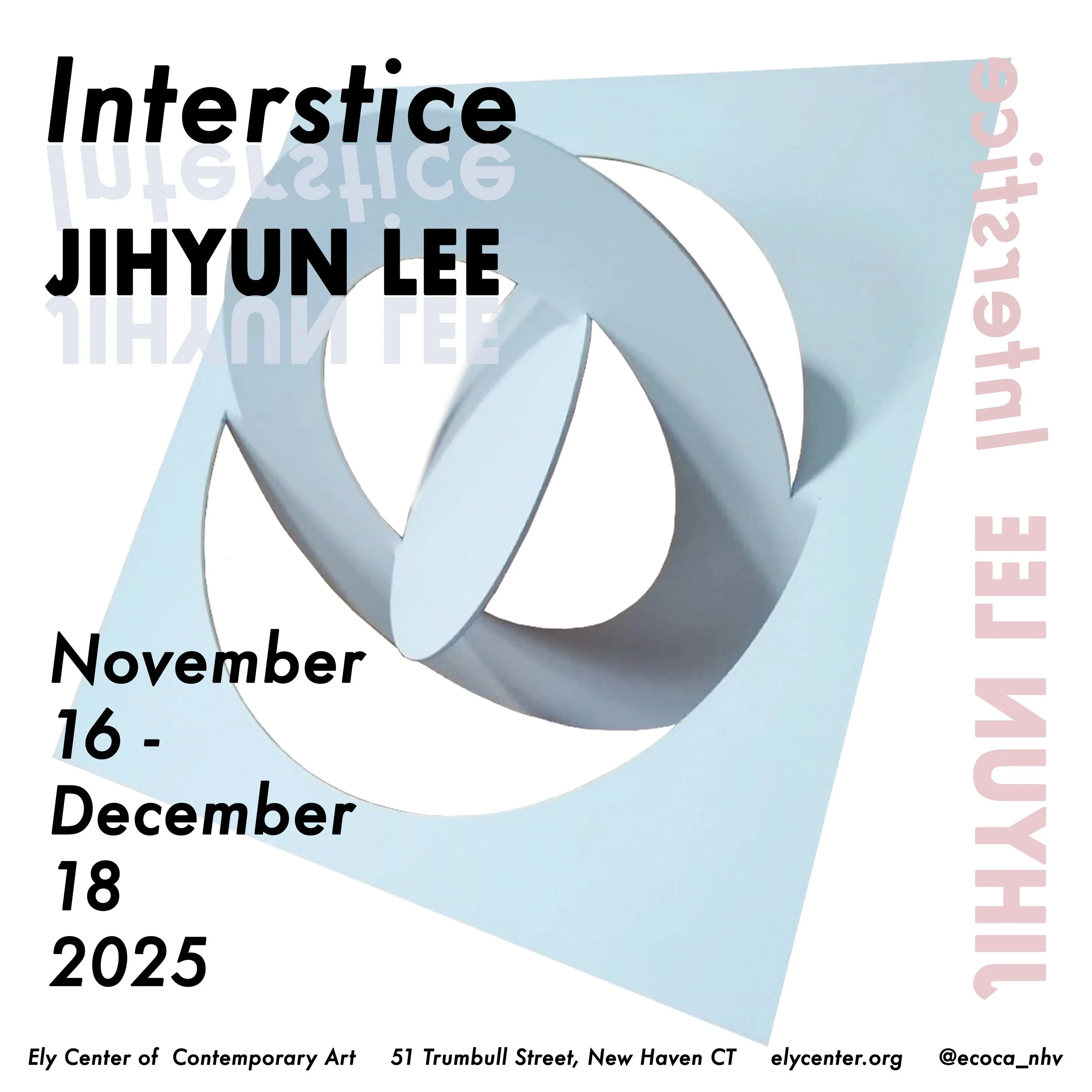
Opening Reception: Sunday November 16, 1-3pm
Artist Talk: Sunday December 7, 2pm, A conversation between Jihyun Lee and Cat Balco
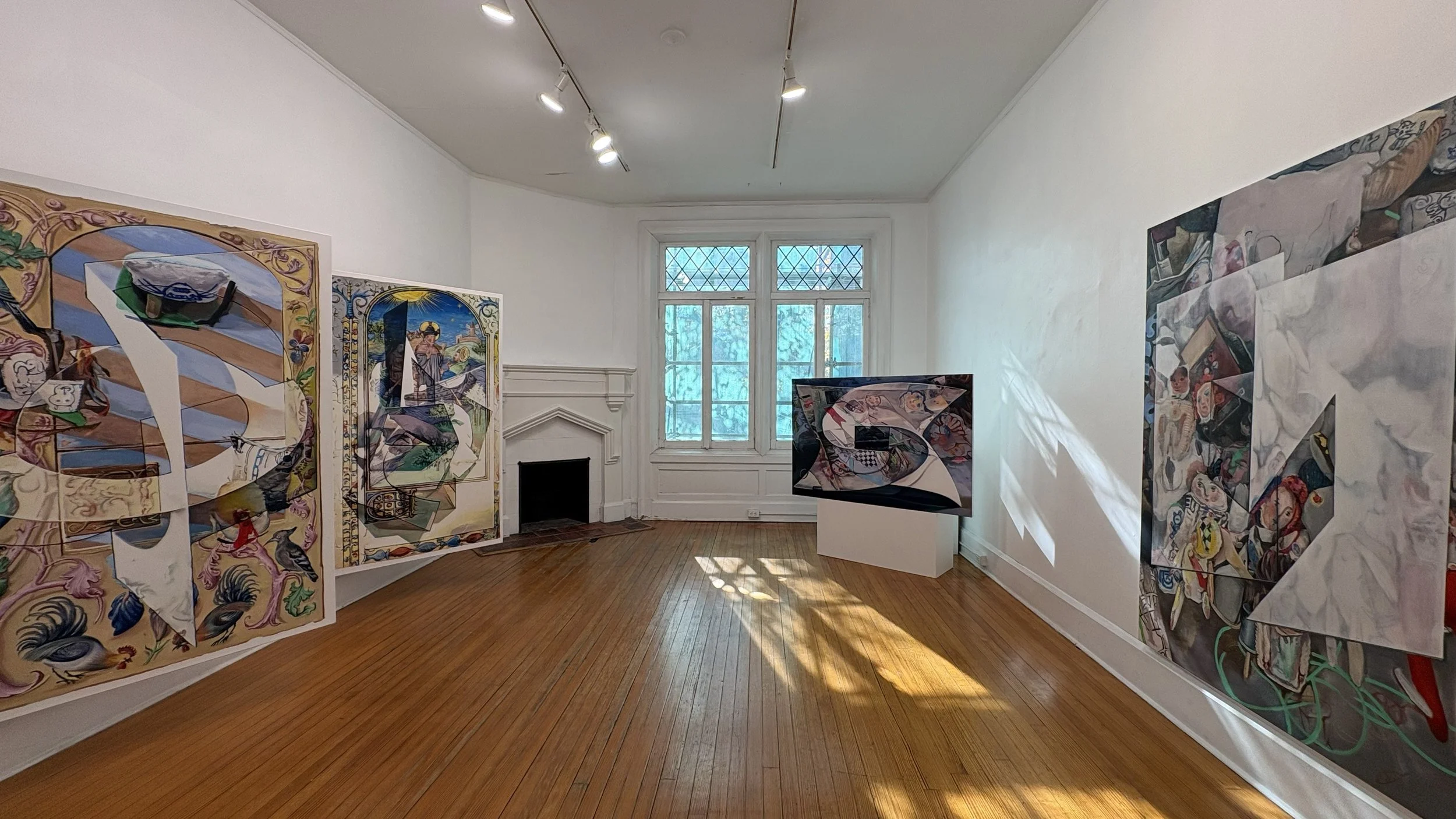
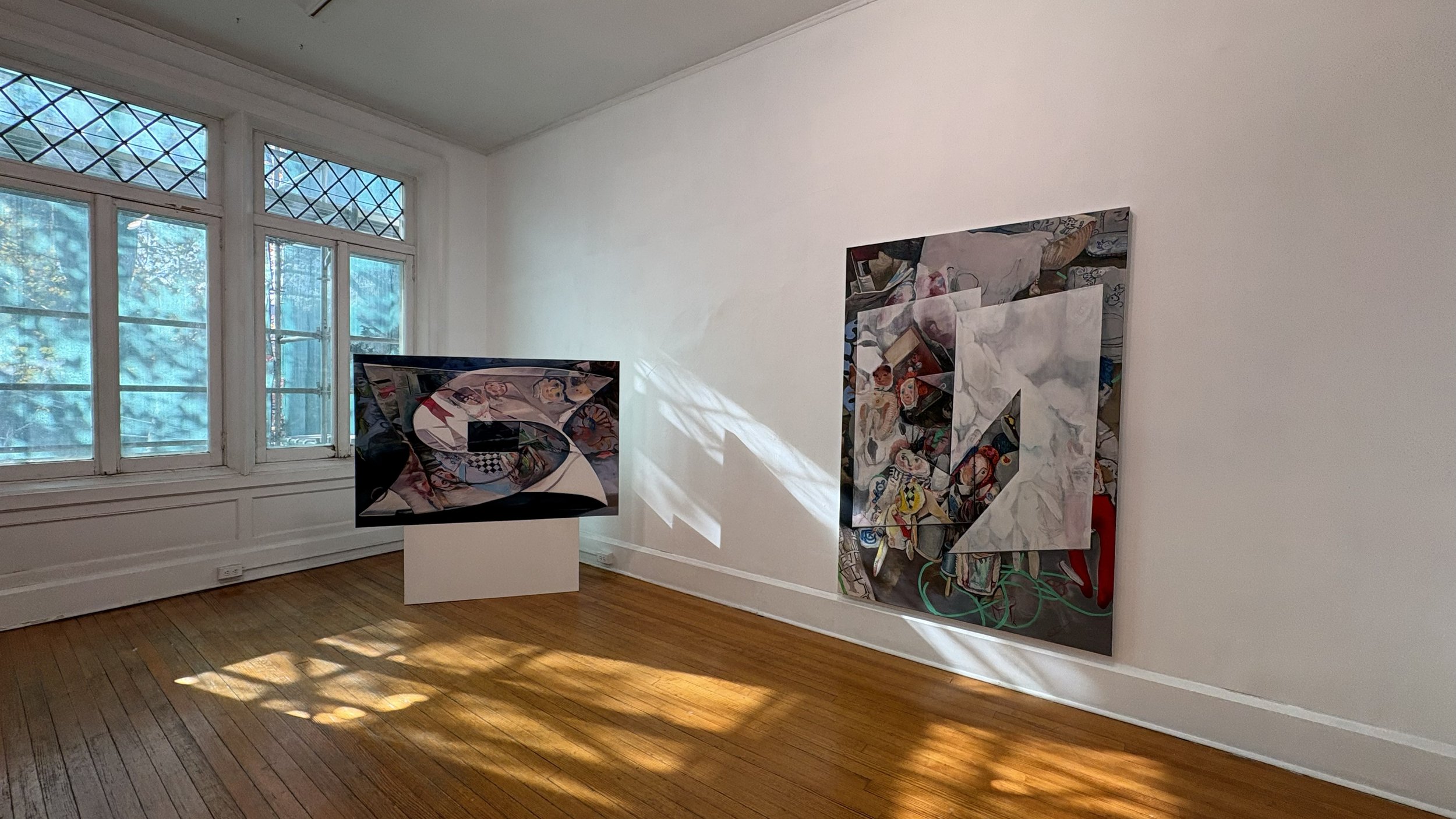
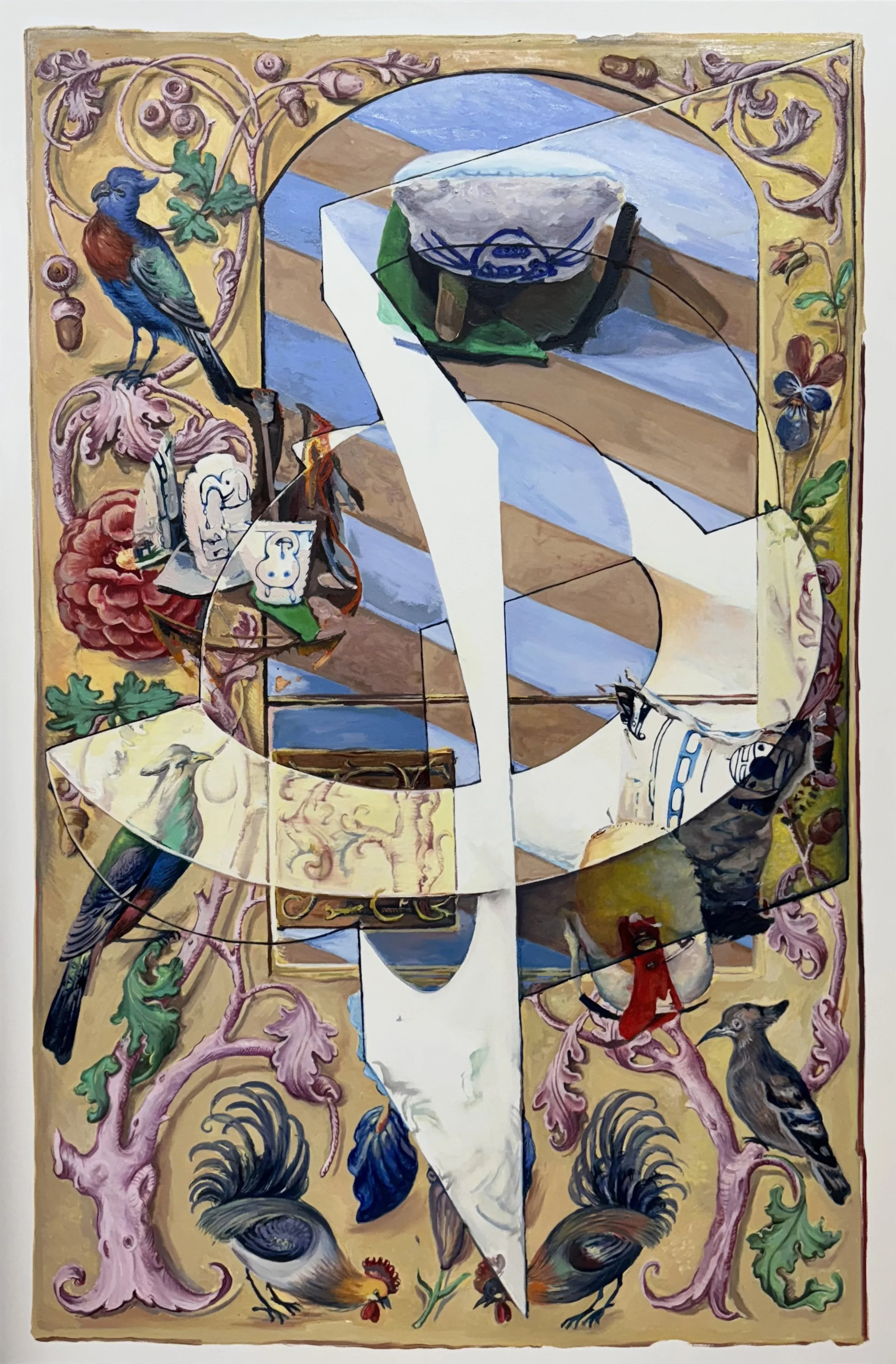
Interstice is a solo exhibition of new work created in response to the galleries at 51 Trumbull by artist Jihyun Lee. A New Haven-based multidisciplinary artist, Lee’s work explores the liminal spaces between moments and the memories they eventually become – the vacuum where all times occurs and yet cannot last. What conceptual possibilities are to be found in these gaps? How might a person make meaning that lasts from a moment which cannot? How can art be used to express the neverending flow of time through our lives? This exhibit explores these essential questions through a series of paintings that invoke Medieval manuscript culture. The “Folded Hours” series reimagines the famed Spinola Book of Hours through folded time and layered memories in order to challenge us to consider our own, unceasing travail through time, place, and memory.
As illusion deepens within the painting, its flatness becomes even more pronounced. The multidimensional space on the surface unfolds into countless dimensions, revealing a quiet paradox.
Within the delicate gaps between layered spaces, I hope both the viewer’s and my own memories may seep in.
Sometimes, fragments of a fabricated past overlap with the present — This moment for the future memory.
In that overlap, I seek to paint the instant when memory rewrites the surface of time.
-Jihyun Lee
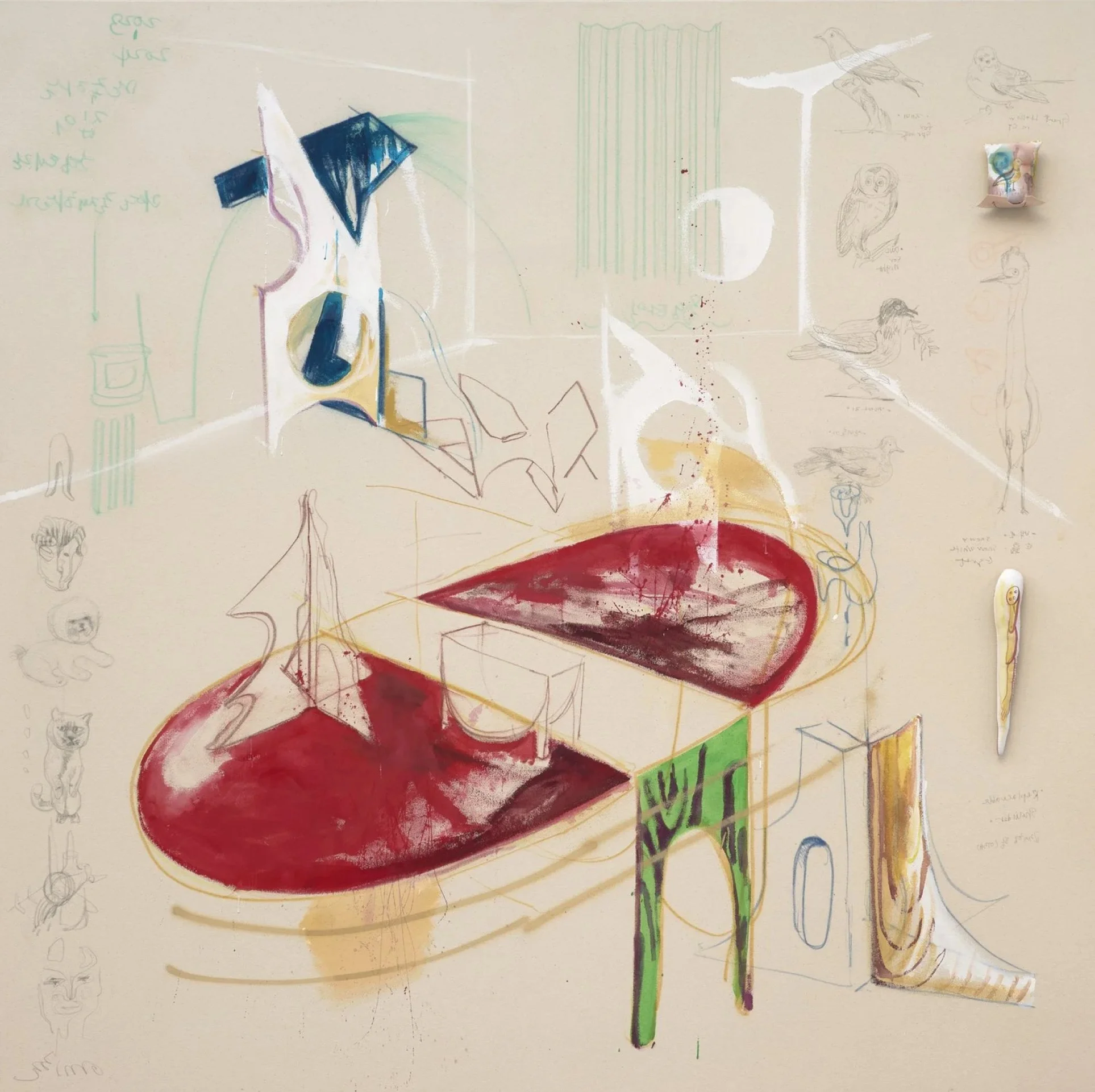


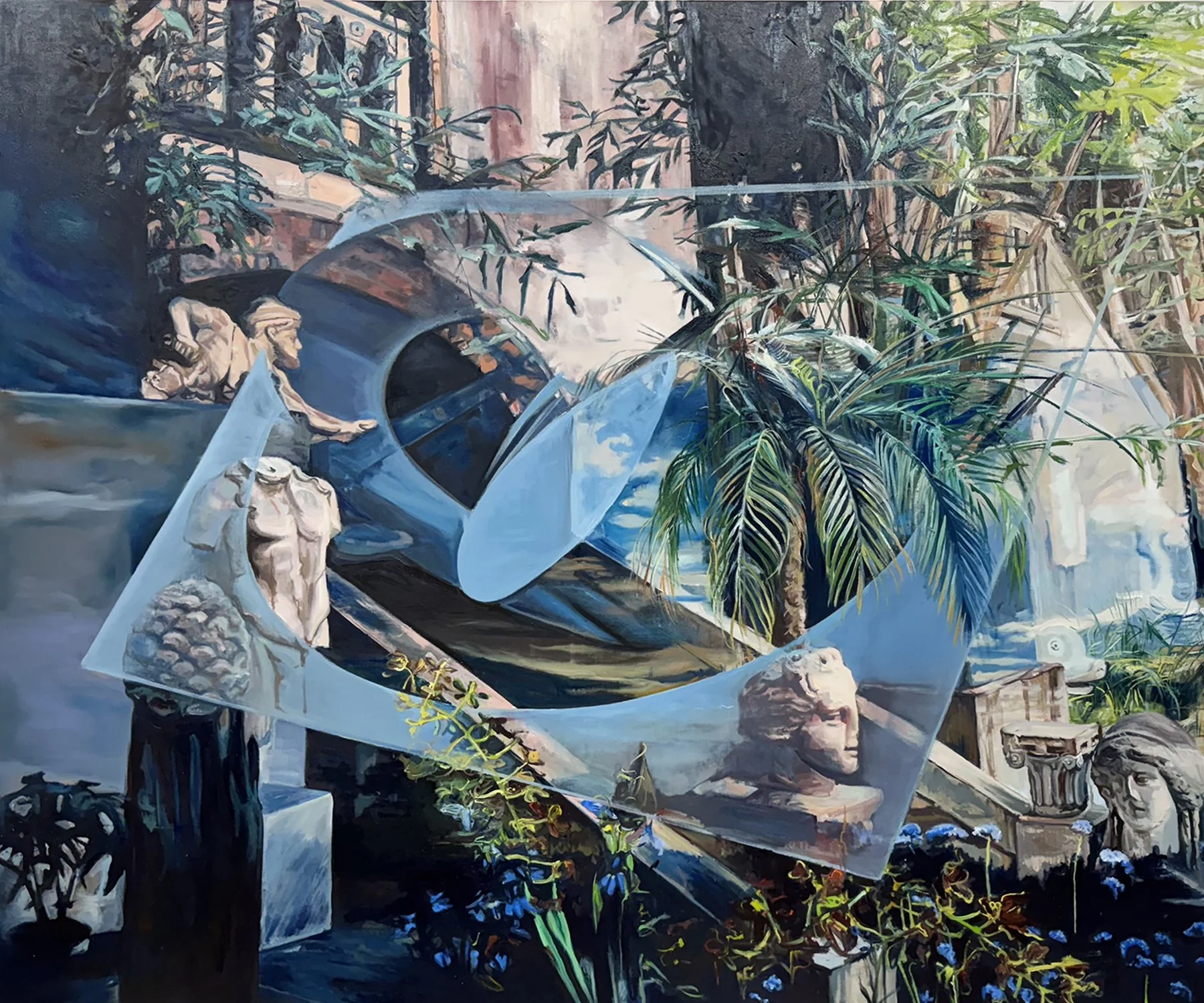
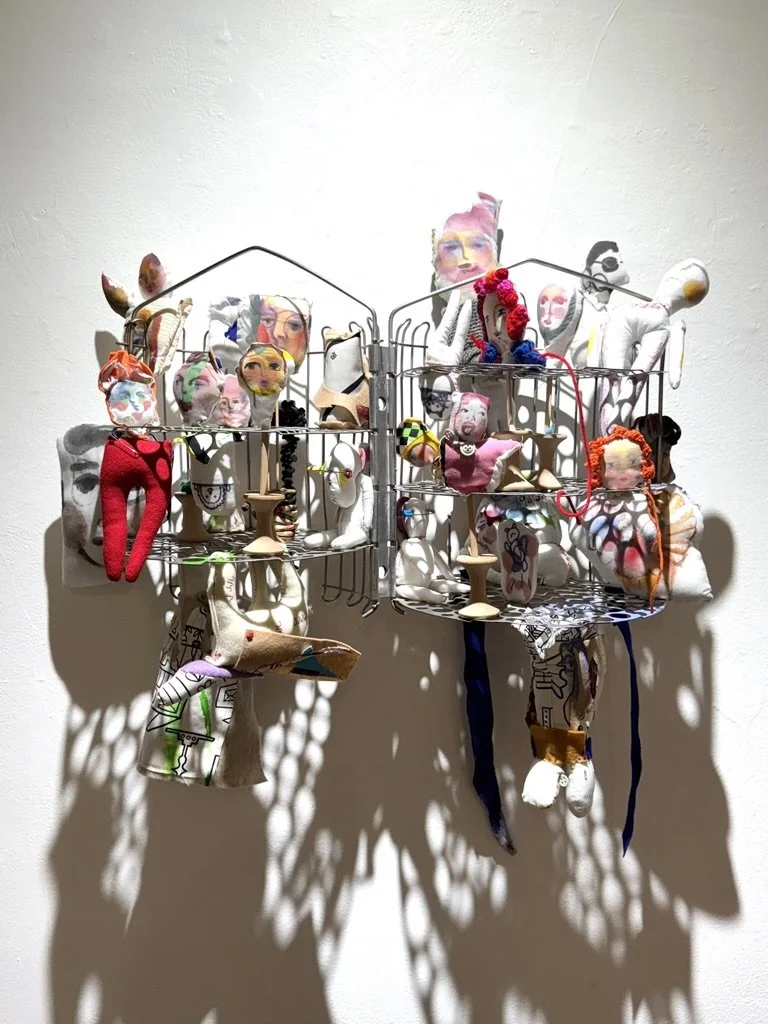

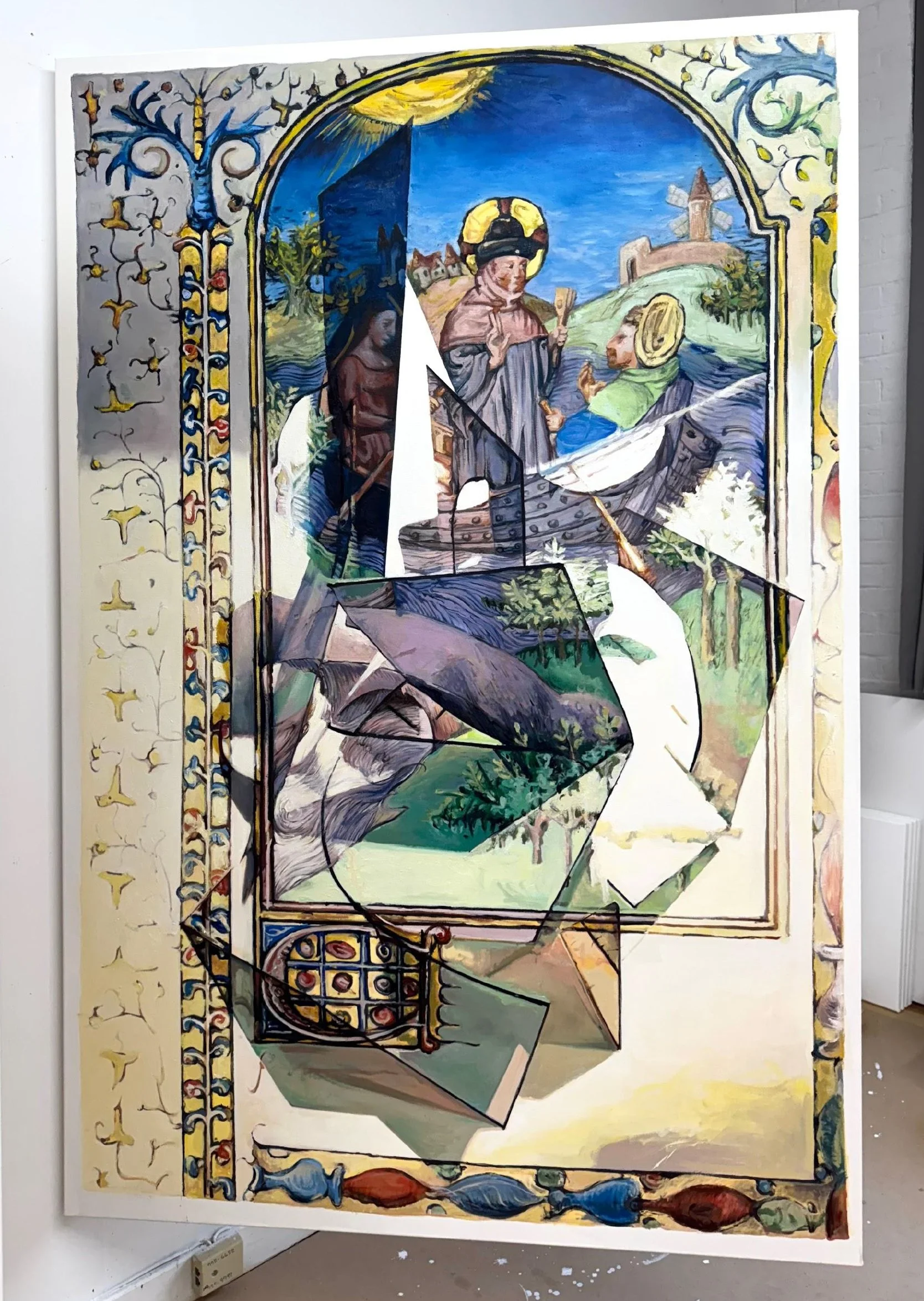
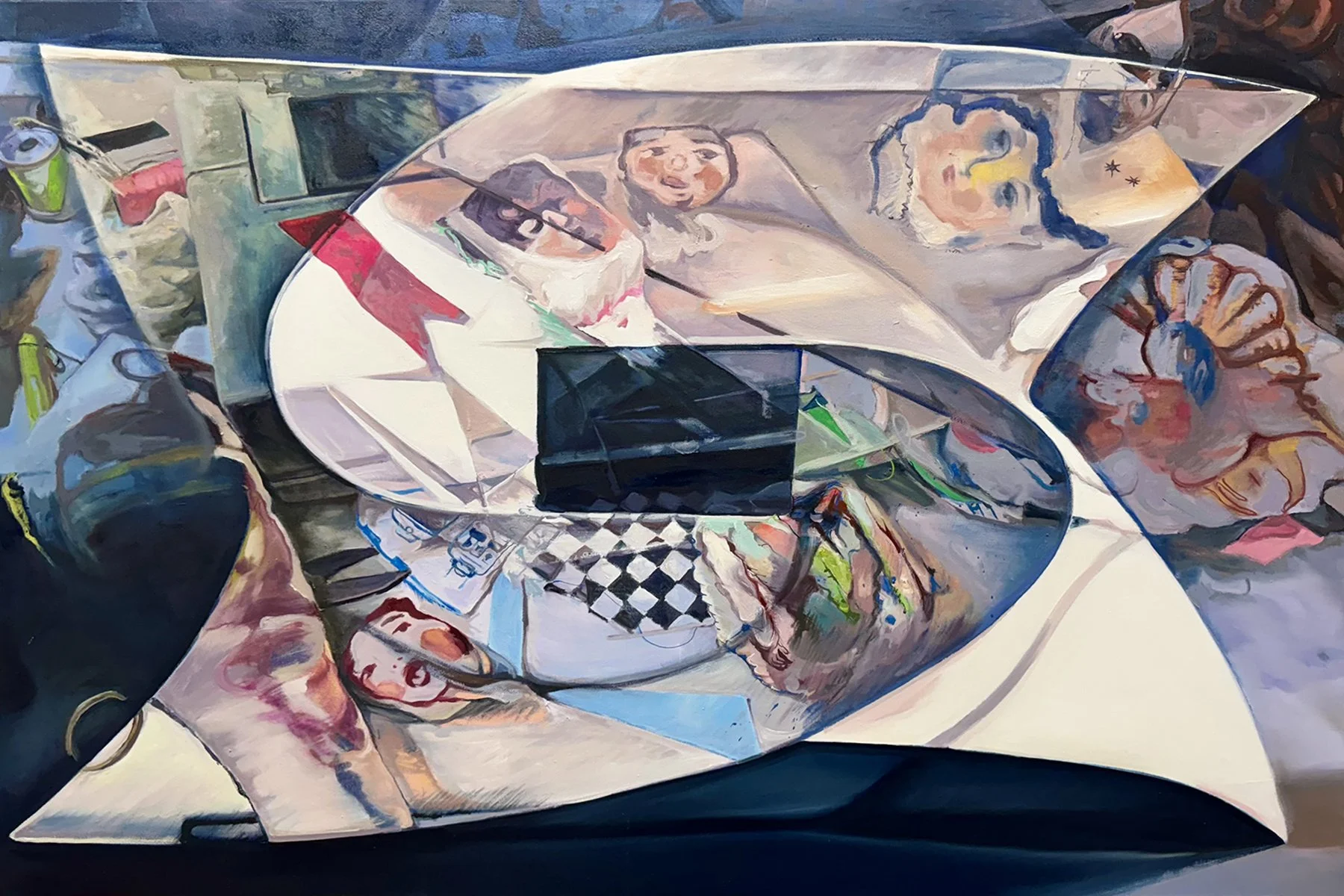
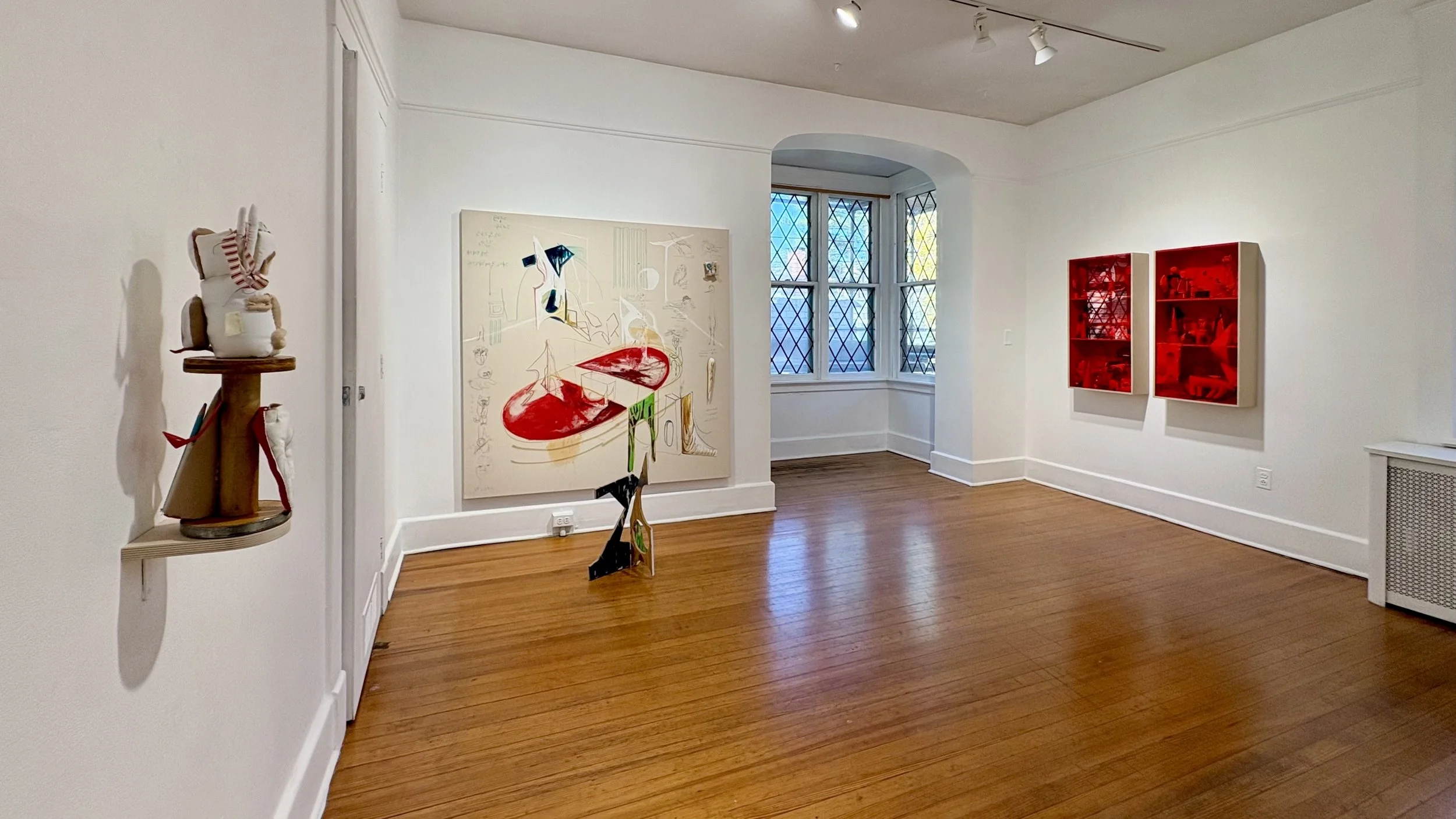
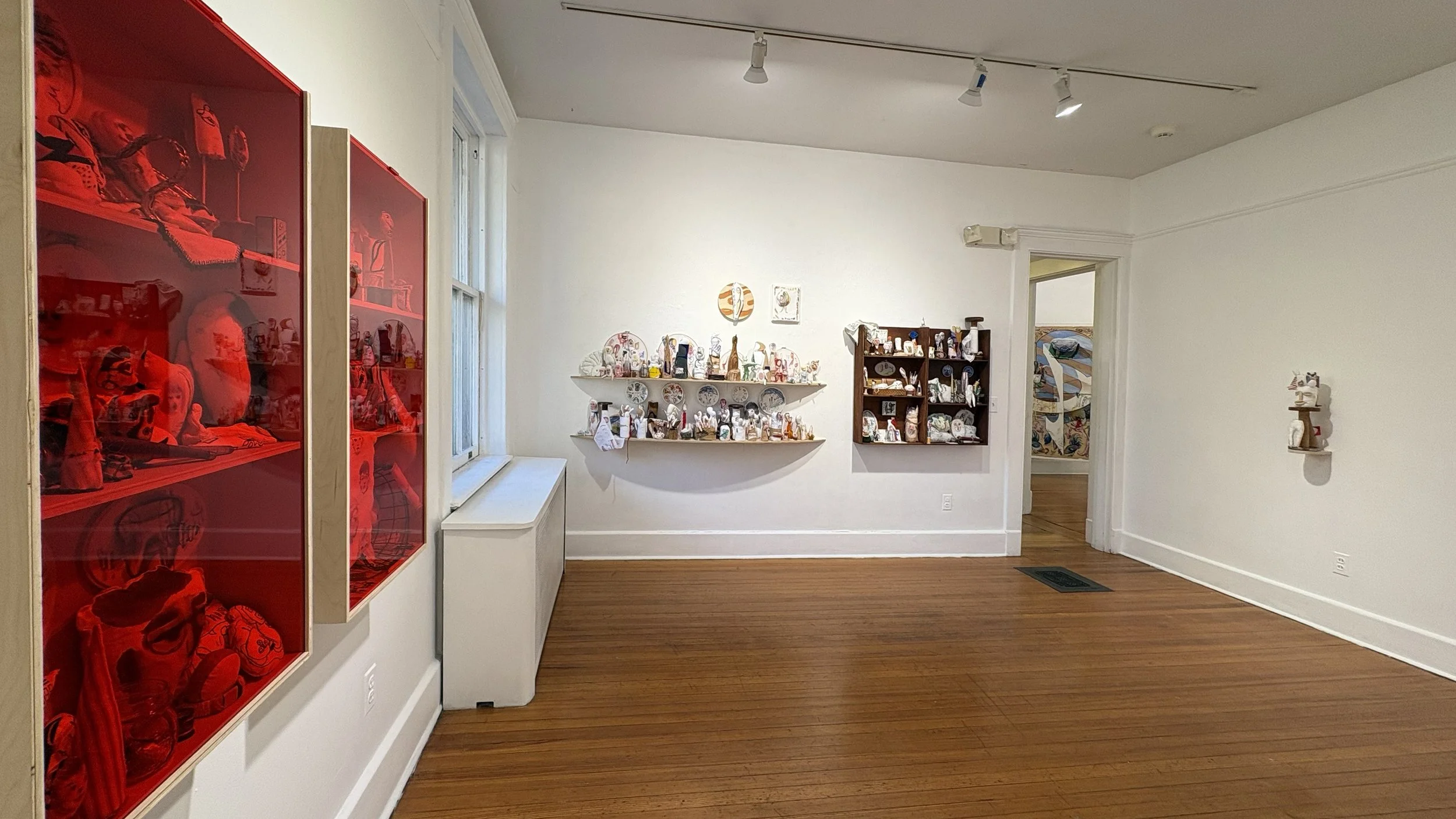
Interstice : The Space Between Time
An image never completes itself.
It always lingers between two scenes,
between one voice and another,
remaining for a moment in the state of in-between before it fades away.
What I paint is that space of time—
the subtle tremor before memory falls silent,
the air before words take form,
the last thread of light before it disappears.
In that gap, I layer colors, twist forms,
and thinly overlay traces from different times
to create an unseen narrative.
Time does not move in a single direction;
it moves slowly back and forth
between the folded layers.
These paintings are less a record than a trace of lingering—
like the margin of an unfinished page,
stories that unfold and refold,
being born again with each turning.
There, for a brief moment,
I feel I might hold myself,
and the time we have lived.
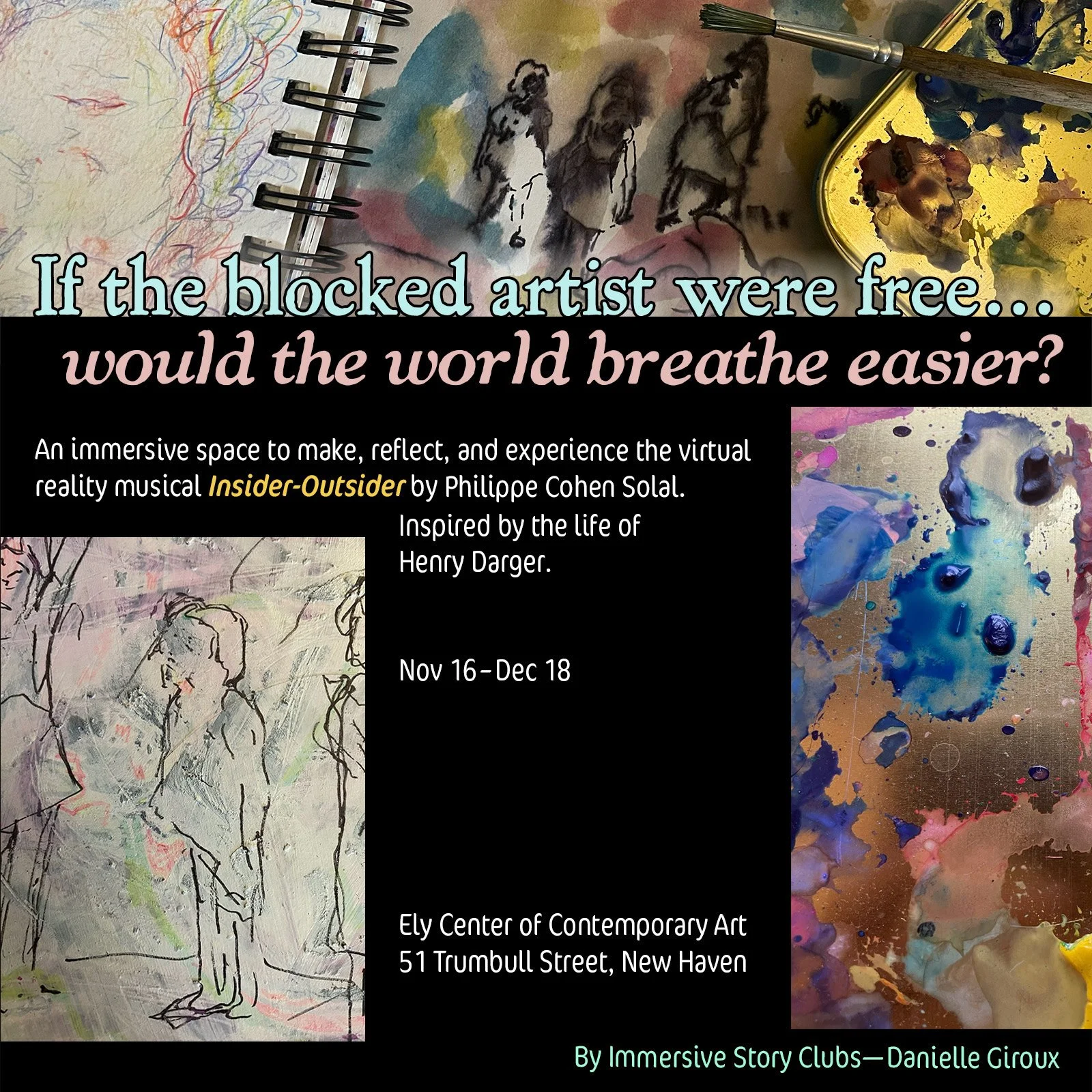
If the blocked artist were free, would the world breathe easier? is an experimental installation based on the work of Henry Darger, created by artist Danielle Giroux. Through innovative use of found objects, VR headsets and tactile elements, this exhibit guides the viewer through a series of short, immersive narratives. “Ito Meikyu” invokes Japanese art and literature to create a virtual interactive, wandering space composed of plants, animals, objects, people and calligraphy for the viewer to explore, choose, and contemplate the meaning of choice in our lives. “Rockey” takes the viewer into the life of an unhoused woman on the day she and her community are ousted from their makeshift homes in a city park. Photos, music, and psychedelic animations tell a story of privation, despair, and hope while inviting us into the inner richness of some of society’s most vulnerable members.
More information on the film Insider-Outsider available HERE and HERE

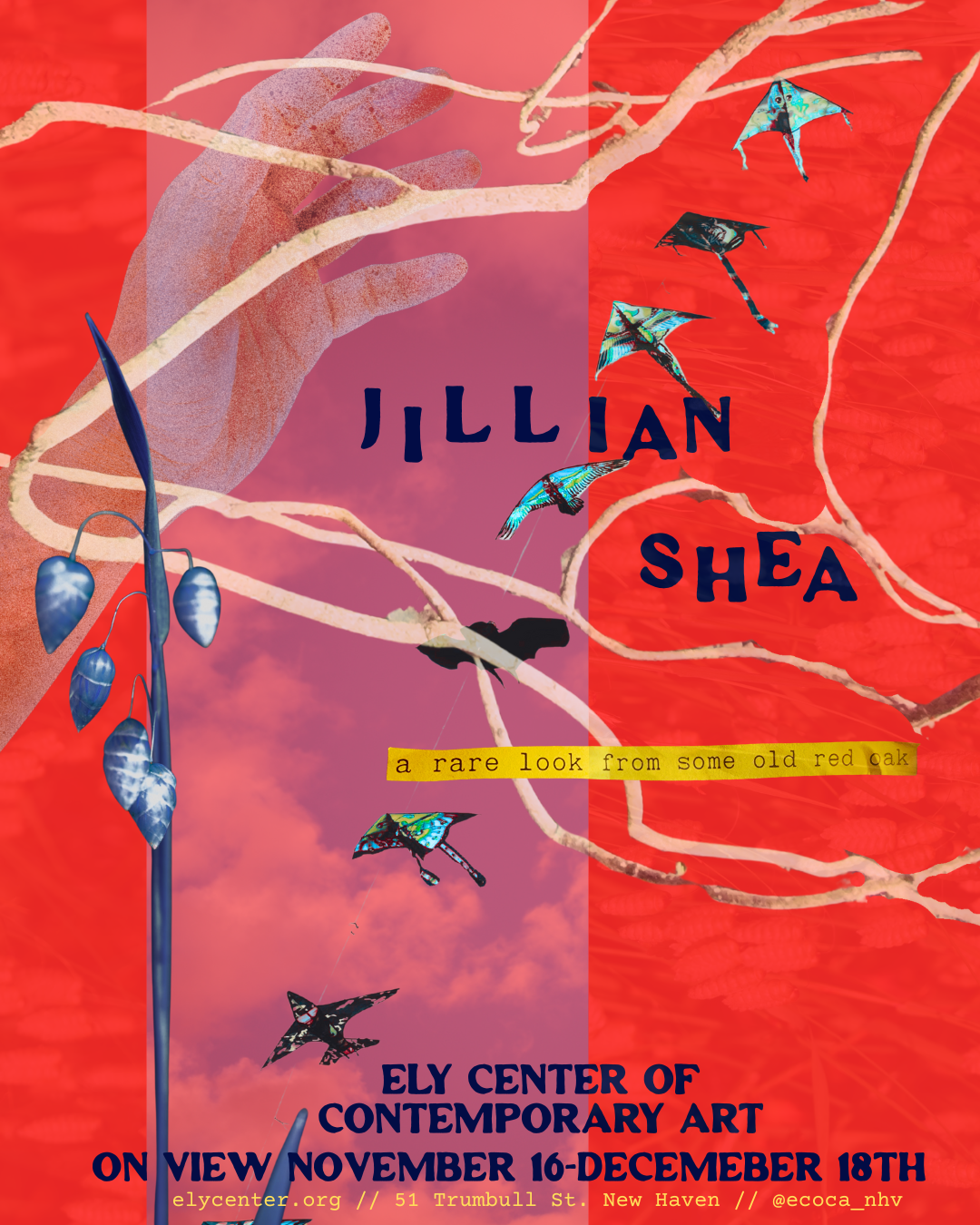
A Rare Look From Some Old Red Oak is an entryway installation by multidisciplinary artist Jillian Shea. With a primary focus in botanical sculpture and collage, her work places emphasis on reimagining and repurposing invasive species, recycled materials and locally grown floral matter to create immersive installations. Inspired by the Trickster role as a boundary crosser in mythology, her work enjoys combining unexpected elements and taking materials out of context to crack open new possibilities.
“There is a lot to keep track of, and a lot to do, but at least one of those things could be sending a wish for humanity to the wind.” -Shea
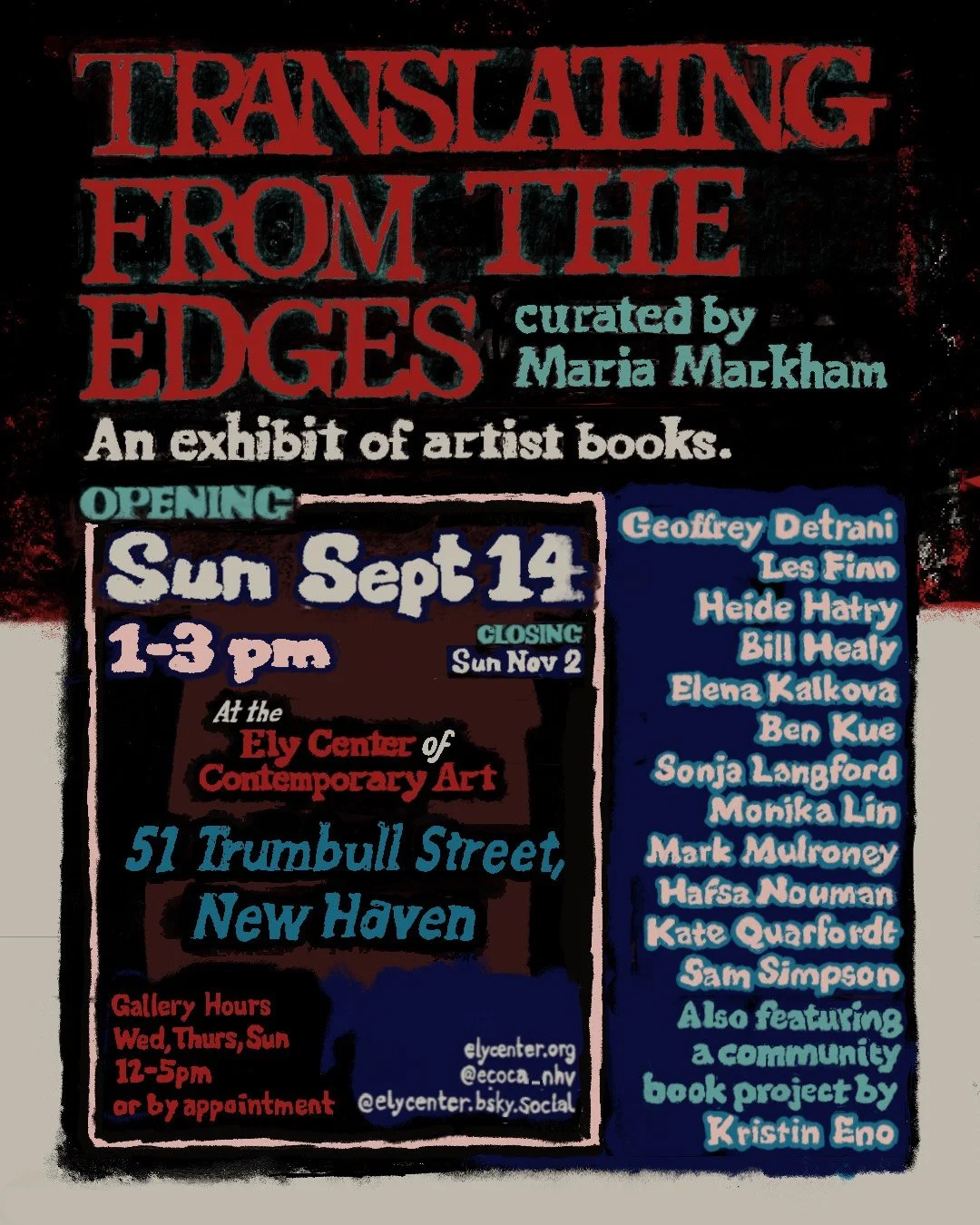
Opening Reception: Sunday September 14, 1-3pm
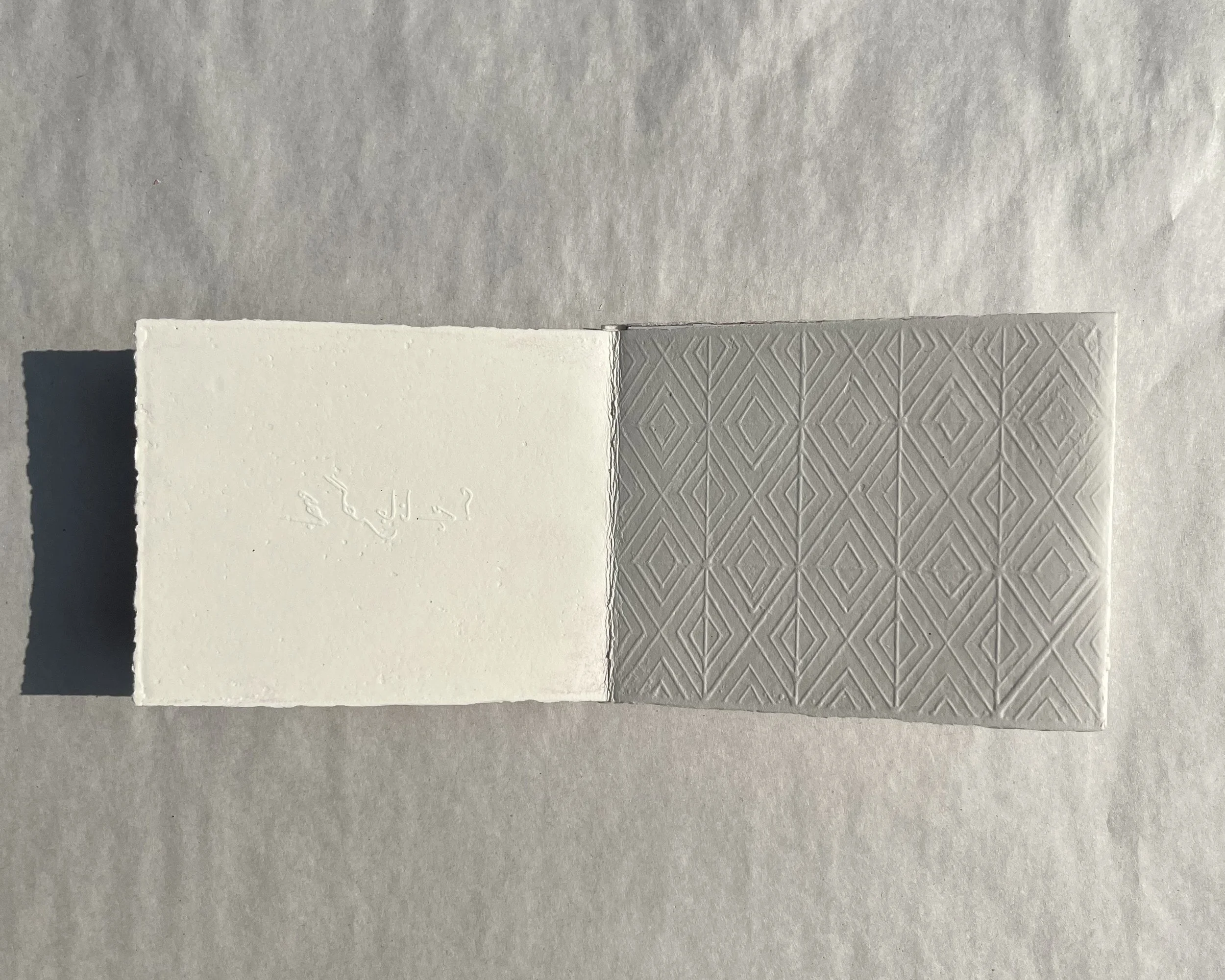
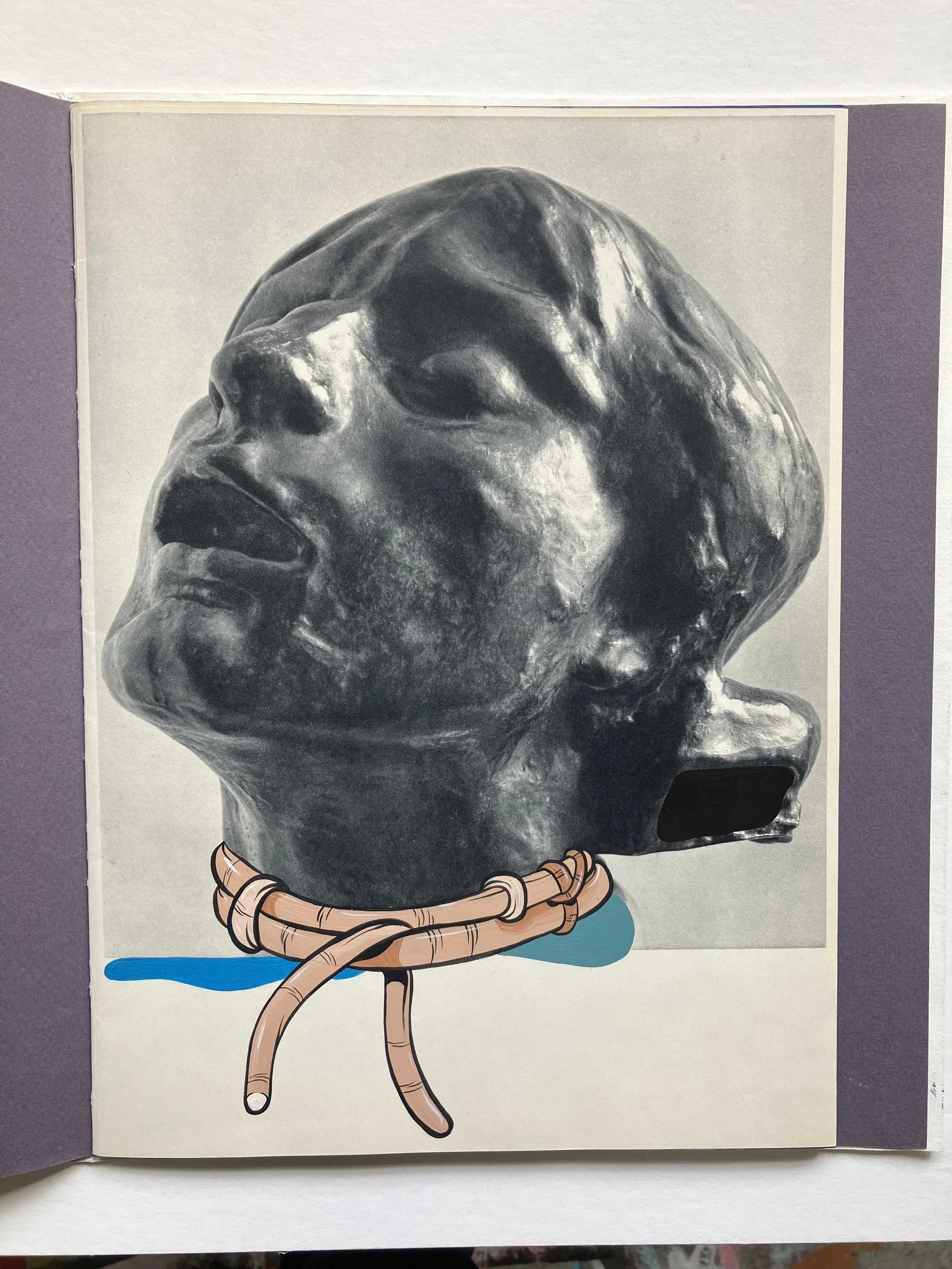
Translating From the Edges is an exhibit of artist books organized by artist Maria Markham, with:
Geoffrey Detrani, Les Finn, Heide Hatry, Bill Healy, Elena Kalkova, Ben Kue, Sonja Langford, Monika Lin, Mark Mulroney, Hafsa Nouman, Kate Quarfordt, Samantha Simpson and also featuring a community book project by Kristin Eno
BRIAN SLATTERY: NEW HAVEN INDEPENDENT
Artists Tell The Stories Beneath The Stories | October 16, 2025



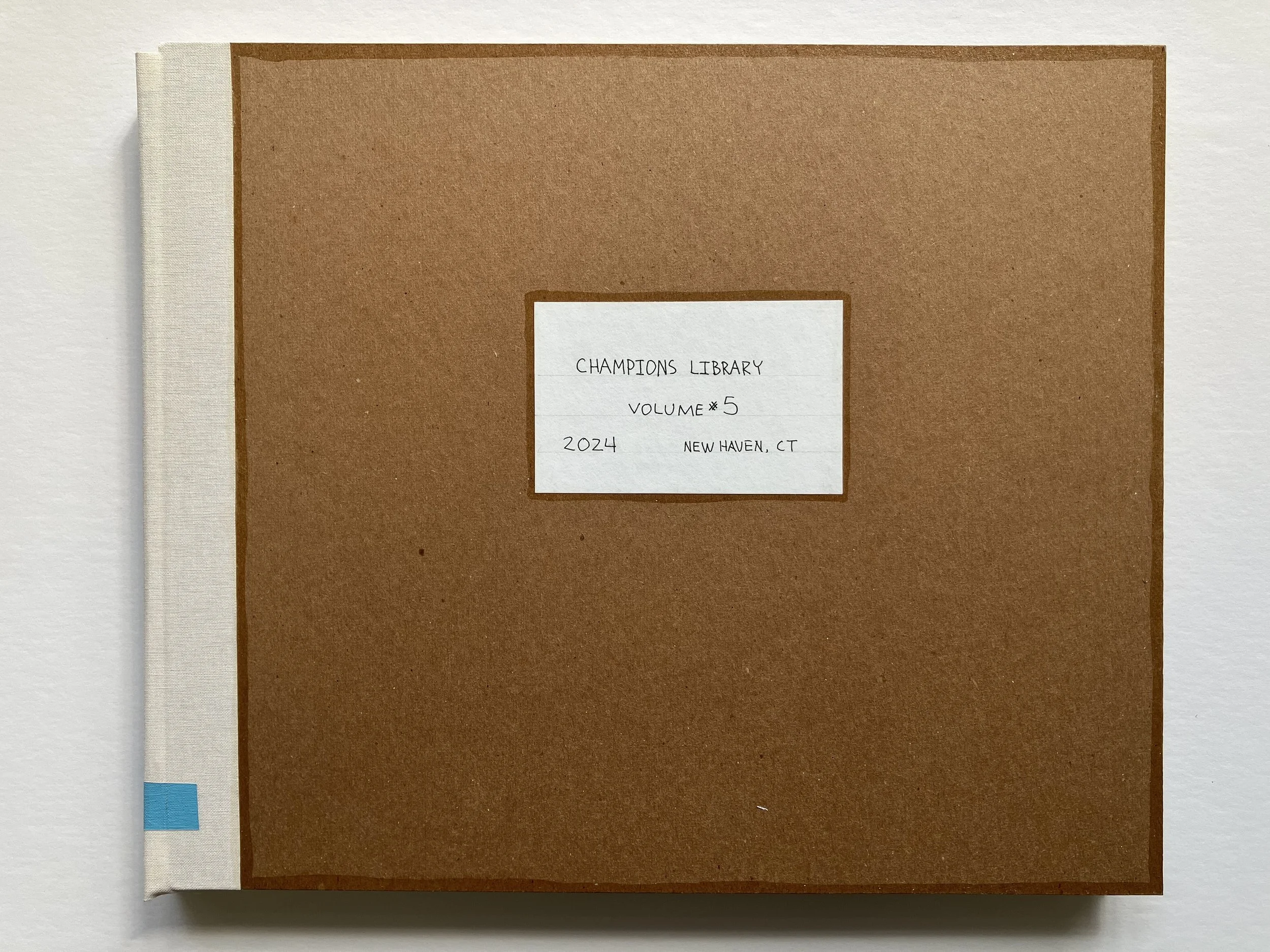


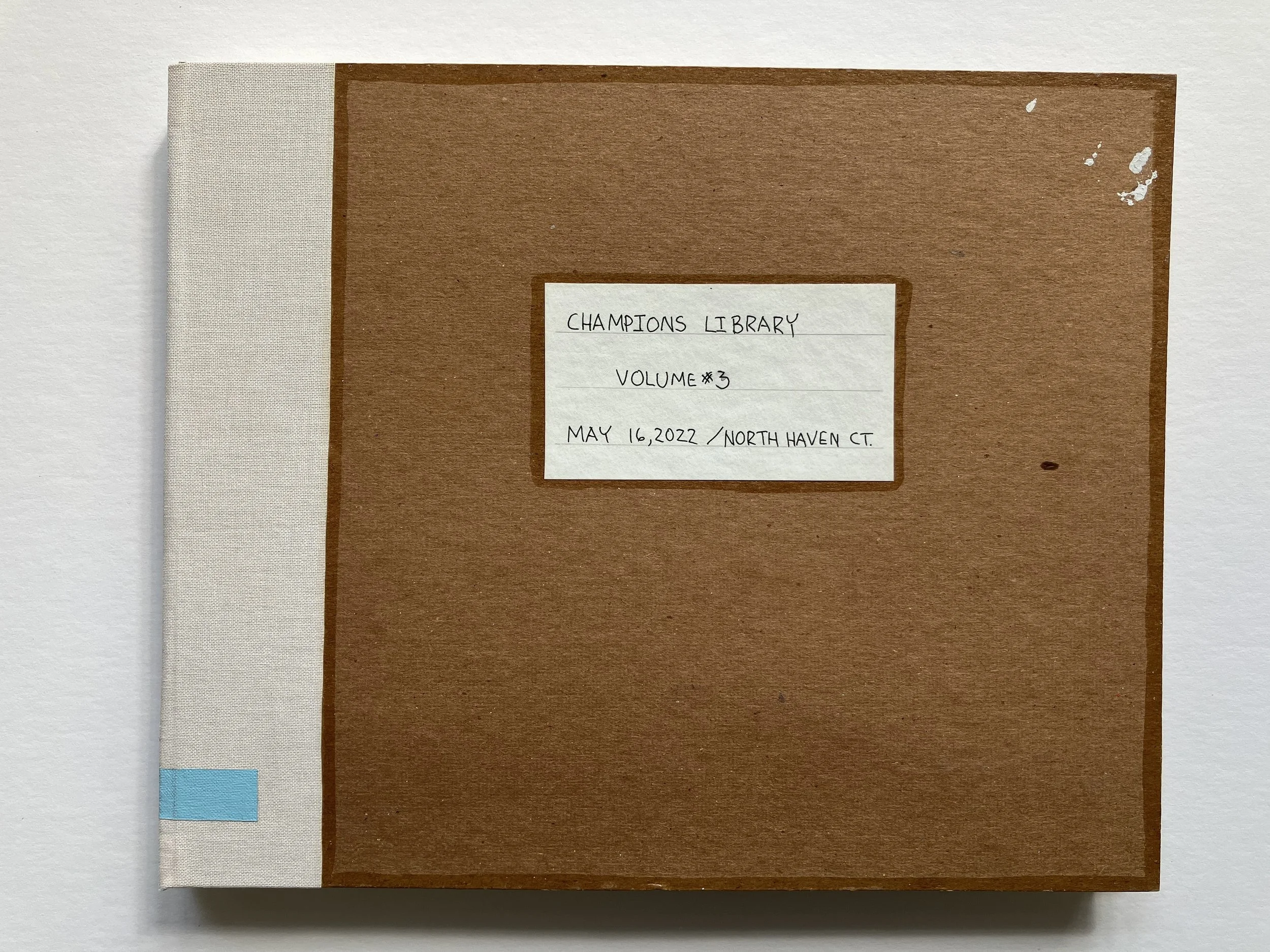


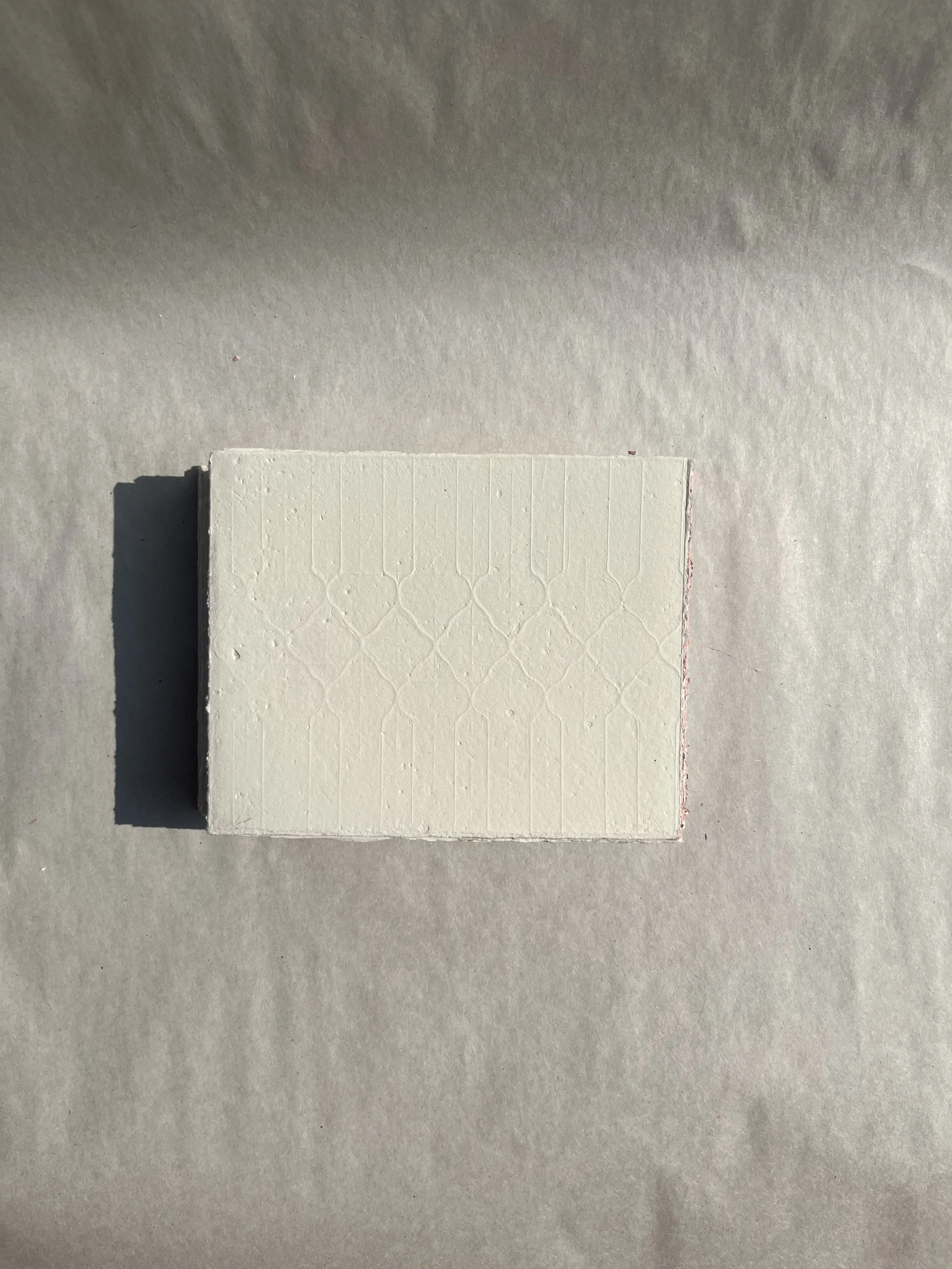

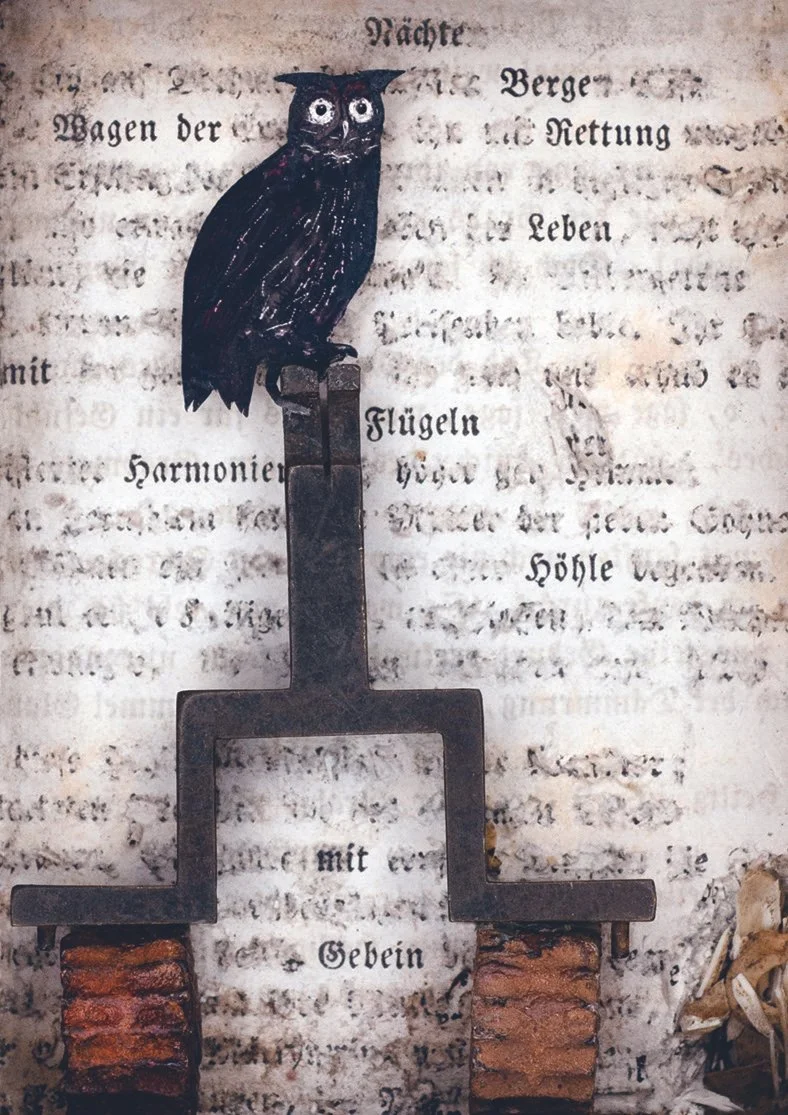
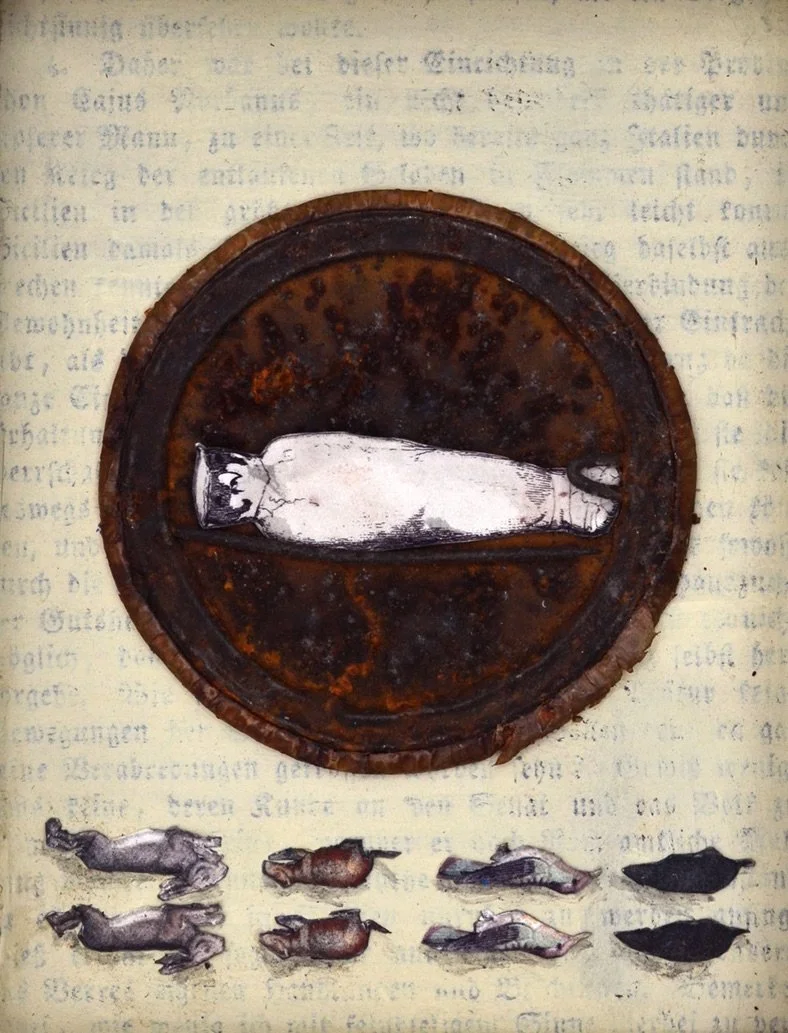

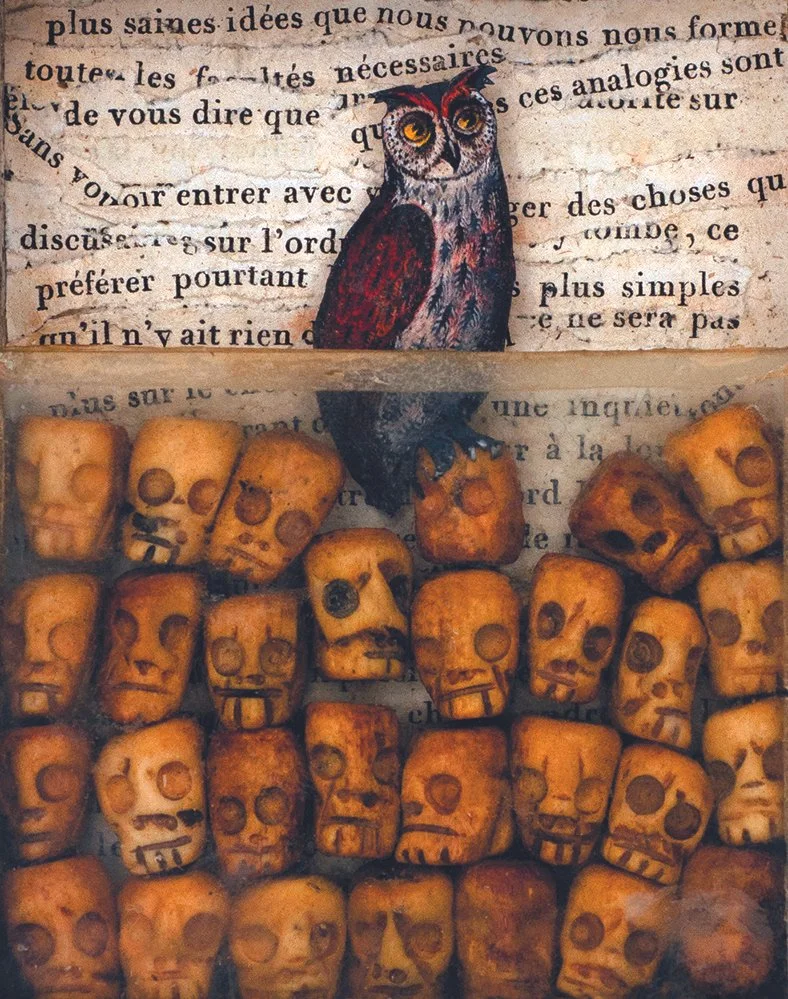
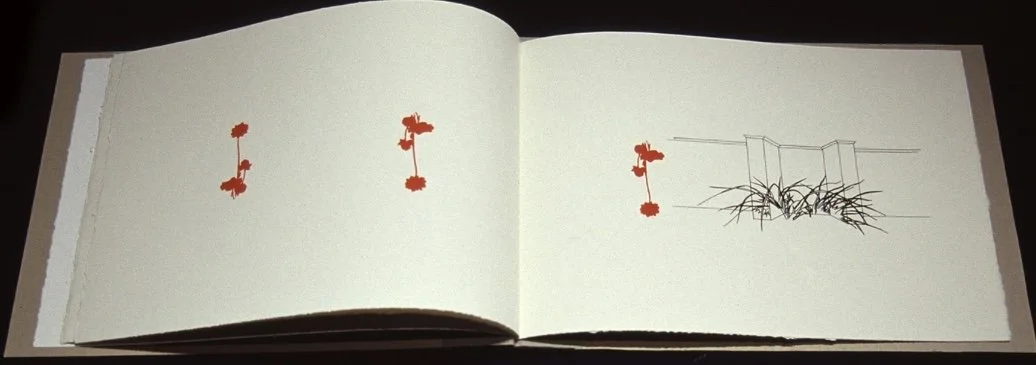

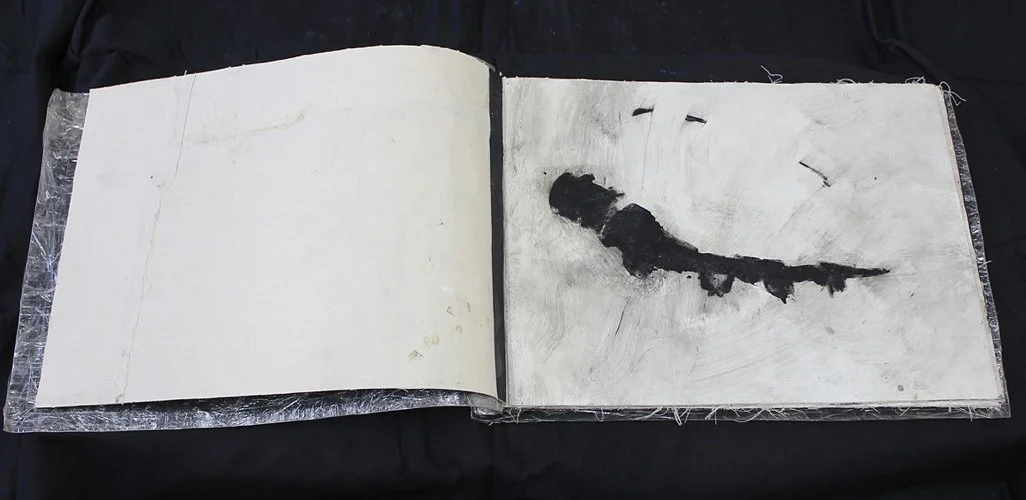
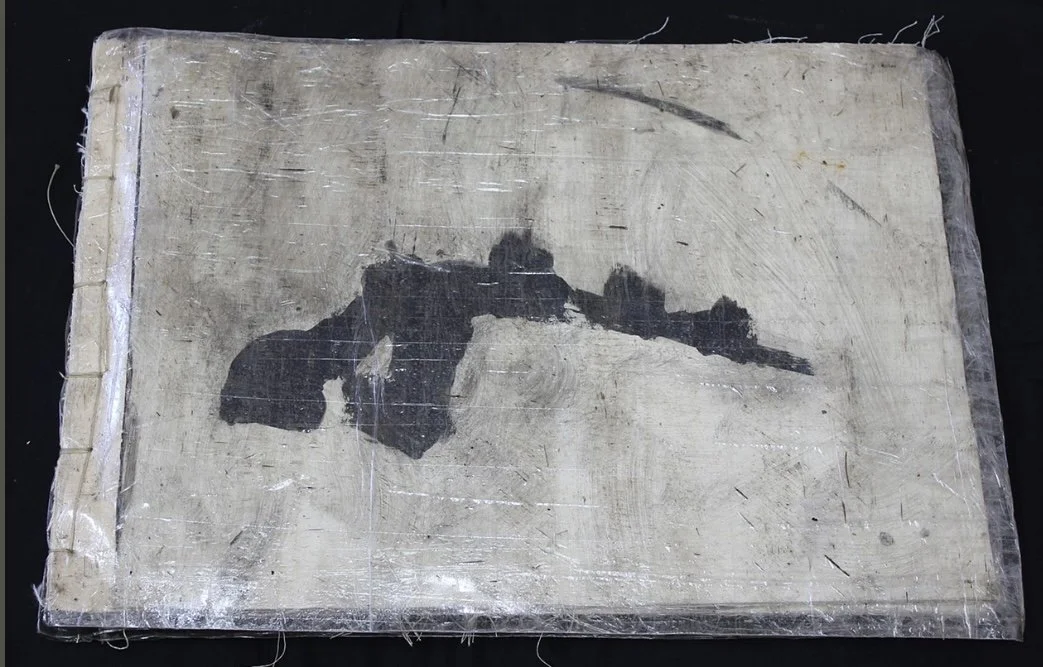


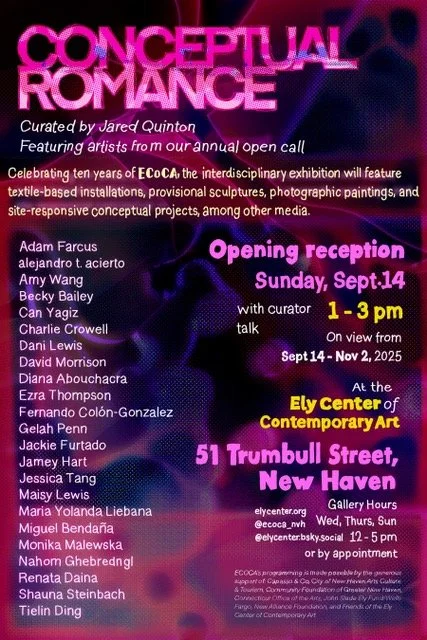
The Ely Center of Contemporary Art opens its fall season with Conceptual Romance, a group exhibition drawn from more than 600 submissions to its annual open call invitation to artists. Guest Curator: Jared Quinton, Emily Hall Tremaine Associate Curator of Contemporary Art, Wadsworth Atheneum Museum of Art, Hartford, CT
Marking ten years of ECOCA and the seventh consecutive year of the signature Open Call program, this interdisciplinary exhibition offers a window into the wide range of work being produced by visual artists in this moment, and will feature textile-based installations, provisional sculptures, photographic paintings, and site-responsive conceptual projects, among other media.
Curator Jared Quinton says:
“The 23 artists featured in Conceptual Romance create propositions that engage our intellects and emotions at the same time. Working from diverse perspectives across a range of disciplines, these artists share an understanding that art’s real meaning always exceeds articulation. They use materials, images, and formats that look and feel familiar, yet the works retain an air of mystery, seducing viewers into the realm between objects and ideas.”
Exhibition Dates: September 14 – November 2, 2025, with an artist reception Sunday September 14, 1-3pm, with a Curator Walkthrough at 2 pm.
With:
Diana Abouchacra, alejandro t. acierto , Becky Bailey, Miguel Bendaña, Fernando Colón-Gonzalez, Charlie Crowell, Renata Daina, Tielin Ding, Adam Farcus, Jackie Furtado, Nahom Ghebredngl, Jamey Hart, Dani Lewis, Maisy Lewis, Maria Yolanda Liebana , Monika Malewska, David Morrison , Gelah Penn, Shauna Steinbach, Jessica Tang, Ezra Thompson, Amy Wang
SIMRAN RANDHAWA: YALE DAILY NEWS
Local gallery exhibition displays diverse range of art | October 7, 2025


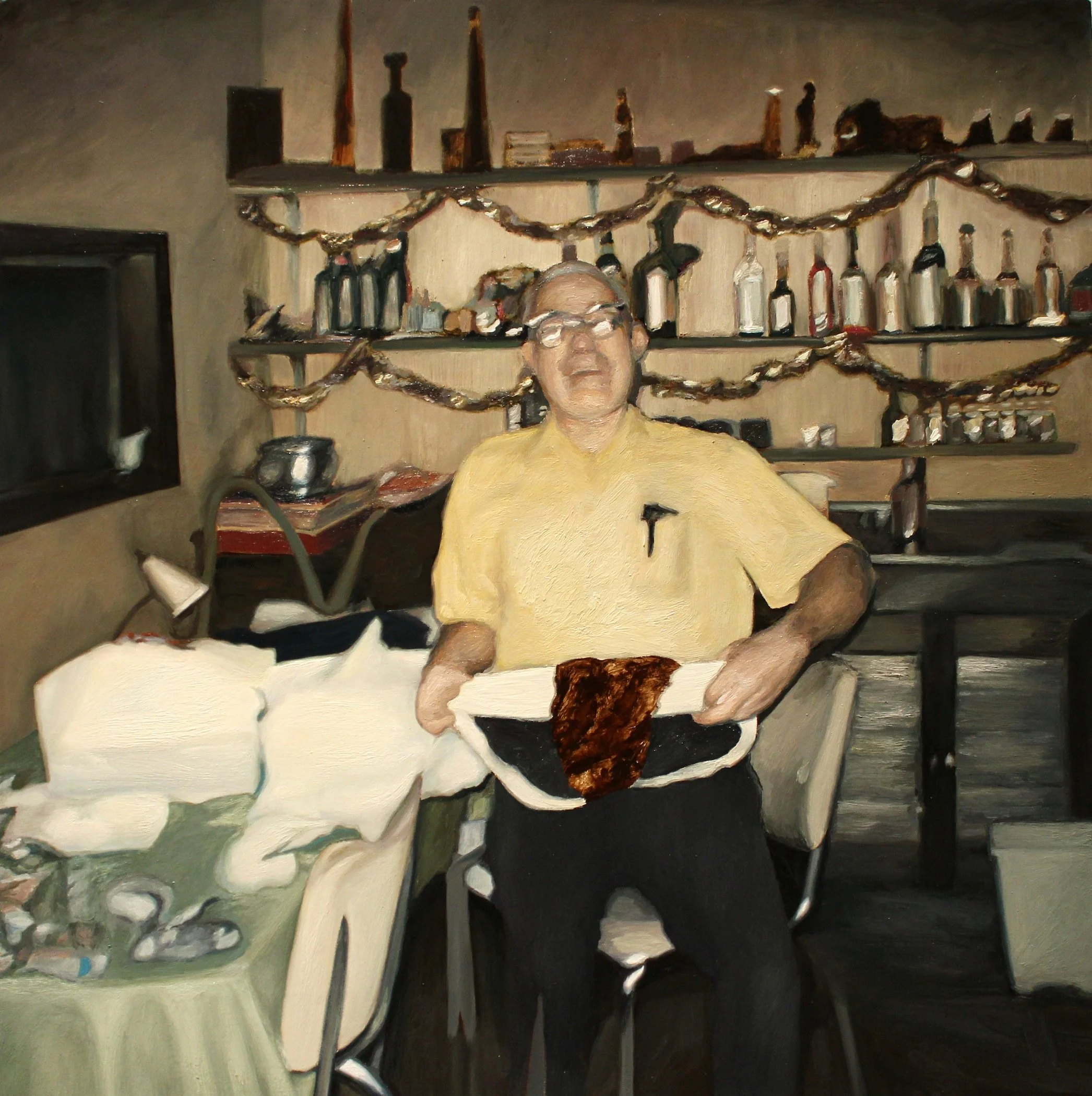


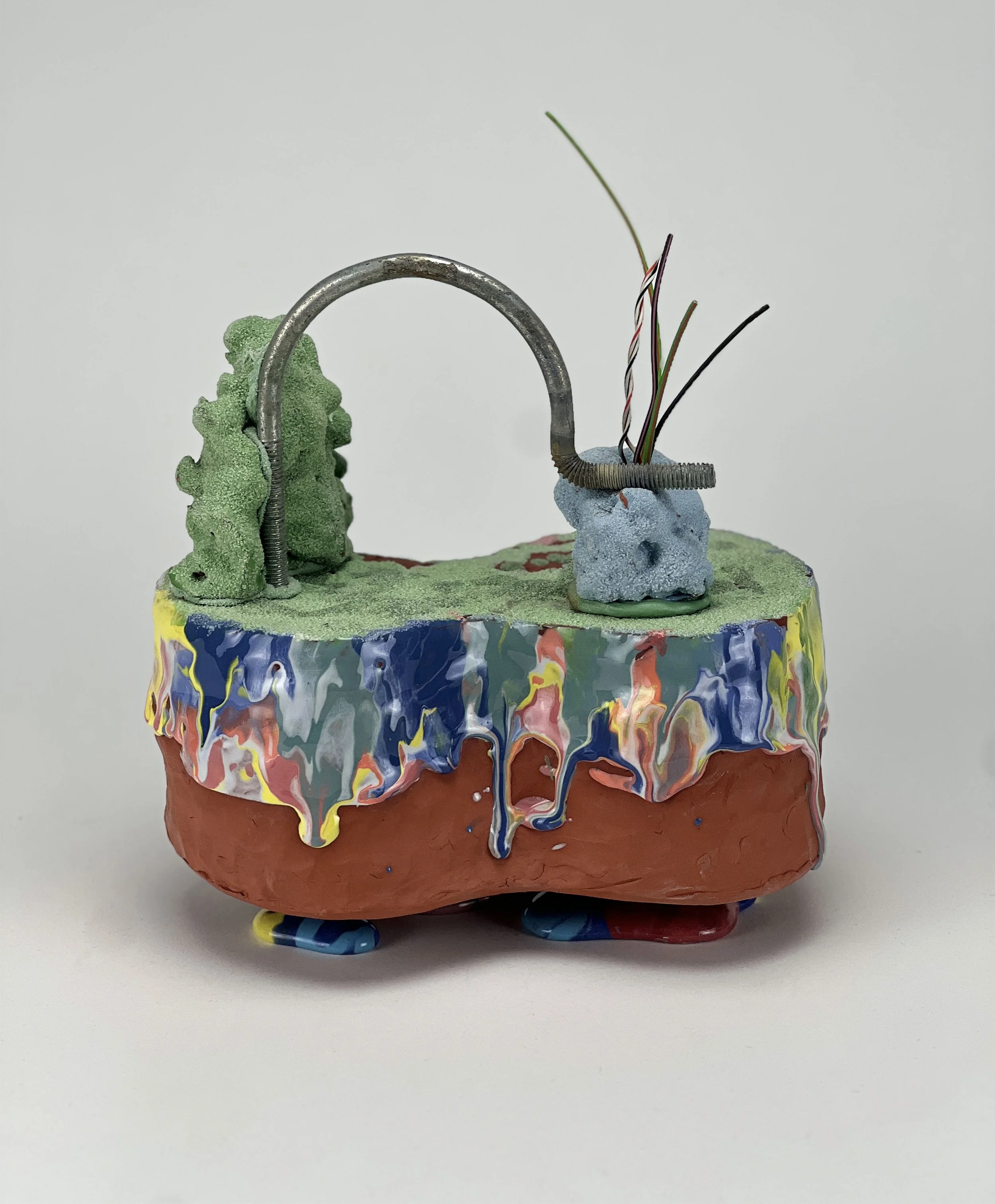
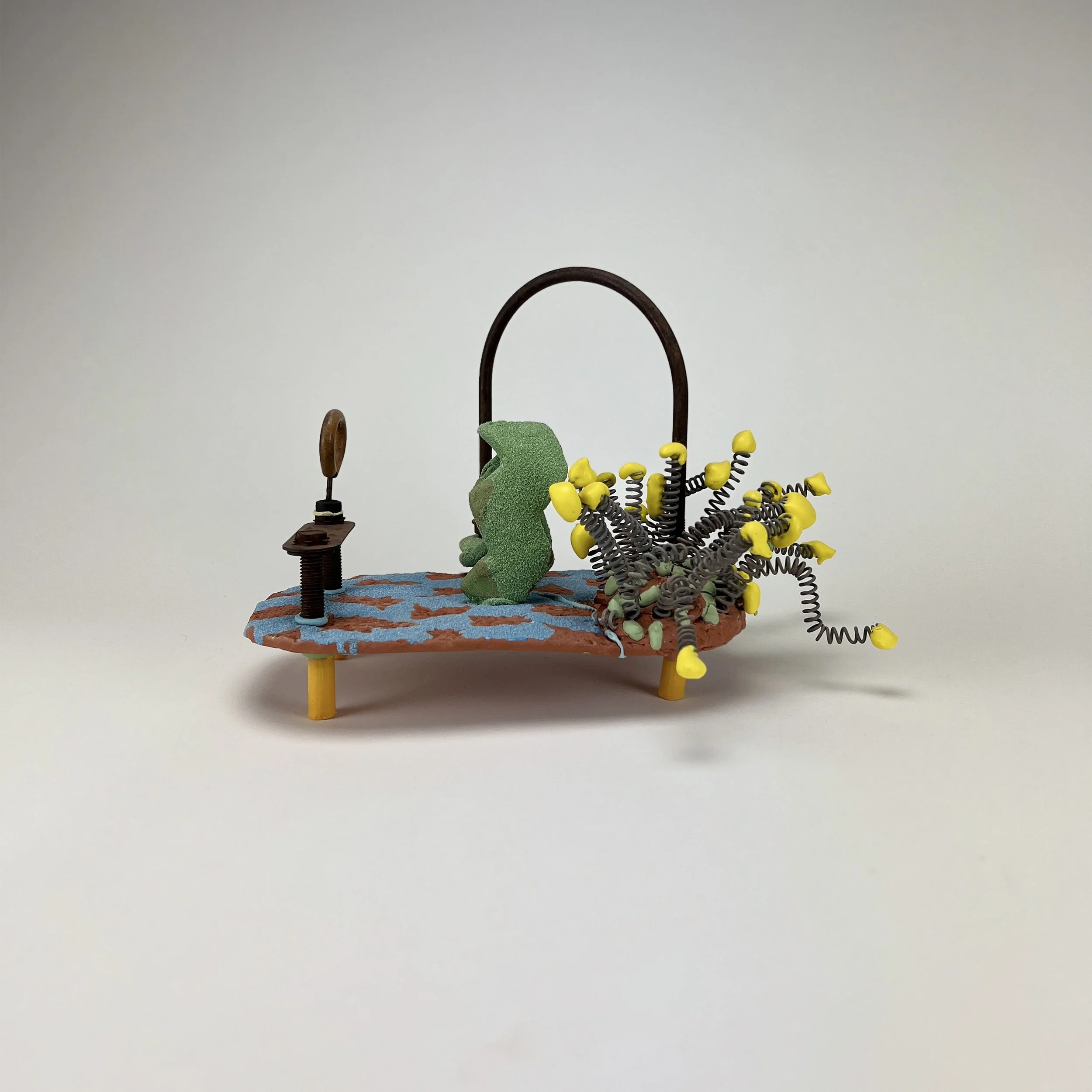


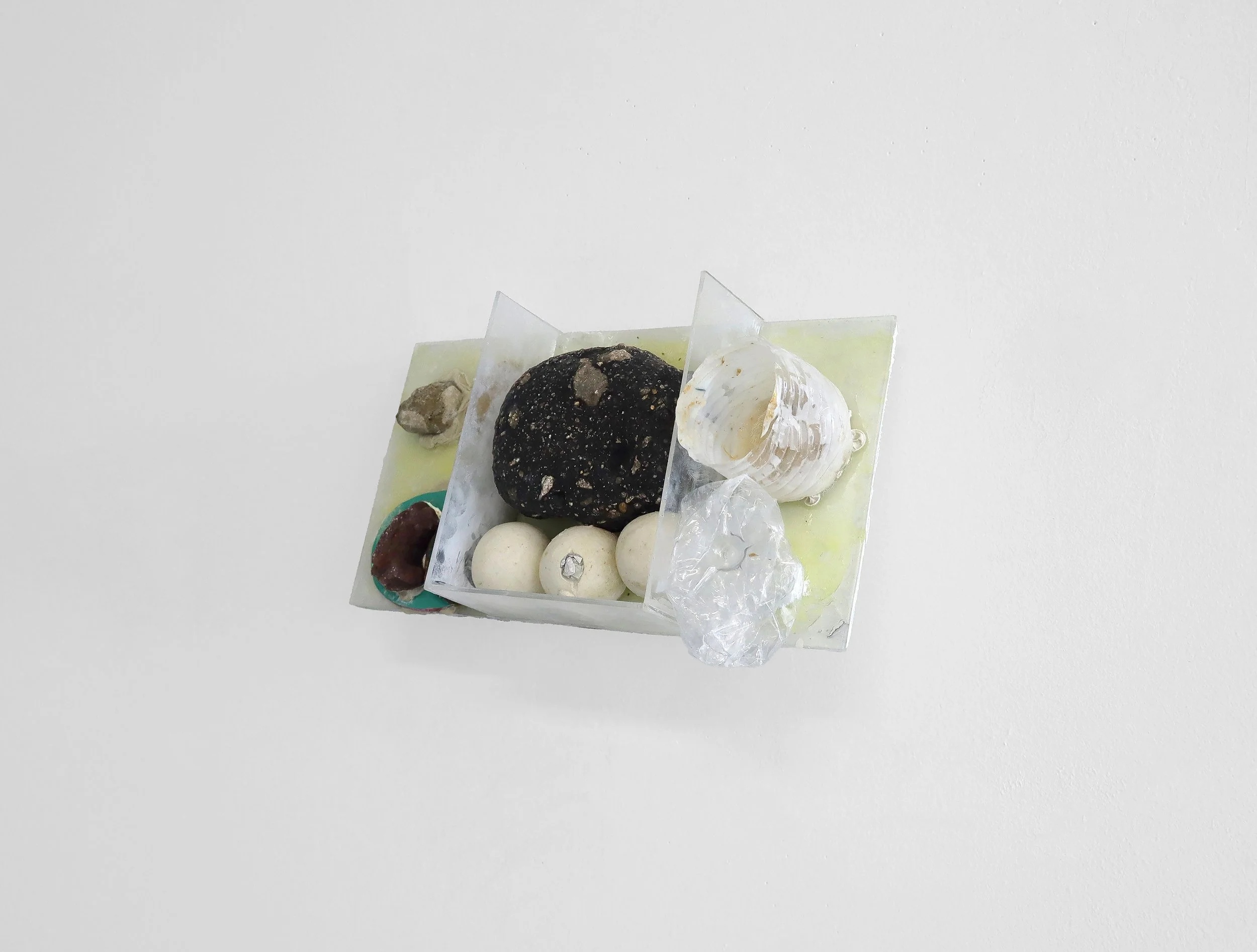


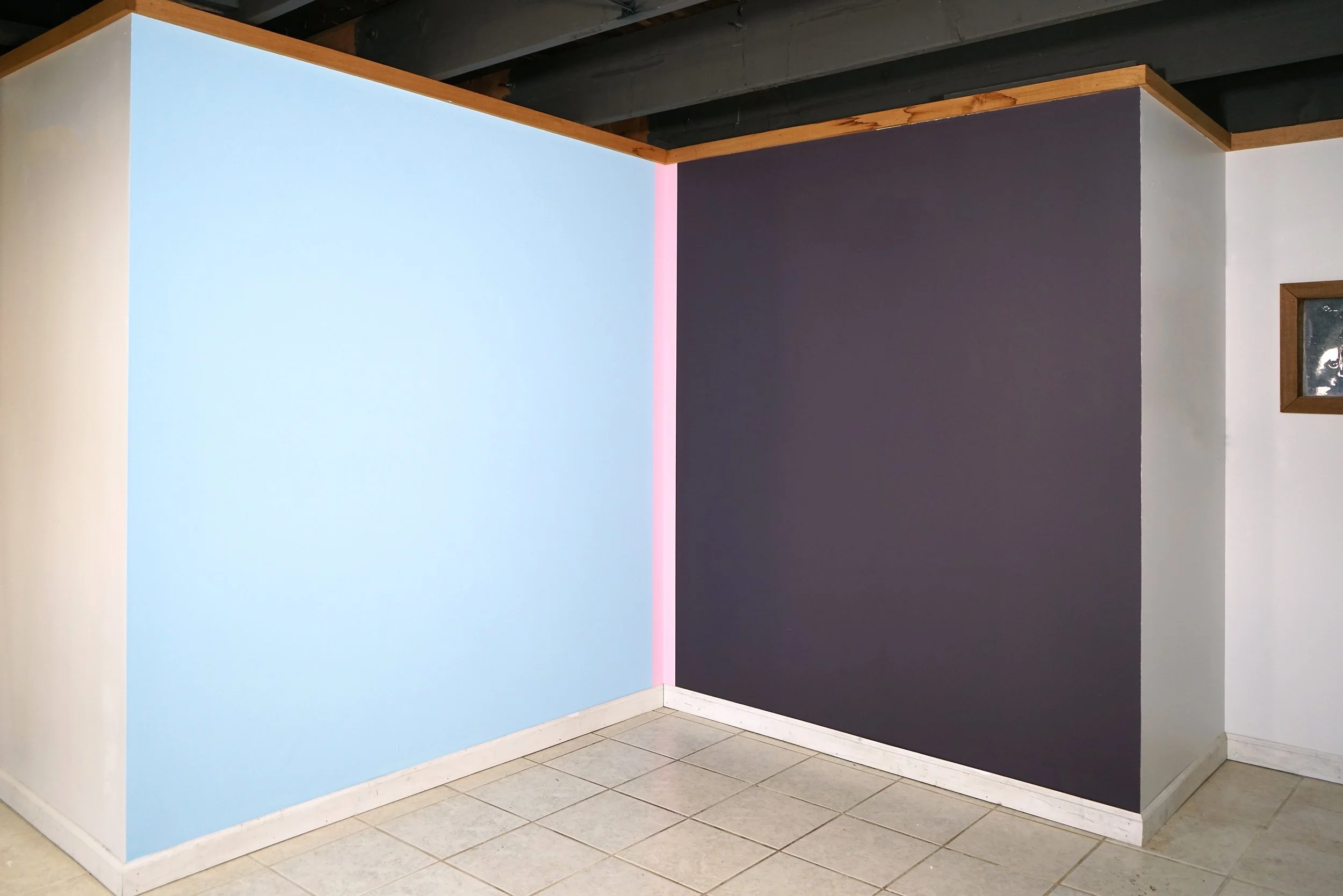

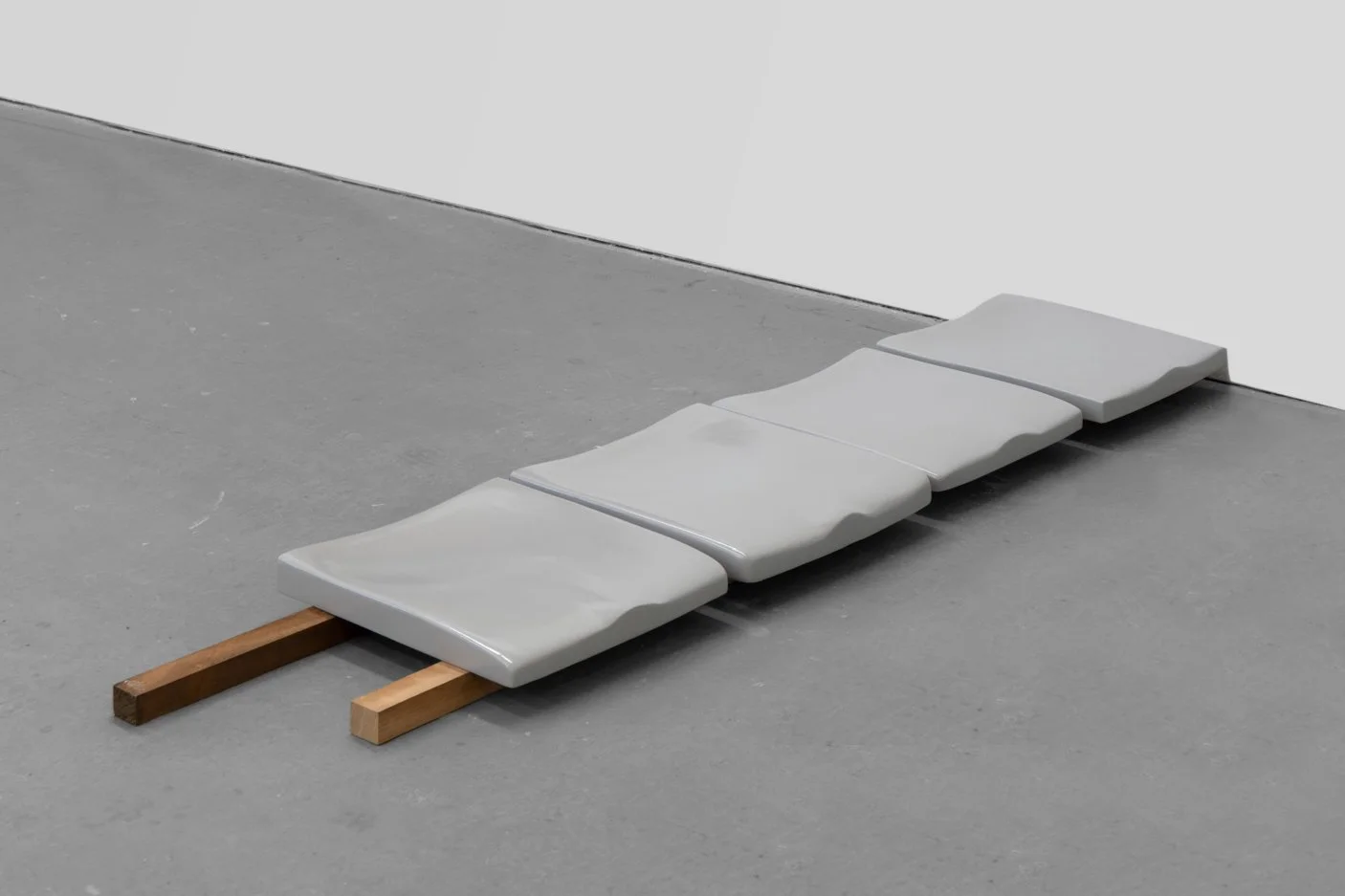


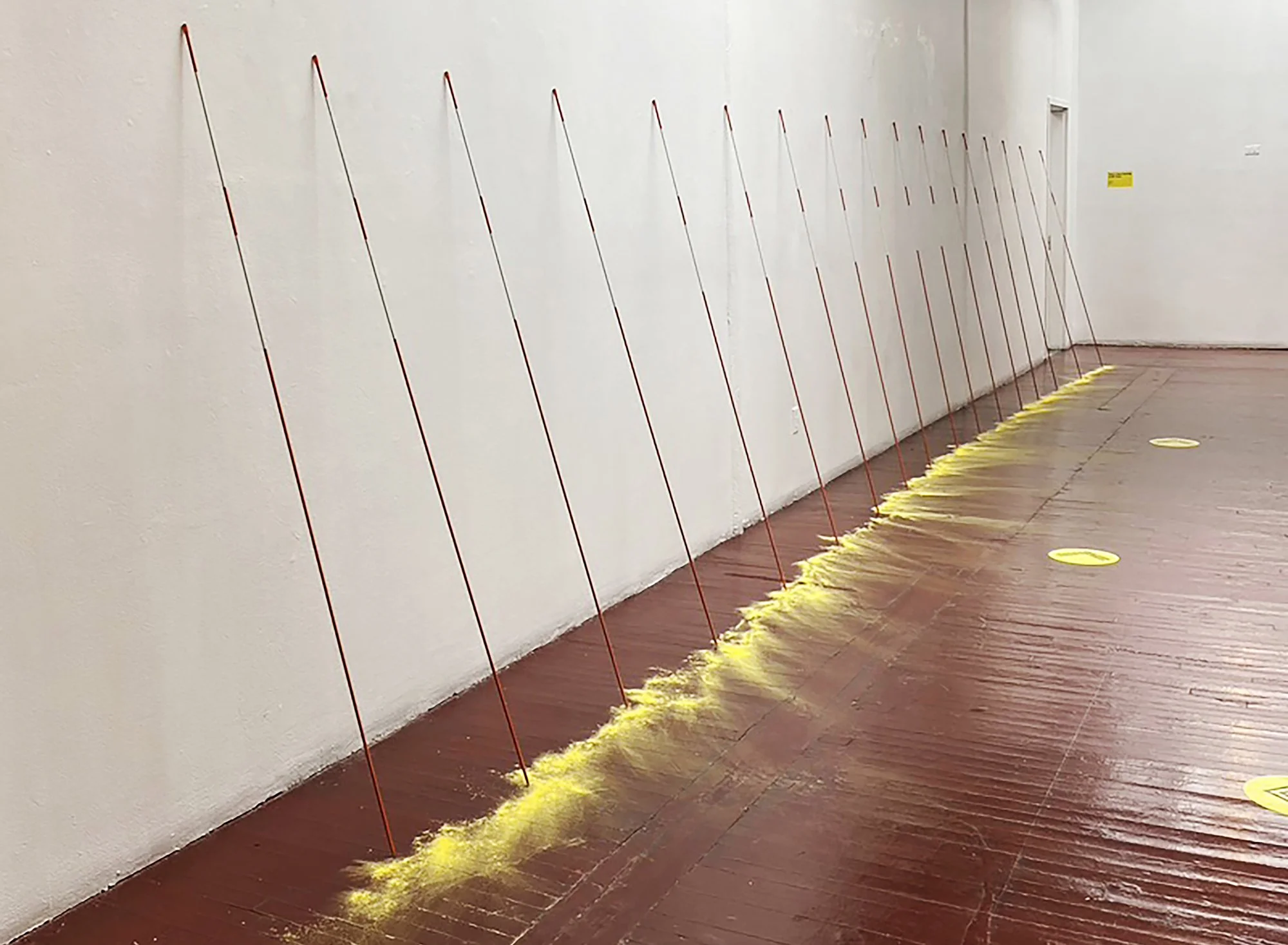


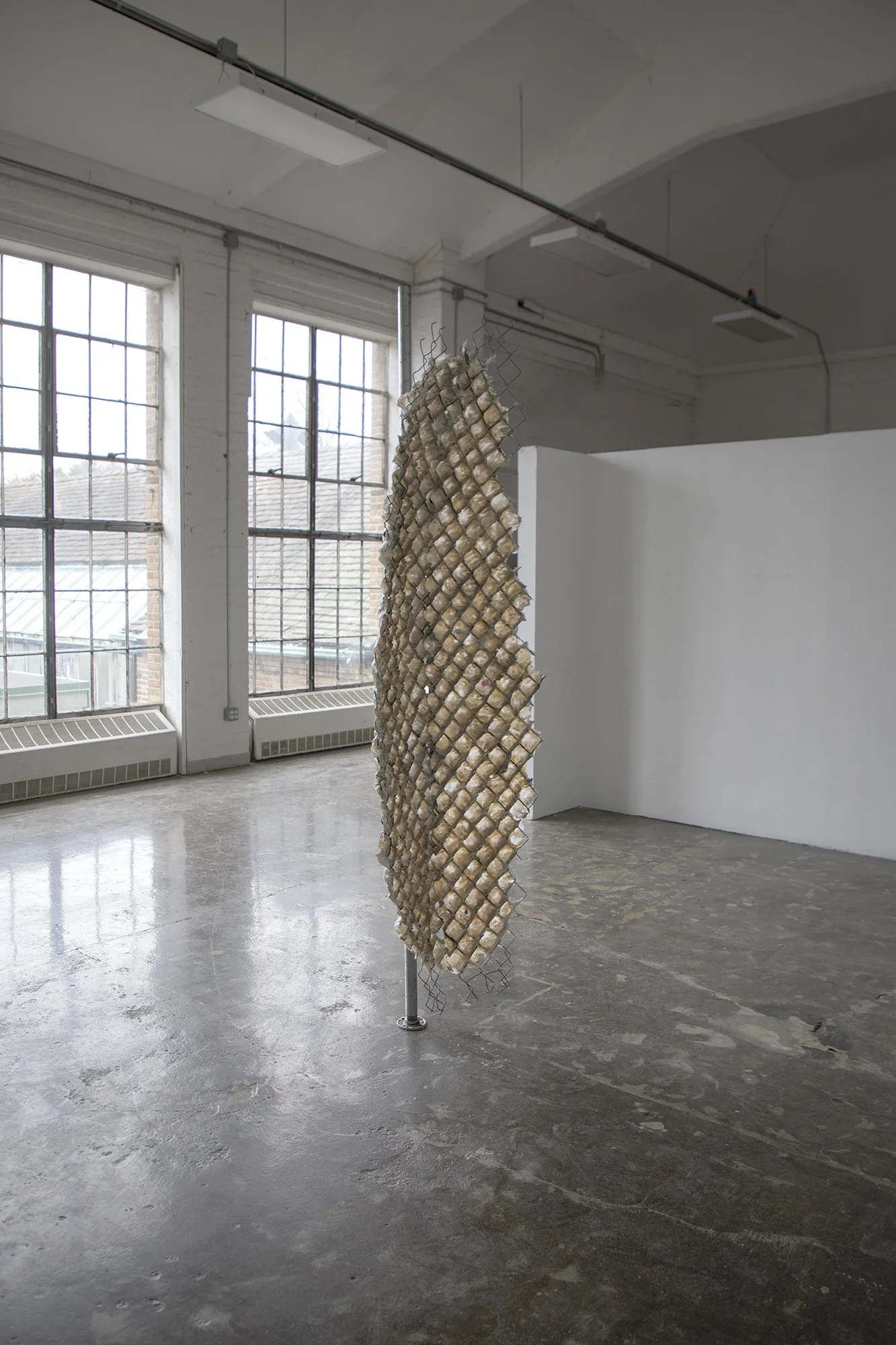

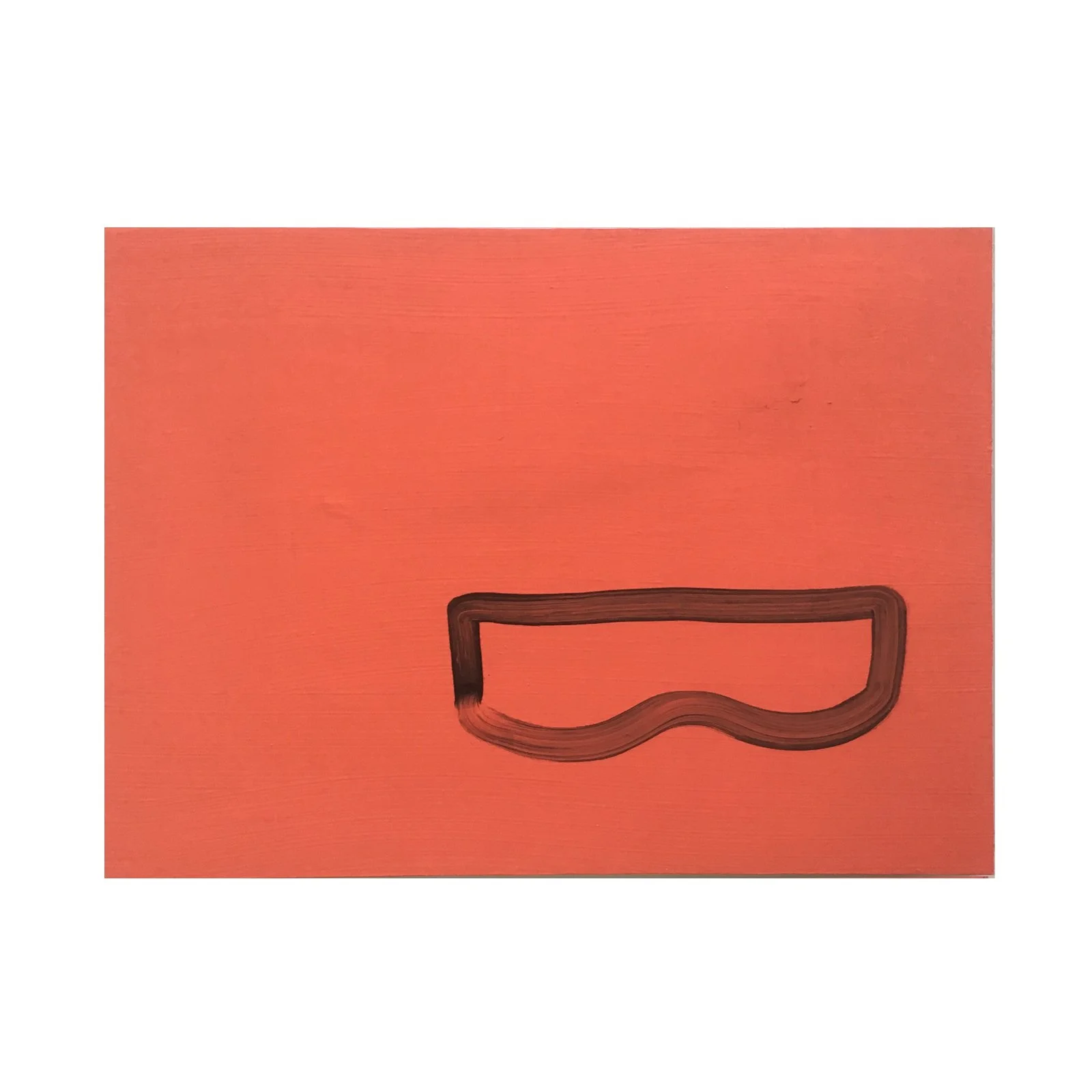

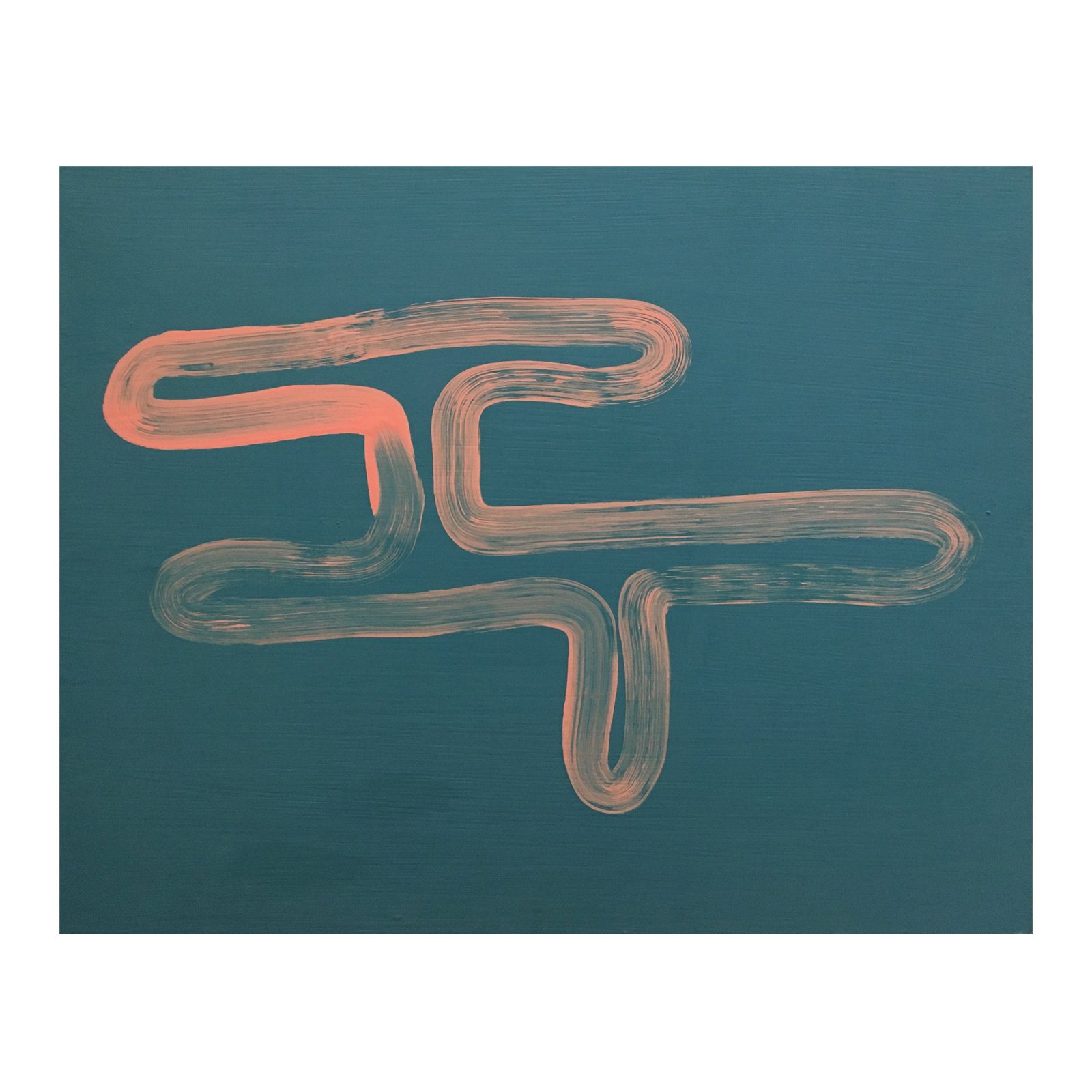

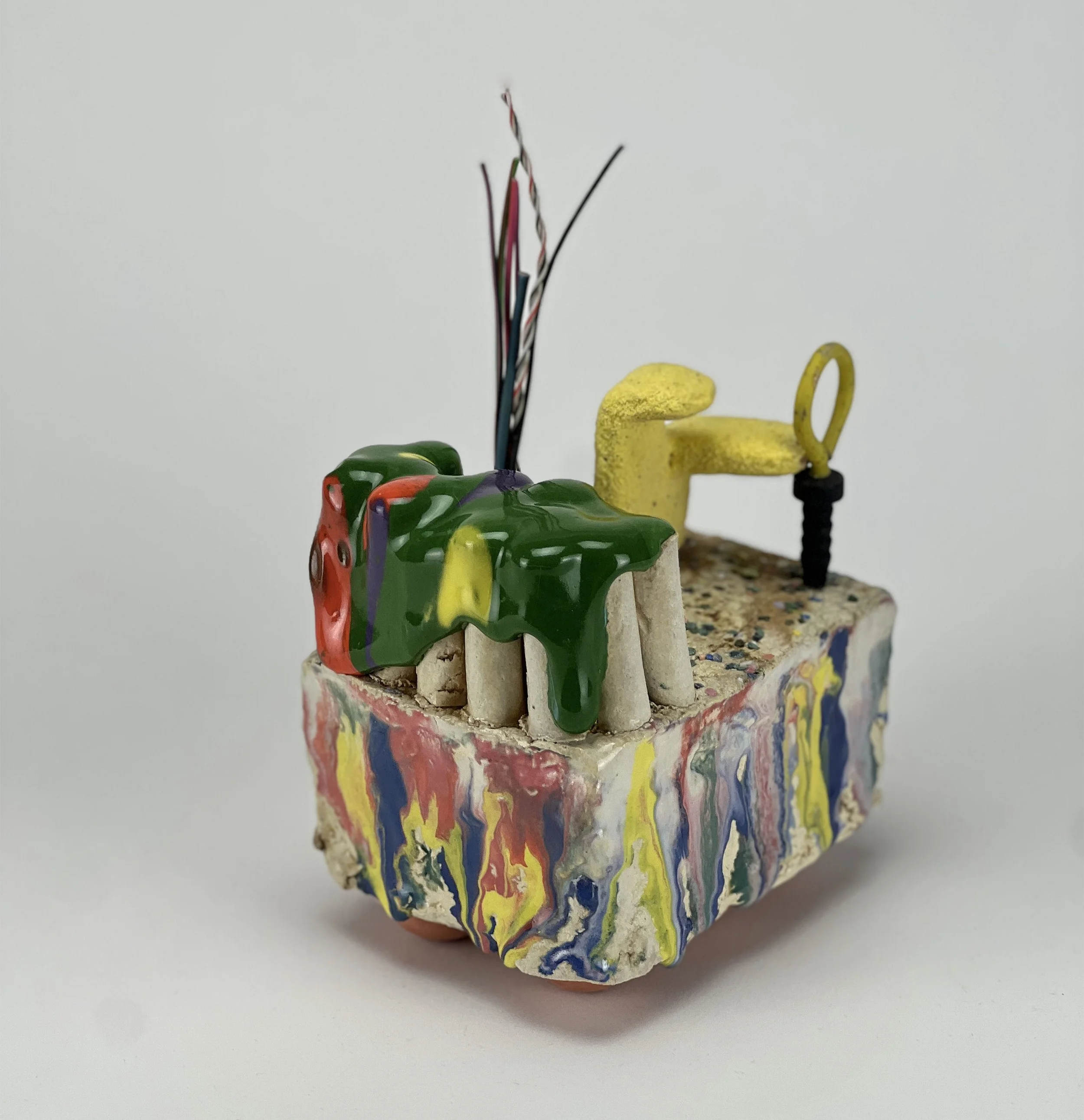


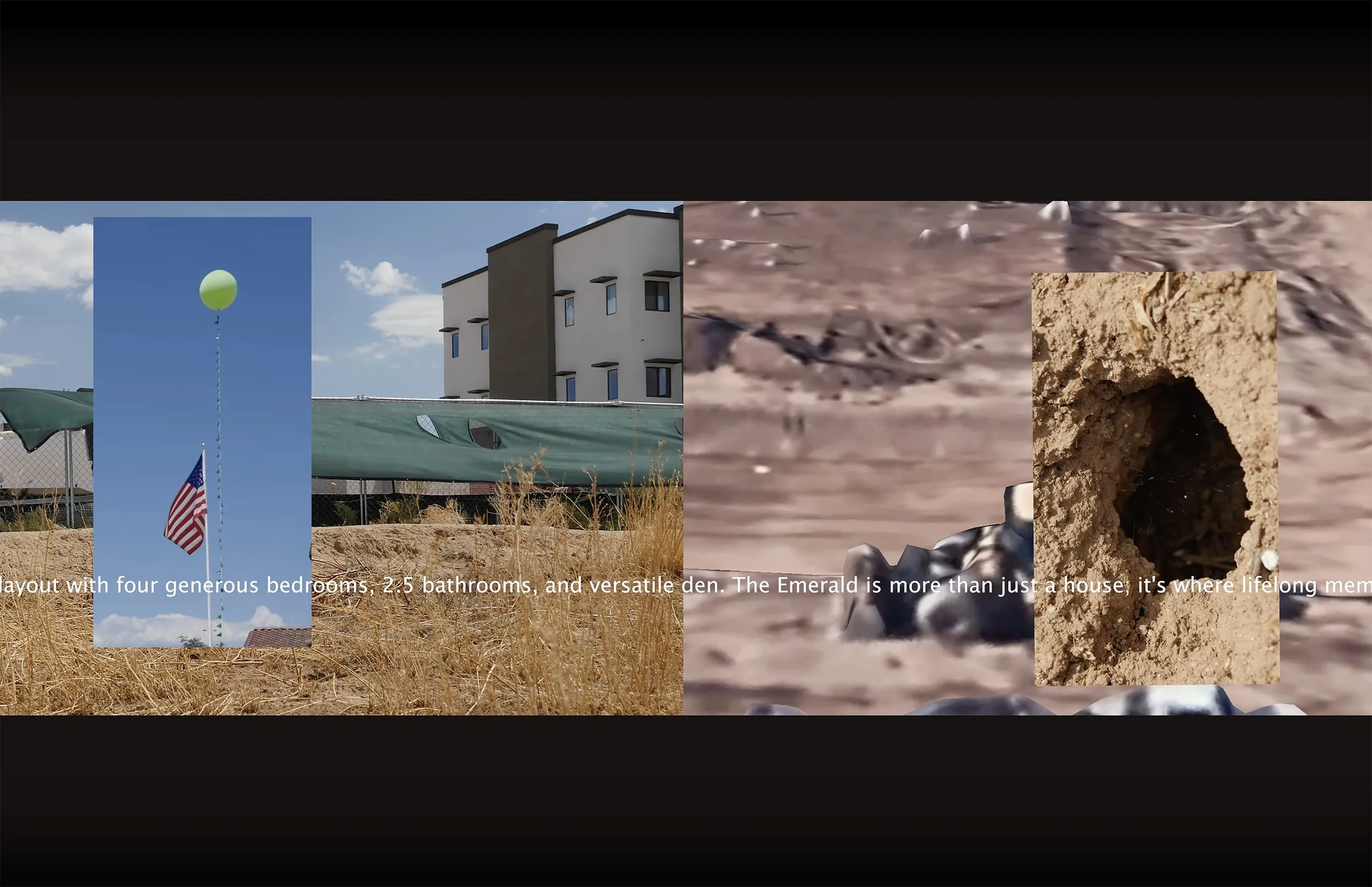


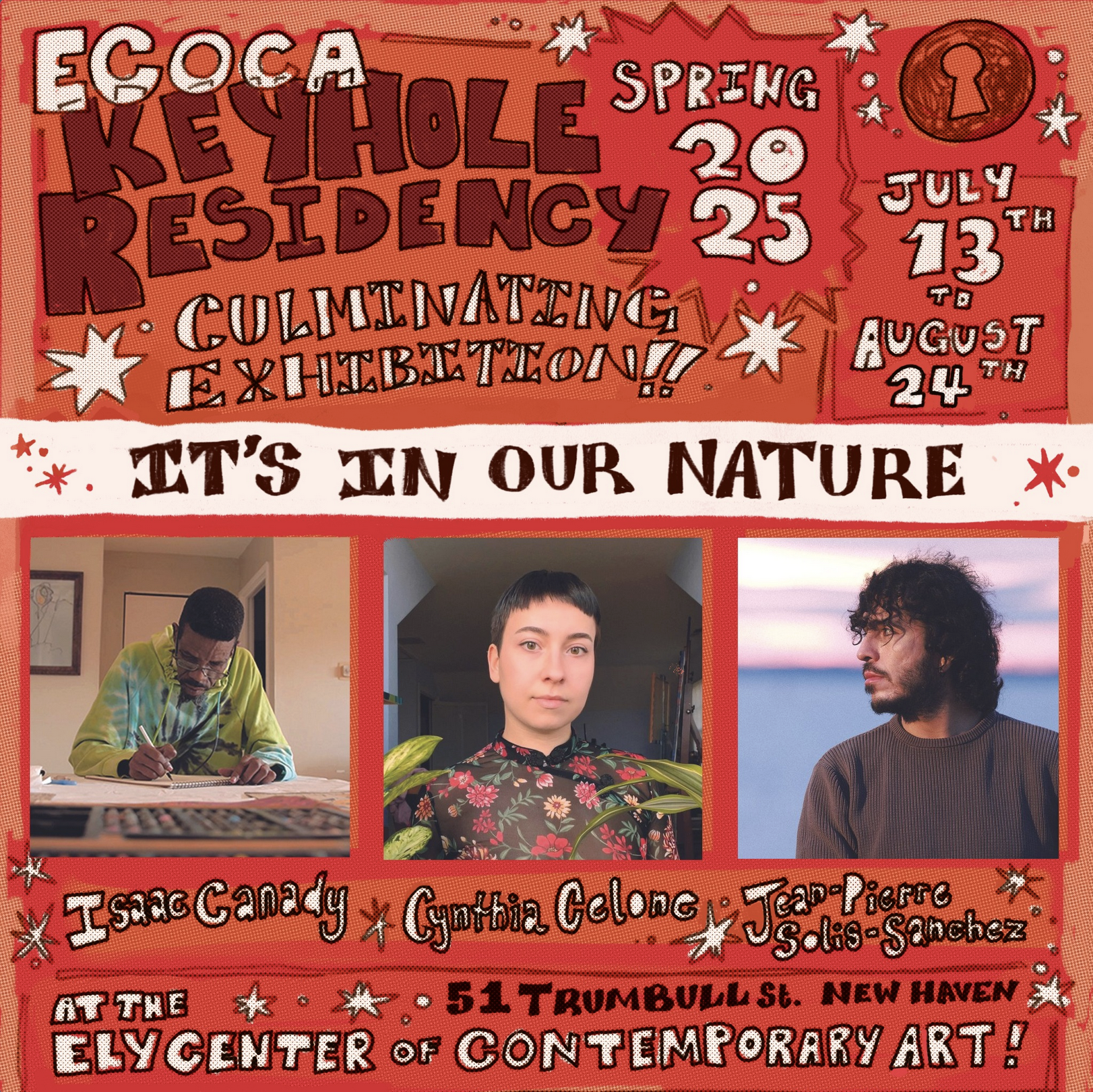
Featuring the work of our three most recent artists in our Keyhole Residency:
Isaac Canady
Isaac Canady is a New Haven native. He studied dance and music in his younger years and was a social worker. He is a self taught artist who spent time drawing after his daughter was born. After numerous hardships, Isaac will start his first artist residency at ECOCA. His work is a reflection on the connections we find in life, knowing that all things are tired together.
Cynthia Celone
Cynthia Celone is a Connecticut-based oil painter whose work explores mythical creatures and atmospheric landscapes. A graduate of the Lyme Academy College of Fine Arts, she has exhibited widely and participated in multiple artist residencies. She looks forward to expanding her practice and engaging with fellow artists as a Keyhole Workspace Resident at the Ely Center of Contemporary Art.
Jean-Pierre Solis-Sánchez
”Creating art is storytelling for me, and life is my muse. I chronicle my experiences, feelings, memories, struggles, and more by transforming them into visually appealing objects. It’s a kind of alchemy, where parts of my life are frozen in time to preserve them, allowing me to look back on them in the future, remember them in an artistic way, and understand them in a completely different light.”
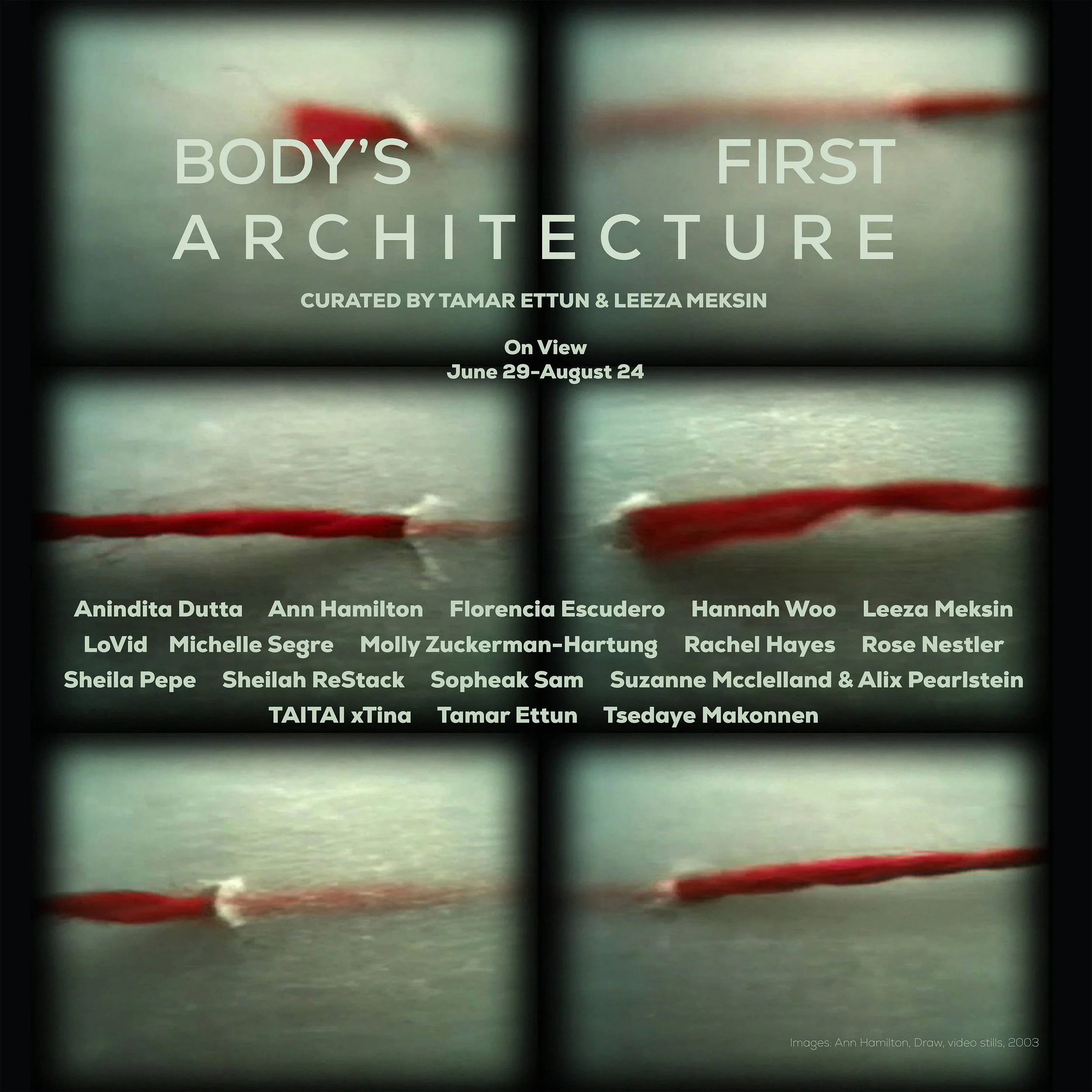
The Ely Center for Contemporary Art is thrilled to present Body’s First Architecture, a group show curated by the artists Tamar Ettun and Leeza Meksin, exploring the various ways in which fabric and clothing are being employed by contemporary artists foregrounding the body's needs for healing. Through attending to the body and highlighting its needs, a larger possibility for healing our troubled world comes into view. The exhibition features works by Anindita Dutta, Ann Hamilton, Florencia Escudero, Hannah Woo, Leeza Meksin, LoVid, Michelle Segre, Molly Zuckerman-Hartung, Rachel Hayes, Rose Nestler, Sheila Pepe, Sheilah ReStack, Sopheak Sam, Suzanne Mcclelland & Alix Pearlstein, TAITAI xTina, Tamar Ettun, and Tsedaye Makonnen.
Body’s First Architecture brings together artists working in many media, including sculpture, installation, video, photography, textiles, painting, wearable art, and performance. The inherent nature of working with textiles includes weaving, sewing, joining, mending and repairing.
Working in this way now offers a surprisingly new (yet ancient) approach to engaging with our world’s problems. The work of mending textile and sewing pieces together, literally and figuratively creates connection and interconnectedness rather than tearing things apart.
Meanwhile, the softness and malleability of fabric stands in contrast to the rigid, unyielding geometry of our dwellings, helping us find a way to heal through touch, playfulness, color and the hand-made.
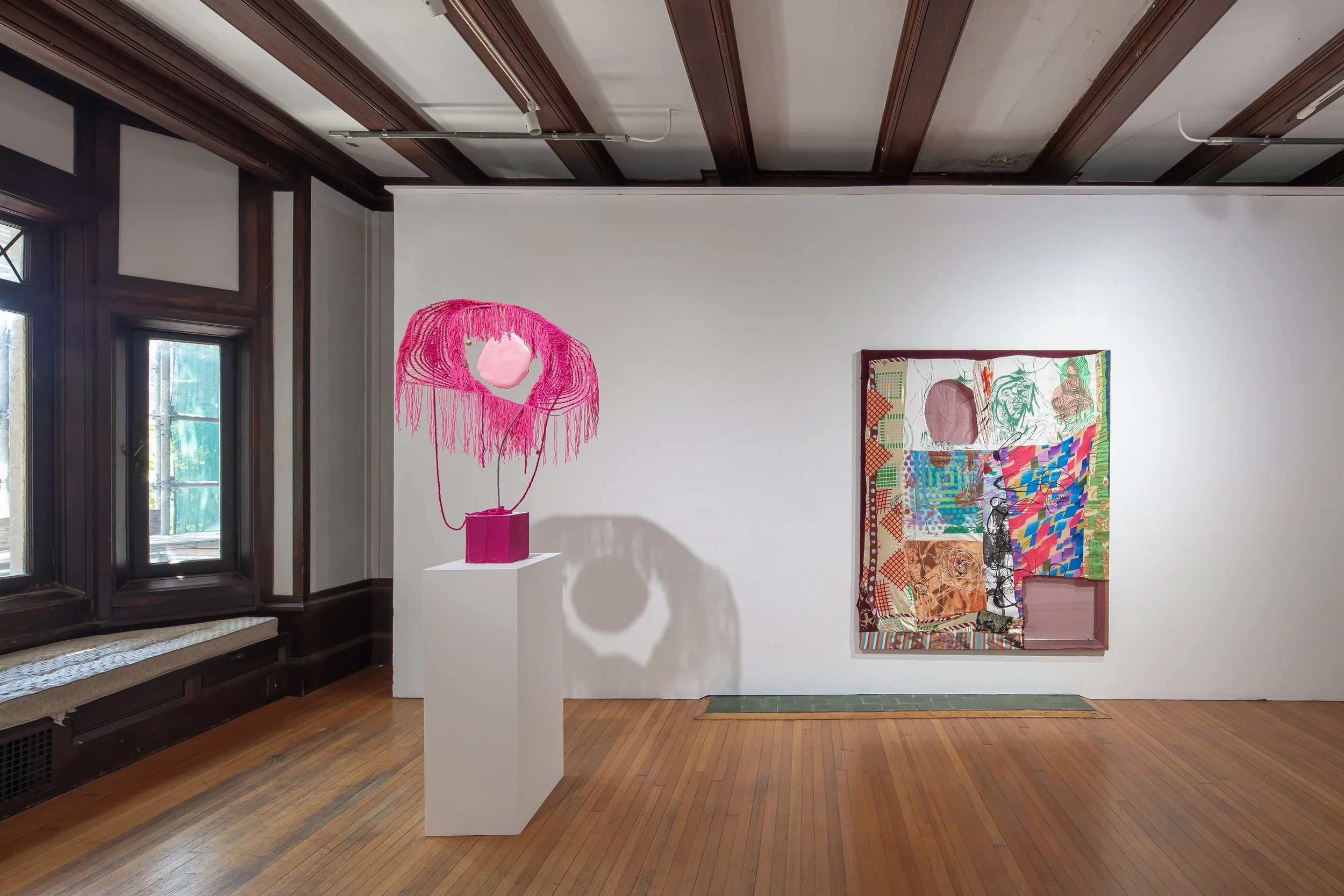
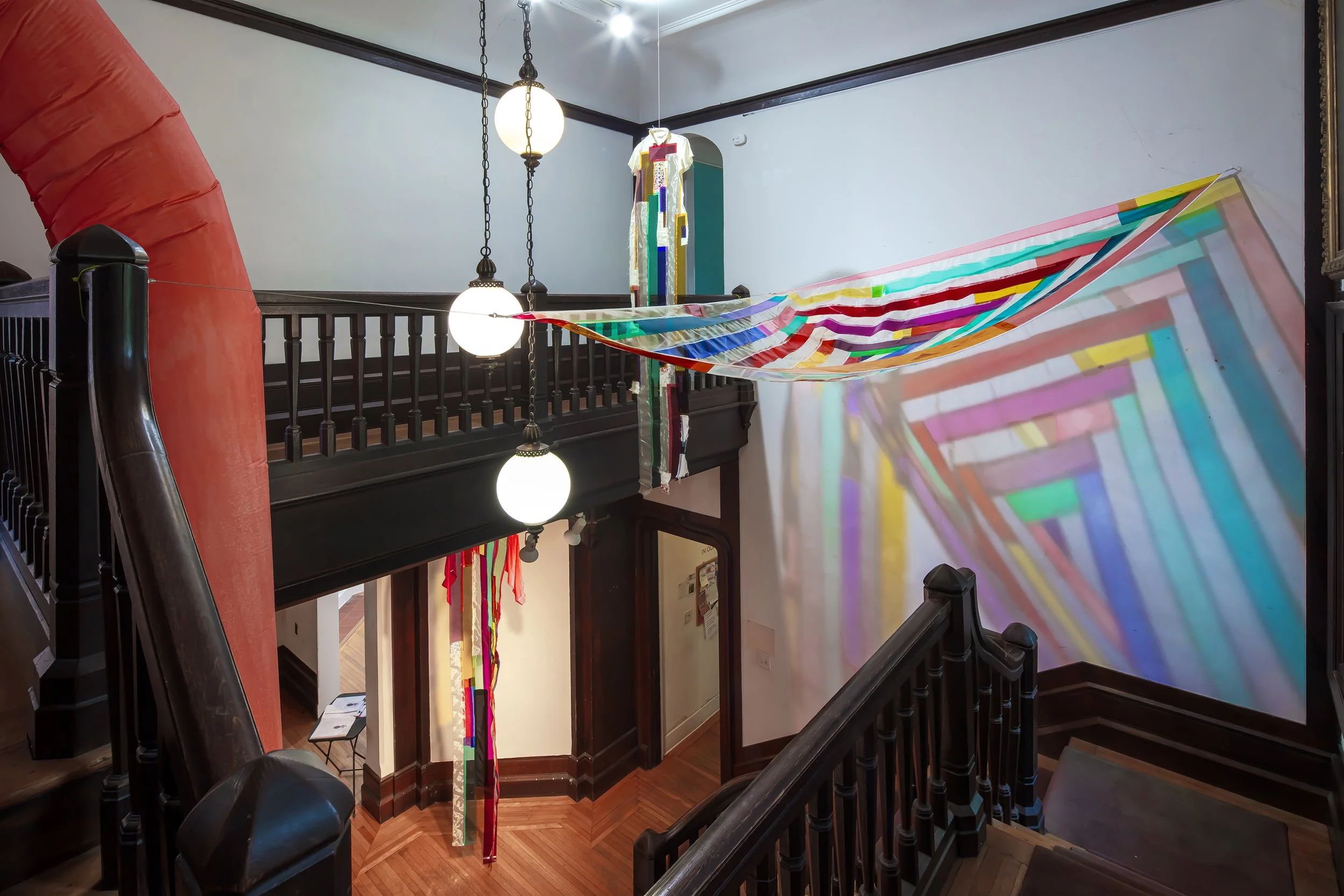
Body’s First Architecture considers the primary and fundamental nature of textiles as the body's first dwelling. Taking its premise from Ann Hamilton’s interview in which she says “Textiles are the body's first house, the body's first architecture."* This statement alludes both to textile’s relationship to the domestic as well as to the nomadic. There is something about the nature of textile that lends itself for travel — it can be packed small, transported relatively easily, made with modest resources while growing expansive and commanding space. For this exhibition,Ettun and Meksin, selected multiple large scale works, which fluidly interact with the unique and historical architecture of the Ely Center. Several of the works are site-specific or site-responsive, hanging in staircases, windows or visually joining the first and second floors.
Many ancient societies, including the Greek, Roman and Mesopotamian, focused on the metaphor of weaving (the essential structure of warp and weft), as symbols of bringing together opposing points of view during civil strife. Ritual garments, such as cloaks, veils and overcoats, were often made as offerings to divinites during war time and transitions of power, and physically placed on the statue of the divinity.* It comes as no surprise then, that during our currently polarized political and social climate, textiles have taken central stage in contemporary art. Body’s First Architecture explores the different approaches taken by artists to investigate the soft power and hopefulness that using fabric in art offers today.
The exhibition will be on view from June 29 through Sunday, August 10. Please join us for the opening on Sunday, June 29, 1-3pm. The artist/curators and many of the participating artists will be in attendance. At 2pm the curators will conduct an exhibition walkthrough, open to the public.
–Leeza Meksin
*Interview with Ann Hamilton and Krista Tippett in On Being,
https://onbeing.org/programs/ann-hamilton-making-and-the-spaces-we-share/
*The Craft of Zeus: Myths of Weaving and Fabric by Jasper Svenbro and John Scheid, Translated by Carol Volk, Harvard
University Press, 1996.
PRESS
JACQUELYN GLEISNER: THE ARTS PAPER
In "Body’s First Architecture," Textiles Teleport | August 6, 2025
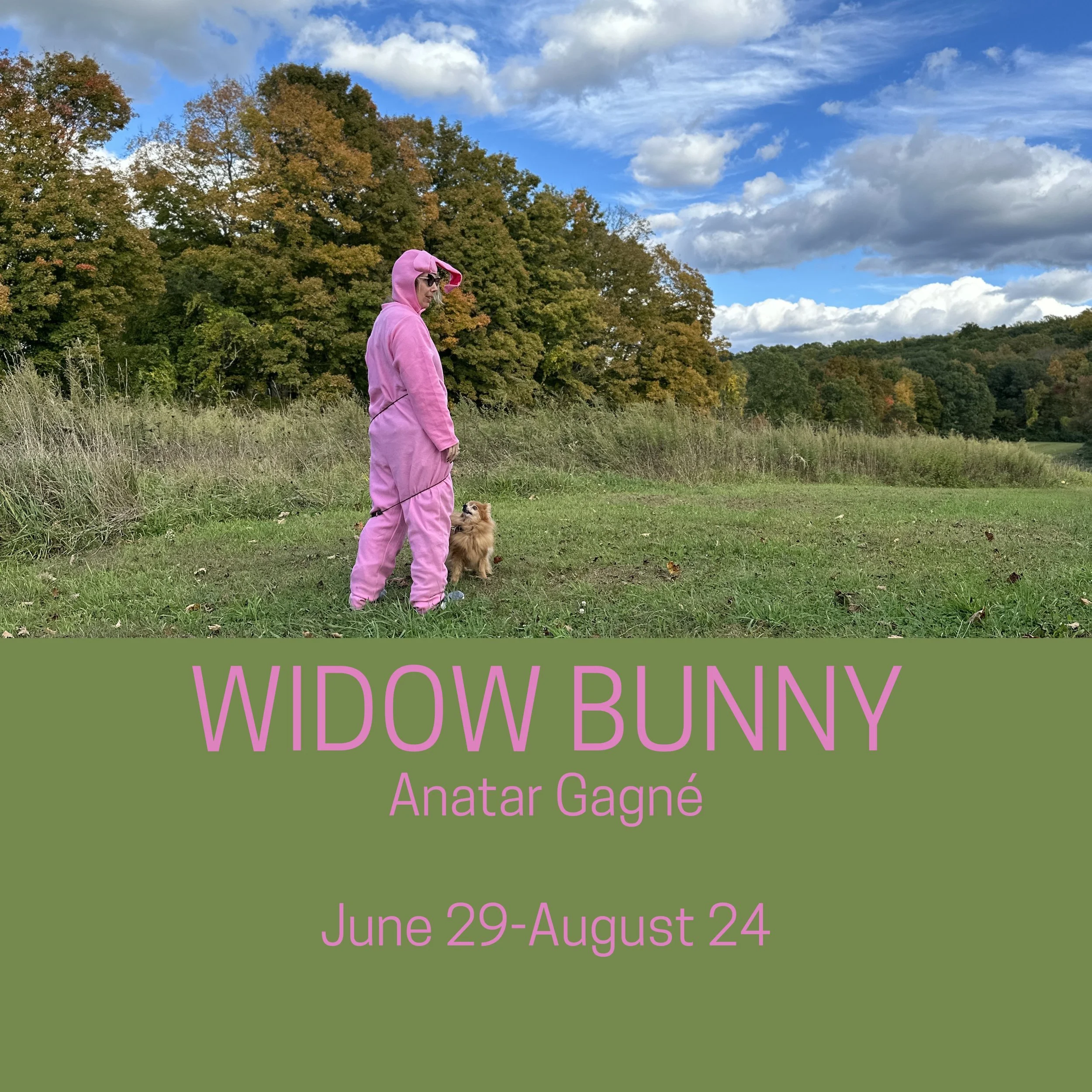
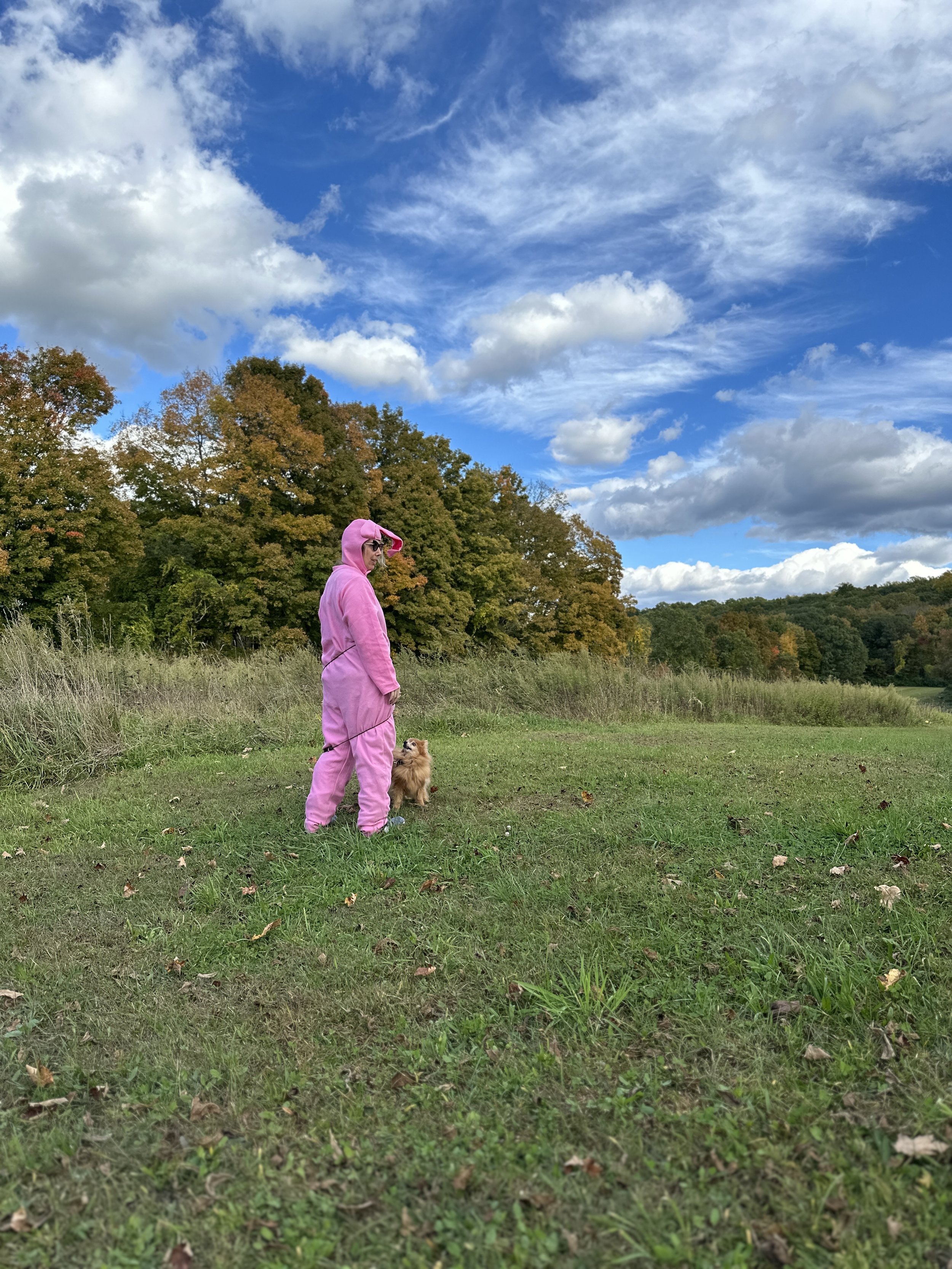
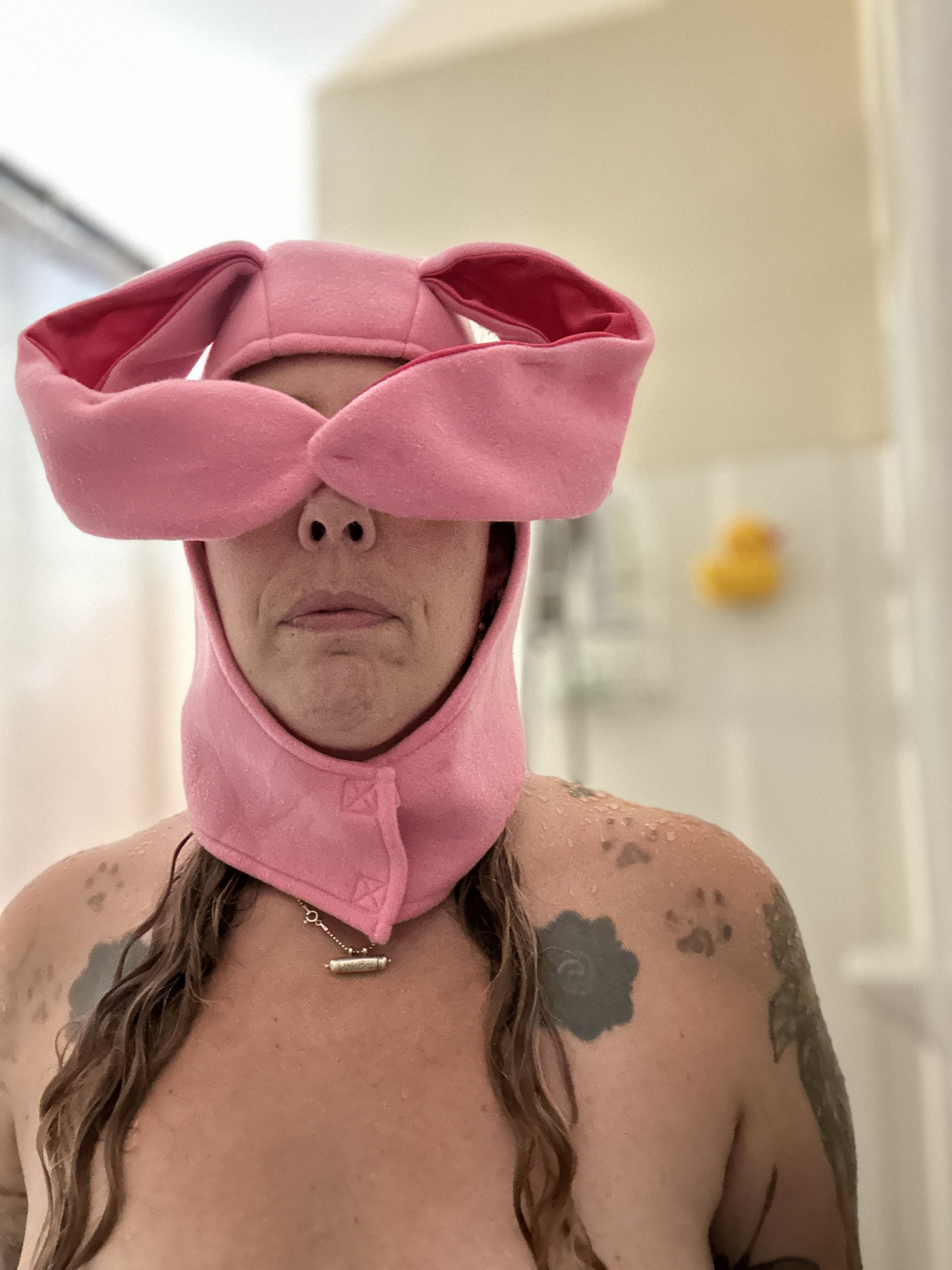
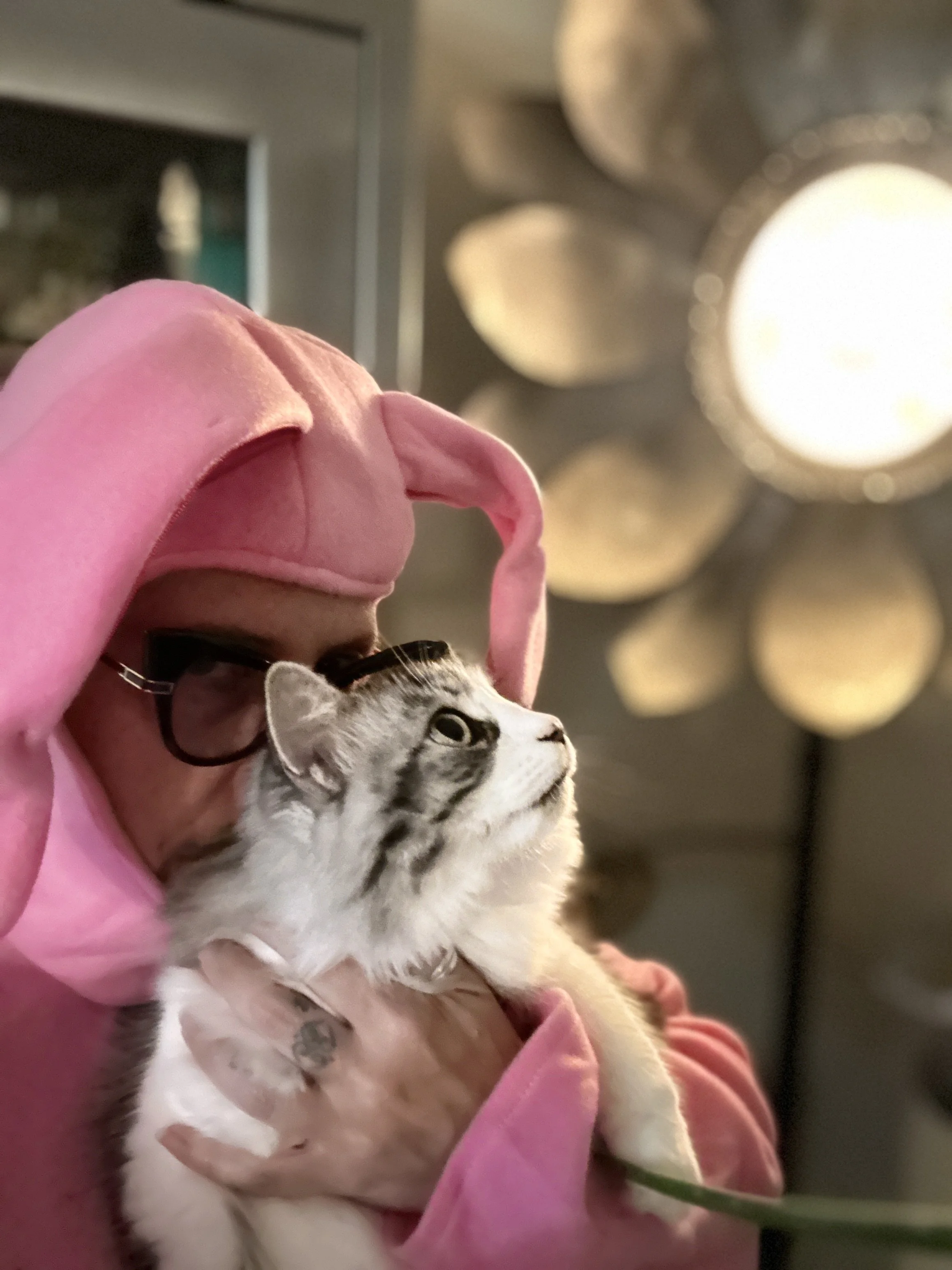
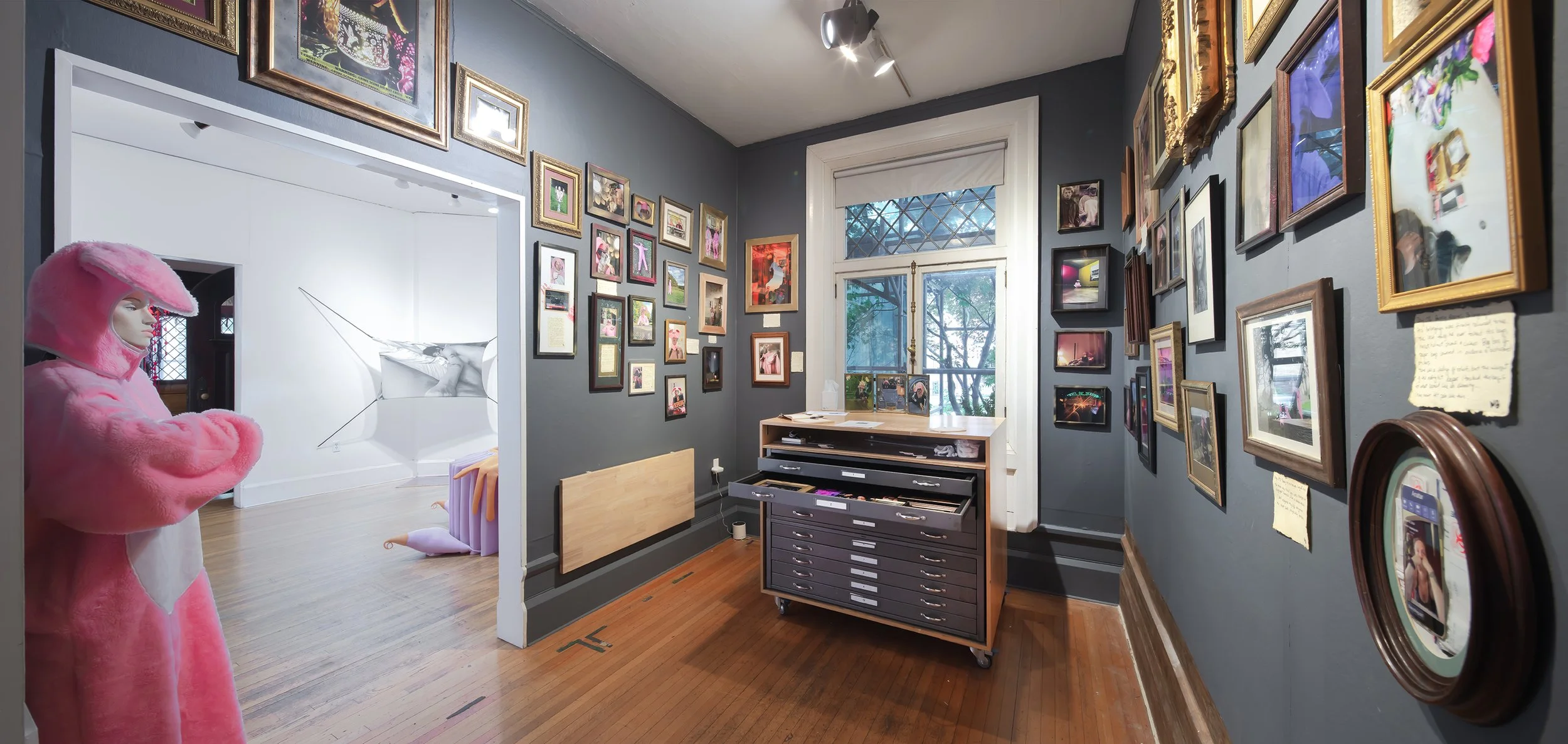
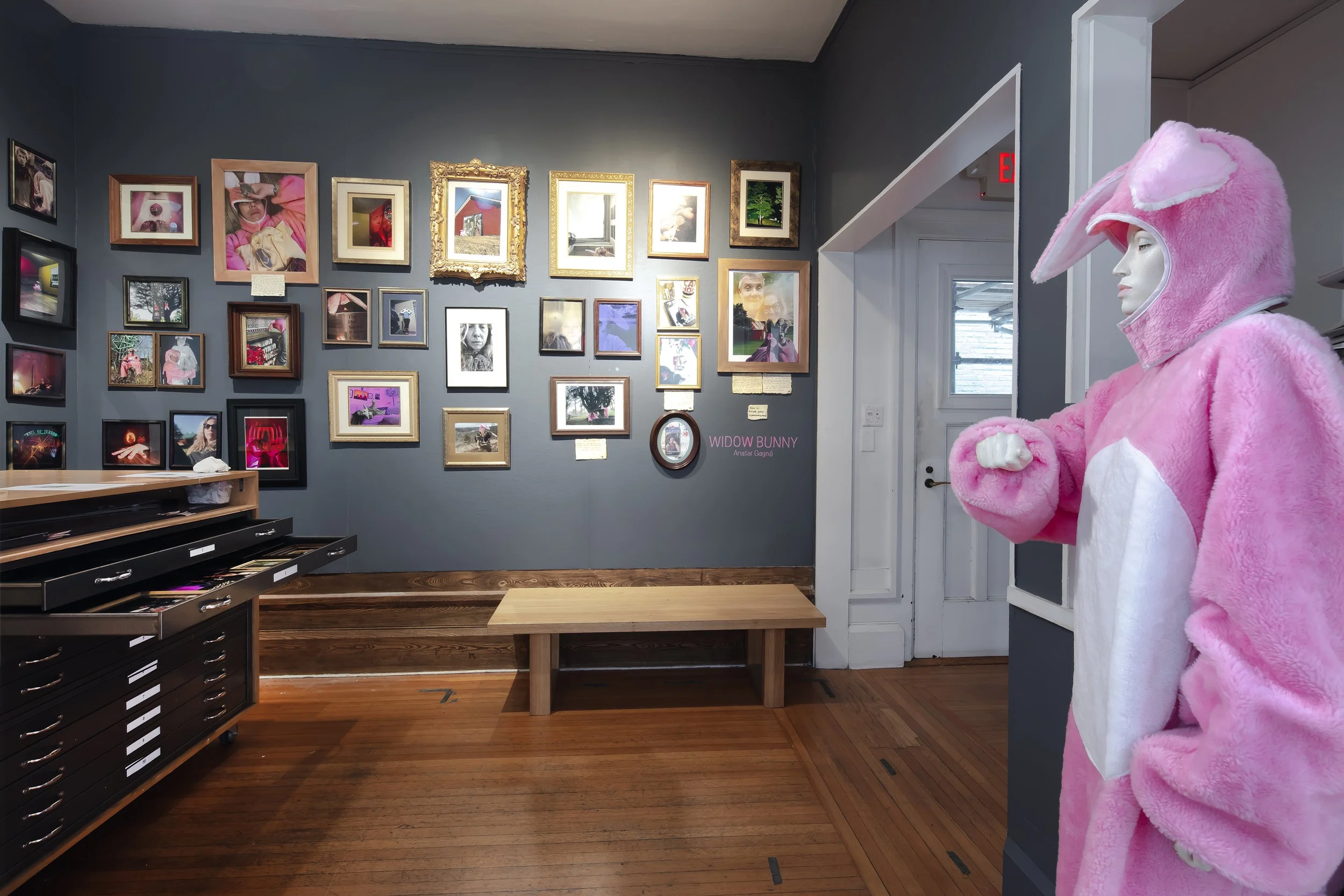
The Ely Center of Contemporary Art is pleased to present “Widow Bunny”, a solo exhibition in our Flat File gallery. “Widow Bunny” is a heartfelt documentation of puppeteer Anatar Gagné’s grieving process after she unexpectedly lost her husband, Dave Gagné, last year.
“On August 15, 2024 my husband was killed in a motorcycle accident. My world was torn apart and life as I knew it ended. My late husband, Dave Gagné was known for his antics, among many other things. He had a pink bunny costume that he had been wearing for over 20 years for Halloween and sometimes he’d use it to crash a party or a wedding. I decided to wear the pink bunny costume while I eulogized him and “Widow Bunny” was born.”
-Anatar Gagné
Anatar M. Gagné/PINNED & SEWTURED Director, designer and puppet theatre artist is originally from Caracas, Venezuela. She holds a MFA in Puppet Arts from the University of Connecticut, and a BA in English/ Creative Writing from Hunter College. Her strong background in art, dance, writing, fiber and fabrication all come together seamlessly with her love for puppetry. She has trained at the National Puppetry Conference at the Eugene O'Neill Theater Center, designed puppets for The Dramatic Question Theater, Yale, Hartford Symphony, Boston Pops and Glass Half Full Theaters "Maebelle's Suitcase/La Maleta de Maebelle" where she was nominated for outstanding puppetry design by B. Iden Payne Awards in 2024. In 2023 she won 1st place in community impact at Nor'Easters 25th video Festival Alliance for Community media for the "Superhero Within." She has performed in slams all over the country, and has toured her full length show Calle Allende, a puppet theater production inspired by a journal entry in Frida Kahlo’s Diary. The show explores themes of pain, inspiration and infertility- all themes that became very personal in her own life. She is the proud recipient of a Jim Henson Workshop grant for “Sueños”. She is the founder and curator of The Pinned & Sewtured Puppet Cabaret and is proudly supported by the Puppet Slam Grant Foundation. Anatar was the Workshop Chair for the 2023 Puppeteers of America National Puppet Festival which had bilingual workshops for the first time and sits on the board of Puppeteer of America Board of Directors. Her newest project "Widow Bunny" explores grief through self portraits.


PRESS
EMILIANO CÁCERES MANZANO: THE ARTS PAPER
A “Widow Bunny,” Making Space for Grief | July 11, 2025

Evolution is a photographic exploration of transformation—both internal and external—told through the lens of young photographers. The exhibition moves through themes of light and shadow, memory and loss, presence and absence. It weaves together intimate portraits, architectural studies, and conceptual works that ask what it means to grow, to question, to remember, and to become.
Within these images, we witness tenderness and truth: portraits of strangers and family members captured with a gaze of love; images of New Haven’s parks and buildings rendered with reverence and curiosity; blurred photographs that speak to the fragility of memory and what cannot be fully held onto. Family archives emerge as sites of both joy and pain, and self-portraits serve as tools of self-invention—where alter egos become a means to move from doubt into self-assurance.
These works were created by Wábi Arts FOCUS Fellowship Program under the mentorship of photographer and educator Kim Weston. Over the course of the program, students studied the work of contemporary artists such as Priya Kambli, LaToya Ruby Frazier, Dawoud Bey, Alec Soth, Leslie Hewitt, and Bill Jacobson.
Featured Artist:
Mason Booker
Nicholas Clement
Jaylin Ambrose Cooper
Bethany Edwards
Alexandriana S. A. Fuentes
Tywain Harris
Snigtha Mohanraj
Abril Rosario
Nickolas E. Santaella
Wes Weston
Brayden Zawadowski

The Ely Center of Contemporary Art is proud to present MUSCLE, curated by JLS Gangwisch.
To celebrate Pride 2025 the Ely Center for Contemporary Arts and the New Haven Pride Center partner to launch MUSCLE, an intermedia exhibition of artworks by local and regional artists featuring the vitality of the LGBTQIA+ community.
These works articulate social power. They are evidence of both personal and collective gains made through determination, will, and grit. They remind us of voluminous resistance to adversity alongside the constant, quiet, domestic assertion of an authentic life. They illustrate the transmutability of our bodies and our bodies politic. They demonstrate lives lived openly, freely, and truthfully. They are tinged with past violences and future threats. They demonstrate the diversity of our community while speaking to our solidarity, our shared vision, and our united desires. They invite us to play with each other, to work together.
2025 is a year that demands muscle. This moment calls us to exercise our authenticity, flex our coordinated joy, and balance the tension of being too seen with the bravery of allowing ourselves to be seen. Pride celebrations were born out of resistance; through resistance we build and exhibit MUSCLE, our powerful creative strength.
-JLS Gangwisch
Featuring the work of Joseph Annino, Kelsey Archbold, Finley Doyle, Ana Maria Farina, Diego Horisberger, David Kuehler, Kayce Lewandowski, Caroline McAuliffe, Michael Morgan, Cate Solari, Matthew Towers and Yves François Wilson
MUSCLE is an in person exhibition celebrating Pride located at the New Haven Pride Center, 50 Orange Street, New Haven. MUSCLE has a soft opening this Friday, June 20, and a closing reception July 18th! The Pride Center’s hours are Mon-Fri 10am-5pm.
FLEX:// is the sister exhibition of MUSCLE and is the first exhibition in a relaunch of Digital Grace, the Ely Center’s online exhibition space, now with an instagram account that will feature interviews with the artists! The interviews will be released throughout the run of the exhibition. Follow the new Instagram account HERE.


Joseph Annino These works explore personal feelings of grappling with knowing myself and feelings of isolation or concealment. Both works are inspired by music, “Nessun Dorma” by the aria of the same name from the opera Turandot by Puccini, and “Ghosts and Goblins Walk in This Land” by the song “22nd Century” written by Exuma and performed by Nina Simone. These are songs about what is secret and what is revealed, morphing identities, and the danger and hope the future holds. Both works are self portraits, nude in wanting to be my true self, yet obscured, as that always comes at the risk of how others might react.
Kelsey Archbold My oil paintings explores the way society presses a duality upon femininity that mischaracterizes the femme experience as a way of control, and how women can push back against this. Through visual narrative and symbolic imagery, I explore how women confront and resist these limiting constructs. The Visitor shows a solitary woman in her home accompanied by her orange cats. She is nude, but it is unclear if it is for her own pleasure or the viewers. Shown outside, camouflaged, lurks a tiger. Has the woman seen the tiger? Is she aware of its presence? The tiger could be a threat, but perhaps instead it is aspirational. Cats are considered semi-domesticated, they never severed the tie between them and their wild cousins. In What You Think of Me, I address the tendency to project assumptions onto women based solely on their presence. The figure appears neutral, almost passive, yet her exposed breast and the brooding clouds behind her evoke conflicting narratives: is she sexual, maternal, melancholic, defiant? When a woman refuses to perform emotional labor for the comfort of others, she is often met with disdain. The painting asks: how exhausting must it be to avoid even a "resting bitch face"? My paintings follow the tradition of portraiture and surrealism, often combining degrees of representation, from realism to flat cartoons to simple line drawings, all in one painting. As this body of work evolves, the women within it increasingly defy the reductive narratives projected onto them, stepping beyond the binary expectations that attempt to define them.
Finley Doyle The radiator is part of a hidden system. It’s the capillaries of the building. It maintains the distinction between the inside and outside worlds. It does this too well, and then we open the window. We let the outside in and the inside out. Now we can smell the garbage and hear the neighbors screaming. It is intentionally inefficient. It loses heat. It forces our hand. I’m interested in the seemingly uninteresting object. I’m interested in the surface and the exciting moments in the paint itself. I like to create work around a domestic object that doesn’t hint at a narrative. I paint my partner and the space we share. I paint the radiator, the bed, the kitchen counter. My duty to the subject and the surface are similar: to neither show nor obscure too much, to revel in the wetness and bodily pleasure of paint while paying attention to the real.
Ana Maria Farina A loop of yarn makes a dot, the start of everything. I instinctively choose colors and gestures that along with intricate, sculpted surfaces evolve into imagery. Using a tufting gun along with needles and hooks, I conjure vibrant objects of comfort in wool that inhabit a mystical pictorial space between abstraction and representation, where painting, sculpture, and textile meet. I am attracted by the creature-like, mythological parts of being human and the untamed primordial wilderness we are taught to suppress. Each piece is a tactile exploration of the hidden, the intangible, and the mythic, inviting viewers to connect with both the familiar and the mysterious. Agnès Varda said that if we opened people up, we’d find landscapes, and I’m fascinated by the idea of what these landscapes look like. Growing up, my father always said that in order to turn a house into a home, you need to have rugs. Working in fibers allows me to bring this sense of comfort and honor my ancestry of Brazilian craftswomen while I work on themes of psychoanalysis and our internal battles of constraintment, repression, and release. Through texture, form, and color, I bring forth a world that is at once comforting and unfamiliar, where the lines between the physical and psychological are softly blurred.
Diego Horisberger Diego Horisberger is a mixed-media artist focused on personal experience in relation to questions of identities and communities that they have affinities for and inhabit. Through print, paint and photographs, Diego embraces the tensioned state of queerness as it relates to a resistance of categorization. This practice also allows them to process their surroundings, and helps them arrive at a way of self-knowing.
David Kuehler I draw upon my experiences in stage and film to explore themes of social status, remembrance and materiality. My works are suffused in my memory influenced, also, by artifice and nostalgia. They are often narrative and sometimes emotional, inarticulate responses. Safflower oil, water and varnishes, combined with thinned oil paint disrupt character forms and create unexpected color dialogues. The buildup of large shapes and patterns makes way for unexpected relationships between color, line, and textures. Rather than asking viewers to suspend disbelief, I invite them to see the world as it truly is—layered and constructed. I am currently investigating gender disposition posited as truth in 20th century American cinema. Iconic characters, especially in Western movies, often present the masculine ideal through functions of dominance—intentionally suppressing traits, such as vulnerability, empathy and intimacy. Using mid-century film production stills as inspiration, I am painting into "the illusion of cinema" as part of a personal journey to unearth, and reimagine, myths of masculinity. The idea for the painting "Elegy" emerged while I was researching how director John Ford shaped John Wayne into an icon of American masculinity. I came across a production still from the film, "The Searchers" showing a crew member carrying Wayne’s stuffed horse onto set, while Wayne gazes stoically into the sunset. This image prompted me to ask: How might I disrupt the status of these figures and reimagine a new narrative?
Kayce Lewandowski My current body of work presents ideas that aren’t always spoken about based on my own personal experiences. My work reveals a great amount of my identity, some I’m proud of and some not so much, but neither are matters I talk about regularly. The ideas I’ve expressed through my work share the common theme of hiding. I’ve hid my eating disorder and my sexuality from others in the past, sometimes intentionally but often instinctually. Dealing with anorexia and anxiety brings a lot of shame and insecurity which caused me to keep it to myself, however all the physical signs became very obvious. For me, it felt like I had lost control over myself. My works accentuate these physicalities to an extreme level to depict how I and others may have felt physically and mentally through this challenge. Besides portraying anorexia, my work also interacts with the insecurities of my own sexuality as a lesbian. I have grown to own and love this piece of my identity rather than hide it, however the reason I hid it for so long constitutes reflection not only on a personal level, but on a societal level. Our nation has come so far in accepting LGBTQ+ individuals, but it's clear that the fight for respect and rights as a minority needs to be spoken out about more than ever. I believe it is important to educate and inform, and I am willing to incorporate my vulnerability in my work because my art feels like an extension of myself and a message to those around. My process is cathartic by helping me make sense of my reality, which is unavoidable in visual, tangible form. One may think that painting about the negative aspects of one’s life would be painful, but I feel it helps me communicate these issues with others in an impactful way. This is especially important to me when others who relate feel they are being seen, or when I can share my perspective with those who don’t initially empathize with my concepts.
Caroline McAuliffe My work is a performance of identities, and in this current era, many former selves are now in the shadows of this bigger identity that has muscled in—mother. Mothering has pushed me to expose more of myself: the insecurities, the monotony, the duality of living and making art from home with my wife and child, and even the toys that surround us have become the subject matter of recent photos and sculptures. Objects of Play is based on how I engage with the “stuffness” of toddlerhood. It feels pressing to speak honestly and not tie a pretty bow on it. Caregiving is demanding, neverending work. The physical and emotional demands of parenting a toddler have turned our world into the subject of my art. I am exploring the body, our lived spaces and the objects of my toddler’s obsessions that fill our home. I am consumed by labor, by stuff and left to grapple with matrescence through humor and art.
Michael Morgan Lightning should obey physics: the tallest metal object wins. Yet in this canvas the bolt veers past a metal sword high in the sky and strikes a lone dog-walker instead. One of the dogs drops theatrically in a “play-dead” flop; the other turns to flee, muzzle twisted with concern. Better to Have More Lightning in the Hand is the second panel in an ongoing triptych that includes Red at Morning. In that first work, a bronze figure stands on a plinth carved “CDIV.” These roman numerals equate to 404, a jest that the monument is dedicated to nothingness. The series is less about what monuments depict than about the raw power claimed simply by erecting them. In Better to Have More Lightning in the Hand that power returns, inflated: a heavy-set and nude sculpture with a gaudy crown rests on a rust-patched oil-drum horse. Below, an altar with a Latin plaque reads Dulce et decorum est pro patria mori (“It is sweet and just to die for one’s country”). This collage of imperial symbols on junk metal suggests civic memory can be welded from spectacle, not truth by bad-faith actors. A wrought-iron gate topped with dragon finials separates viewers from the park. The dragons glare outward, policing who belongs, while a golden-retriever head faces inward, welcoming those already within. The gate casts the audience as outsiders, conjuring that familiar queer feeling of being present, yet uninvited. The lightning bolt carries two charges. Politically, it shows the expendability of “followers” who absorb real harm while authoritarian leaders remain unscathed. Personally, it distills my phobia of lightning and the abrupt trauma of losing my father. The fallen fence pickets at the canvas edge hint at theater props, underscoring that what we call history is often fabricated theater. I want the image to vibrate between seduction and alarm.
Cate Solari My work is rooted in the spirit of play, drawing from my childhood spent exploring the woods. These early experiences inform my ongoing interactive series, Collaborative Play, which invites viewers to reconnect with their inner child through curiosity and playfulness. Trolleys is a replica of a classic American summer camp team-building activity. Two participants must step onto the wooden slats, hold onto the ropes, and coordinate their movements to walk together. An act that requires physical balance, trust, and communication. Intended for adult participants, Trolleys reopens a space typically reserved for children, asking grown viewers to collaborate, stumble, and play in public. In doing so, I want Trolleys to challenge cultural expectations around performance, control, and self-containment. There must be a willingness to engage, to move in tandem, and to embrace the awkward joy of a shared experience.
Matthew Towers Traditions, routines and secular rituals inspire the objects I make. I have always felt that the vessel form is the most perfect object, and is most often used in these civilized practices. I love to manipulate my forms and control the clay in a way that defies gravity and the “norm” or status quo. I try to conjure mystery and magic in order to make my dreamy fantasies a 3D reality. Like many potters, I work in series making repetitions of forms. This helps me organize my obsessions with shapes, movement, ideas and the various notions on the meaning of function. I idolize classic vessel forms that have helped to define civilization and have been rehashed in many cultures. In my current body of work, I place the forms on exaggerated feet that are inspired by stilettos and platform heels to bring in an element of camp, and to uplift the volume in order to celebrate the bizarre history of humanity and its precarious present. I glaze these pieces with colors that reference classic Red and Black Greek pots with gold luster accents that satiate my desire for ornamentation, beauty and artifice. I substitute the sensual figurative illustrations that were used on many of those ancient pots with forms that mimic rippling flesh. This makes them too eccentric to comfortably utilize as utilitarian pots, and instead transforms them into a different type of vessel.
Yves François Wilson If We Leave Now is a silent, multi-channel video installation composed of slow-motion portraits filmed in public spaces. Each frame invites a kind of pause a soft interruption of time where the viewer can fully encounter the presence of another person. These moments are quiet but intentional, asking us to consider what it means to be seen without being explained. The work was filmed in Bridgeport and New Haven, cities shaped by migration, labor, and erasure. It draws on shared visual language the glance, the stillness, the breath between movements as a way of holding space for collective memory. I think of it as a non-material architecture, a place made of light and duration, where stories and ways of knowing can be felt even if they’re not spoken aloud. This piece is part of an ongoing effort to create spaces for recognition.

My artistic practice emerges from the intricate landscapes of diaspora, embodied memory, and collective healing. Rooted in the transformative moments of the 1992 LA Uprising and shaped by contemporary visual culture’s relationship to US history and politics, I create interdisciplinary works that challenge systemic representations and reveal hidden narratives for social transformation.
Found images, natural artifacts, neon signage, thrift store t-shirts, and beeswax serve as critical materials in my multimedia installations. In works like “Thank You; Have a Nice Day”, I explore the affective dimensions
of Asian American labor and cultural displacement. A digitally overlaid found photograph of a hollow deer bone—marked by coyote teeth—features iconic shopping bag text, with one line rendered in neon, emitting a bitter irony that highlights the visual aesthetics of Asian American immigrant owned small businesses. This piece was created in response to the violence that fell on the AAPI community during the pandemic and the murder of 6 Asian female spa workers in Atlanta in 2021.
My recent encaustic-based work responds to the normalization of White Christian Nationalism, deconstructing thrifted “patriot” t-shirts mounted on artist panels and embalmed in the ancient medium of encaustic paint. Through assemblage and collage, these pieces present layered histories that expose the fragile notion of national identity.
Drawing from post-colonial theory and critical visual culture studies, my practice excavates collective memories across geopolitical borders. Working internationally—from Los Angeles to the Palestinian Territories—I’ve developed a fluid methodology that responds to complex social landscapes. Each project translates personal experience into broader narratives, converting pain into possibility.
I create works where personal and political memories breathe, where silence speaks, and transformation becomes possible.

The Ely Center of Contemporary Art is pleased to announce Current Aberrations, a two person exhibition featuring the works of Fethi Meghelli and Fabiana Comas Risquez.
Current Aberrations presents works from Comas Risquez’s Guaricha series along with Meghelli’s sculptures and tapestries featuring the female form. Both artists work with the female figure in a distorted, overlapped but celebrated way.
Guaricha is a term of the Cumanagoto Caribbean ethnic group, used in Colombia, Ecuador, and Venezuela. Guaricha means woman, and over time this term has become the colloquial language to signify both prostitute and indomitable woman. In this series, the female body is exposed as an exhausted medium that carries the precariousness of being a woman. Comas Risquez draws high heels, pantyhose, and amorphous bodies, to represent and hold the various layers of meanings about the feminine's vulnerability, sensuality, and power.
Like other series of his, Meghelli’s ‘Tribute to Women’ tapestries show the multiple realities of a woman’s essence simultaneously, with multiple facial features symbolizing the many tasks and roles that a woman plays. The sculptures on display present a rough, primordial expression of the female form as mother and caregiver, evoking pre-colonial art.

The Ely Center of Contemporary Art is proud to present Wake: Selected Works on Paper by Kasey Ramirez, a solo exhibition of Hartford, CT based artist, Kasey Ramirez in our Flat File Gallery.
Ramirez’s work “explores the tension between stability and impermanence by placing architectural structures in consuming environments. I experienced Superstorm Sandy firsthand, and in the wake of increasingly frequent severe storms, my personal sense of vulnerability connects with the impending tipping point of climate change. In my drawings and prints, buildings become a stand-in for humans, a metaphor for manmade efforts to create shelter that are ultimately vulnerable to environmental extremes.”
-Ramirez